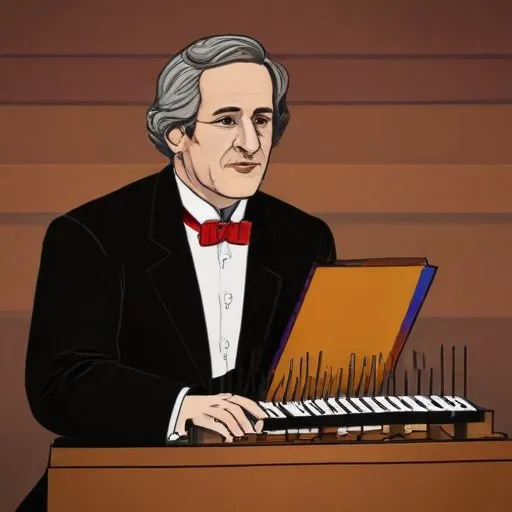
Sebastian Anton Scherer: The Baroque Era's Unsung Maestro
Legacy of a German Composer and Organist
Sebastian Anton Scherer, a renowned German composer and organist of the Baroque era, left an indelible mark on the music landscape of his time. Born on October 3, 1631, in Ulm, Germany, Scherer's contributions to sacred music, trio sonatas, and organ compositions continue to resonate with music aficionados to this day.
Early Life and Career
Scherer's journey into the world of music began in his hometown of Ulm, where he was elected town musician on June 17, 1653. During this period, he assisted Tobias Eberlin, the organist of the famous Ulm Minster, and later succeeded him as organist of the cathedral in 1671. Scherer's marriage to Eberlin's daughter further solidified his connection to the esteemed musician.
Composer and Organist Extraordinaire
Scherer's surviving works, although few in number, showcase his mastery of sacred vocal music, trio sonatas, and organ compositions. His collection of motets, mass movements, and psalm settings, published in 1657, demonstrates his unique approach to word-setting and imaginative composition. The fourteen trio sonatas, published in 1680, are notable for their quality and depth, while his two-part volume of organ music exhibits a distinct Italian influence, particularly that of Frescobaldi.
Organ Music: A Testament to Scherer's Craft
The first part of Scherer's organ music publication, titled
Intonationes breves per octo Tonos, consists of 32 short versets, each tailored to a specific church mode. The use of pedal point, imitative counterpoint, and free writing techniques showcases Scherer's technical prowess. The second part features eight toccatas, characterized by their sectional structure, heavy use of pedal point, and intricate counterpoint.
Influence and Historical Context
Scherer's contributions to the south German tradition of organ music, as well as his representation of the Italian influence of the time, solidify his position as a significant figure in the Baroque era. His music reflects the cultural and artistic exchange that defined the era, with its fusion of Germanic and Italian styles.
Personal Milestones and Life Events
- October 3, 1631: Born in Ulm, Germany
- June 17, 1653: Elected town musician of Ulm
- 1671: Succeeded Tobias Eberlin as organist of the Ulm Minster
- 1680: Published fourteen trio sonatas
- August 26, 1712: Passed away in Ulm, Germany
Legacy and Impact
Sebastian Anton Scherer's legacy extends beyond his compositions, influencing generations of composers and organists. His contributions to the Baroque era's musical landscape, particularly in the realms of sacred music and organ compositions, continue to inspire musicians and scholars alike.
Trivia and Fun Facts
- Scherer's music exhibits a unique blend of Germanic and Italian styles, reflecting the cultural exchange of the Baroque era.
- His collection of motets, mass movements, and psalm settings is notable for its imaginative word-setting and composition.
- Scherer's trio sonatas are characterized by their quality and depth, solidifying his position as a master of the genre.
Conclusion
Sebastian Anton Scherer's life and works serve as a testament to the rich cultural heritage of the Baroque era. As a composer and organist, he left an enduring legacy that continues to captivate audiences and inspire musicians to this day.
FAQ
What is Sebastian Anton Scherers early life and education?
Sebastian Anton Scherer was born in 1631 and was educated in music and composition. He developed a passion for organ playing and was known for his skill on the instrument.
What are Sebastian Anton Scherers notable works?
Sebastian Anton Scherer is best known for his compositions for the organ, particularly his fugues and toccatas. He also wrote music for voices and other instruments.
What is Sebastian Anton Scherers role in Baroque music?
Sebastian Anton Scherer played an important role in the development of Baroque music, helping to establish the organ as a major instrument in the period.
What is Sebastian Anton Scherers personal life like?
Sebastian Anton Scherer lived a life of music and devotion. He was known for his piety and humility, and was revered by his contemporaries as a master musician.
What is Sebastian Anton Scherers legacy?
Sebastian Anton Scherers legacy is as a master composer and organist of the Baroque period. He is remembered for his beautiful and complex music, which continues to inspire musicians today.