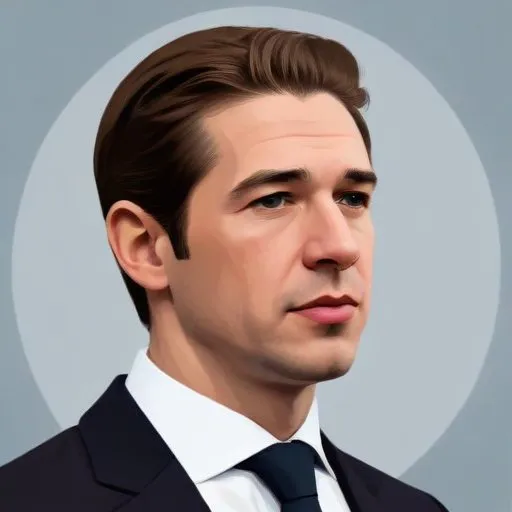
Sebastian Kurz: The Young and Ambitious Austrian Statesman
The Rise to Power
Sebastian Kurz, born on August 27, 1986, is an Austrian politician who made history by becoming the world's youngest head of government at the age of 31. Known for his modernizing approach to politics and his strong stance on immigration, Kurz served as the Chancellor of Austria twice, first from December 2017 to May 2019 and again from January 2020 to October 2021.
Early Life and Political Career
Born and raised in Meidling, Vienna, Kurz entered the world of politics at a young age by joining the Young People's Party (JVP) in 2003. He quickly rose through the ranks, becoming the state secretary responsible for socially integrating refugees in 2011. After the 2013 legislative election, Kurz became Austria's foreign minister, a position he held until December 2017.
Leadership and Reform
Kurz's leadership style was characterized by his perceived reformist approach, rhetorical skills, and youth. He campaigned on modernizing the Austrian political and bureaucratic apparatus, as well as addressing social and immigration issues following the European refugee crisis. His landslide victory in the 2017 legislative election was attributed to these qualities.
First Chancellorship and Controversies
During his first chancellorship, Kurz formed a coalition with the far-right Freedom Party of Austria (FPÖ). While he was credited with following through on his campaign pledges, his leadership style was widely criticized as uncooperative and hasty. Several political scandals, culminating with the Ibiza affair in 2019, ultimately led to the downfall of the ÖVP-FPÖ coalition.
Return to Power and Coalition with the Greens
Following the 2019 snap election, Kurz returned to power and formed a coalition with the environmentalist Green Party. This unexpected alliance marked a significant shift in Austrian politics, with Kurz committing to addressing climate change and environmental issues.
Conviction and Legacy
In February 2024, Kurz received an eight-month suspended sentence after being convicted of perjury by a court in Vienna. This conviction has cast a shadow over his legacy, with some critics arguing that it undermines his credibility as a statesman. Nevertheless, Kurz's impact on Austrian politics and his commitment to reform remain undeniable.
Trivia and Fun Facts
- Kurz was the youngest foreign minister in the European Union when he assumed the office in 2013.
- He was the first Chancellor of Austria to be born after World War II.
- Kurz is fluent in English, French, and Spanish, in addition to his native German.
Influence on Modern Society
Sebastian Kurz's rise to power and his commitment to reform have left an indelible mark on Austrian politics and society. His leadership style, though controversial, has inspired a new generation of politicians and has forced a reevaluation of the role of government in addressing social and environmental issues.
FAQ
What was Sebastian Kurzs role in Austrian politics?
Sebastian Kurz served as the 25th Chancellor of Austria from 2017 to 2019, leading the Austrian Peoples Party (ÖVP) and forming a coalition government with the Freedom Party of Austria (FPÖ).
What was Sebastian Kurzs stance on EU migration policies?
Sebastian Kurz was a strong advocate for stricter EU migration policies, often taking a hardline stance on border control and asylum seeker integration.
What was Sebastian Kurzs approach to Austrian economy?
Sebastian Kurzs approach to the Austrian economy focused on reducing bureaucracy, cutting taxes, and promoting entrepreneurship and innovation.
What was the controversy surrounding Sebastian Kurzs government?
Sebastian Kurzs government was embroiled in controversy surrounding the Ibiza affair, which led to the collapse of his coalition government and fresh elections in 2019.
What is Sebastian Kurz doing now?
After leaving office, Sebastian Kurz has remained active in Austrian politics, serving as the leader of the ÖVP and critiquing the policies of the current government.