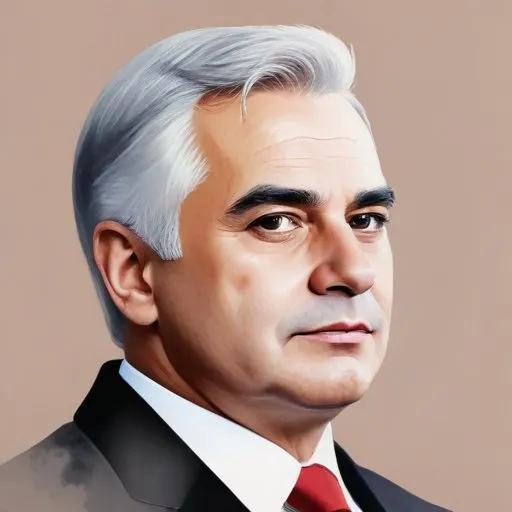
Werner Faymann: The Austrian Chancellor Who Shaped the Country's Political Landscape
A Visionary Leader and Champion of Social Democracy
Werner Faymann is a name synonymous with Austrian politics, having served as the Chancellor of Austria and chairman of the Social Democratic Party of Austria (SPÖ) from 2008 to 2016. As a champion of social democracy, Faymann's political career spanned over three decades, leaving an indelible mark on the country's political landscape.
Early Life and Education
Born on May 4, 1960, in Vienna, Austria, Faymann's interest in politics was sparked at a young age. He attended grammar school in Vienna and later enrolled at the University of Vienna, where he studied jurisprudence, political science, and history of art.
A Rise to Prominence
Faymann's political career began in 1981 when he became the provincial chairman of the Socialist Youth Vienna (Sozialistische Jugend Wien). He later worked as a consultant to the Zentralsparkasse (now part of Bank Austria) from 1985 to 1988, a period that saw him develop close ties with the municipal government dominated by the Social Democrats.
A Commitment to Public Service
Faymann's dedication to public service led him to become the director and provincial chairman of the Viennese Tenants' counselling. He soon became a member of the Viennese state parliament and municipal council, where he held various positions concerning housing construction and urban renewal.
Minister of Transport and the Road to Chancellorship
In 2007, Faymann was appointed Minister for Transport, Innovation, and Technology in the Cabinet of Chancellor Alfred Gusenbauer. As coalition coordinator, he played a crucial role in shaping the country's transport policy. Faymann's meteoric rise continued as he succeeded Gusenbauer as chairman of the Social Democratic Party of Austria (SPÖ) in 2008, paving the way for his eventual appointment as Chancellor of Austria.
Leadership and Legacy
During his tenure as Chancellor, Faymann oversaw significant reforms in education, healthcare, and labor policy. His leadership was marked by a commitment to social democracy, and he played a key role in shaping the European Union's economic policy. Faymann's resignation in 2016, following internal party criticism, marked the end of an era in Austrian politics.
Personal Life and Milestones
Faymann is a devout Roman Catholic and has been married twice, with two children. Despite his busy political schedule, he has always made time for his family and has been known to prioritize his personal relationships.
Philosophical Contributions and Beliefs
Throughout his political career, Faymann has been driven by a strong sense of social justice and a commitment to the principles of social democracy. He has been an ardent advocate for workers' rights, education, and healthcare reform, earning him the respect of his peers and the admiration of the Austrian people.
Controversies and Public Perception
Faymann's leadership was not without controversy, with critics accusing him of being too closely tied to the party's old guard. His resignation in 2016 was met with both relief and sadness, as many acknowledged his dedication to the country but questioned his ability to adapt to changing political landscapes.
Historical Context and Legacy
Werner Faymann's legacy is one of service, commitment, and vision. As a champion of social democracy, he has left an indelible mark on Austrian politics, shaping the country's political landscape for generations to come. His contributions will be remembered as a testament to the power of dedication and hard work.
Trivia and Fun Facts
- Faymann is known for his charismatic personality and has been described as a skilled communicator.
- He has been a vocal advocate for environmental protection and has played a key role in shaping Austria's climate policy.
- Faymann is a strong supporter of the European Union and has been instrumental in shaping the EU's economic policy.
Impact on Modern Society
Werner Faymann's legacy extends beyond the realm of politics. His commitment to social democracy has inspired a generation of young Austrians, while his advocacy for workers' rights, education, and healthcare reform has had a lasting impact on Austrian society.
FAQ
What was Werner Faymanns role in Austrian politics?
Werner Faymann was an Austrian politician who served as the 28th Chancellor of Austria from 2008 to 2016, leading a Social Democratic Party (SPÖ) government and implementing key reforms in areas such as education and healthcare.
What policies did Werner Faymann implement as Chancellor?
Werner Faymanns government introduced measures to increase the minimum wage, reduce bureaucracy, and modernize the education system, while also promoting renewable energy and sustainable development.
What was Werner Faymanns stance on European integration?
Werner Faymann was a strong advocate for European integration and played a key role in shaping Austrias EU policy, supporting closer economic and political cooperation within the European Union.
Has Werner Faymann held any other notable roles?
Werner Faymann served as the leader of the Social Democratic Party of Austria from 2008 to 2016, and previously held various ministerial positions, including Federal Minister for Education, Science and Culture.
What is Werner Faymanns current role?
After stepping down as Chancellor, Werner Faymann became the President of the Austrian Federal Economic Chamber, where he continues to promote business development and economic growth in Austria.