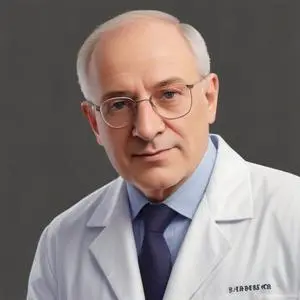
Selman Waksman: A Pioneer in Antibiotic Research
The Discovery of Streptomycin and Beyond
Selman Waksman is renowned for his groundbreaking research into the decomposition of organisms that live in soil, which led to the discovery of streptomycin and several other antibiotics. As a Nobel Prize laureate, biochemist, and microbiologist, Waksman's work has had a profound impact on the field of medicine, revolutionizing the treatment of bacterial infections.
Early Life and Education
Waksman was born on July 22, 1888, in Nova Pryluka, Kyiv Governorate, Russian Empire (now Vinnytsia Oblast, Ukraine), to Jewish parents, Fradia London and Jacob Waksman. He immigrated to the United States in 1910 and became a naturalized American citizen six years later. Waksman attended Rutgers College (now Rutgers University), graduating in 1915 with a Bachelor of Science in agriculture.
Career Highlights and Major Works
Waksman's academic career spanned four decades, during which he served as a professor of biochemistry and microbiology at Rutgers University. His research focused on the decomposition of soil microorganisms, leading to the discovery of several antibiotics, including:
- Streptomycin: the first effective treatment for tuberculosis
- Actinomycin: used to treat certain types of cancer
- Neomycin: an antibiotic used to treat bacterial infections
- Clavacin: an antibiotic with antibacterial properties
Waksman's pioneering work in antibiotic research introduced the modern sense of the word "antibiotic" and established procedures that have led to the development of many other antibiotics.
The Waksman Institute of Microbiology
The proceeds earned from the licensing of Waksman's patents funded the establishment of the Waksman Institute of Microbiology, located at the Rutgers University Busch Campus in Piscataway, New Jersey, USA. The institute continues to foster research and education in microbiology, perpetuating Waksman's legacy.
Awards and Honors
Waksman's contributions to science were recognized with numerous awards and honors, including:
- 1952 Nobel Prize in Physiology or Medicine
- ACS National Historic Chemical Landmark (2005)
Controversies and Public Perception
Waksman's legacy was not without controversy. Albert Schatz, one of his Ph.D. students and the discoverer of streptomycin, sued Waksman and his foundation for minimizing Schatz's role in the discovery.
Philosophical Contributions and Beliefs
Waksman's work embodied a deep understanding of the interconnectedness of life and the importance of scientific inquiry. He believed that the pursuit of scientific knowledge should be driven by a desire to improve human life and alleviate suffering.
Personal Milestones and Key Life Events
Waksman's personal life was marked by significant milestones, including his immigration to the United States and his naturalization as an American citizen. His legacy extends beyond his scientific contributions, inspiring future generations of scientists and researchers.
Influence on Modern Society
Waksman's discovery of streptomycin and other antibiotics has had a profound impact on modern society, revolutionizing the treatment of bacterial infections and saving countless lives. His work has paved the way for continued research and development in the field of antibiotic research.
Historical Context and Legacy
Waksman's contributions to science are a testament to his dedication, perseverance, and groundbreaking research. His legacy continues to inspire and educate, solidifying his place as a pioneer in the field of antibiotic research.
FAQ
What is Selman Waksman known for?
Selman Waksman was a Jewish-American biochemist and microbiologist who made significant contributions to the discovery of antibiotics. He is credited with the discovery of streptomycin, the first antibiotic effective against tuberculosis.
How did Waksmans discovery of streptomycin impact medicine?
Waksmans discovery of streptomycin revolutionized the treatment of tuberculosis, which was previously a deadly disease. His work paved the way for the development of new antibiotics and saved countless lives.
What was Waksmans research focus?
Waksmans research focused on the study of microorganisms and their metabolic processes. He was particularly interested in the production of antibiotics by microorganisms and their potential applications in medicine.
What awards did Waksman receive for his work?
Waksman was awarded the Nobel Prize in Physiology or Medicine in 1952 for his discovery of streptomycin. He also received the Lasker Award in 1946 and the National Medal of Science in 1965.
What was Waksmans academic background?
Waksman earned his Ph.D. in biochemistry from the University of California, Berkeley, and later became a professor of microbiology at Rutgers University, where he conducted his Nobel Prize-winning research.