


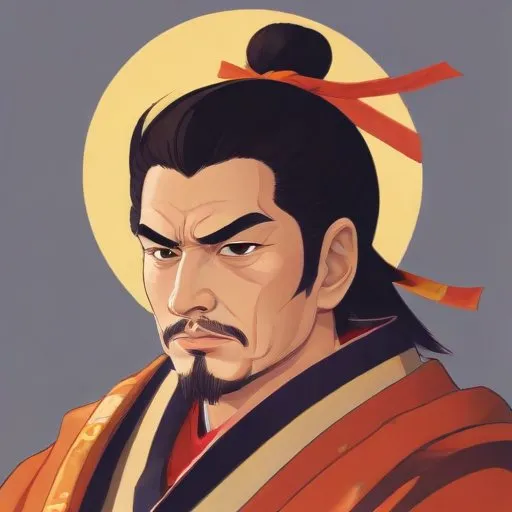
A powerful daimy? of the Sengoku period, known for his military prowess and strategic alliances that shaped Japan's feudal era.
Sengoku Hidehisa, a renowned samurai warrior of the Sengoku and Edo periods, is best known for capturing the legendary outlaw hero Ishikawa Goemon. He was also the head of the Komoro Domain in Shinano Province, leaving an indelible mark on Japanese history.
According to his family records, Hidehisa was the fourth son of the Sait clan, a low-ranking samurai family. He was adopted out to another family at a young age but eventually inherited his family name after his older brothers died of illness.
During the Mino Campaign, his clan was destroyed by Oda Nobunaga, and he was captured during the assault. He then became a member of the Oda clan and was ordered to serve under Kinoshita Tōkichirō, eventually serving under Toyotomi Hideyoshi. Hidehisa took part in most of the Oda clan's military actions, slowly but steadily rising through the ranks.
Hidehisa is described as a brave and skillful warrior in his early days with Nobunaga. He was often at the front lines of the Oda clan's military operations and inherited some of Hideyoshi's charisma, allowing him to avoid getting himself killed despite ending up in precarious situations several times.
Hidehisa's capture of Ishikawa Goemon, a legendary outlaw hero, cemented his place in Japanese history. His military campaigns and battles, although marked by some defeats, demonstrate his bravery and skill as a samurai warrior. His rise to prominence and eventual leadership as the head of the Komoro Domain in Shinano Province showcase his ability to adapt and thrive in a tumultuous period of Japanese history.
Although there are no recorded quotes or memorable sayings attributed to Sengoku Hidehisa, his actions and achievements speak to his bravery, skill, and charisma as a samurai warrior.
In comparison to his contemporaries, Hidehisa's unique blend of bravery, skill, and charisma set him apart as a formidable samurai warrior. His ability to navigate the complex web of alliances and rivalries during the Sengoku period, as well as his eventual rise to leadership, demonstrate his exceptional abilities as a military commander and leader.
In conclusion, Sengoku Hidehisa's capture of Ishikawa Goemon and his military campaigns and battles have left an enduring legacy in Japanese history. His bravery, skill, and charisma as a samurai warrior continue to inspire and fascinate to this day.
Born in 1530
A powerful feudal lord who unified Japan's Echigo Province and fought several battles, earning a legendary reputation for bravery and martial prowess.
Born in 1521
A powerful daimy? who unified Japan's Takeda clan and expanded its territories through military campaigns, known for his exceptional leadership and innovative tactics.
Born in 1543
Unified Japan's warring states, establishing a dynasty that ruled for over 250 years, and is revered as a brilliant military strategist and statesman.
