


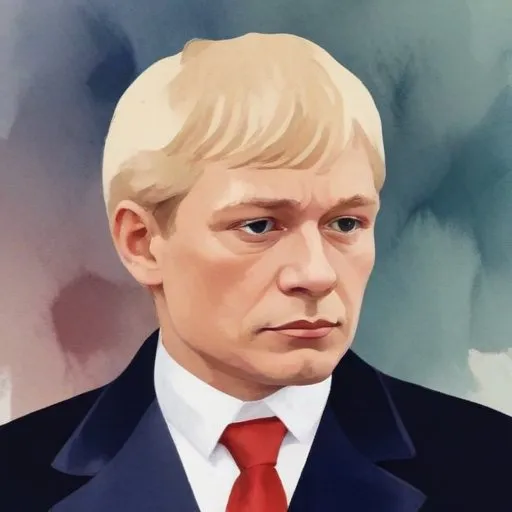
A renowned Russian poet, known for his lyrical and patriotic works that often romanticized rural Russia, and his tumultuous life that ended in tragedy at a young age.
Sergei Yesenin, one of the most beloved and celebrated Russian poets of the 20th century, is known for his evocative and nostalgic portrayals of rural life, which continue to resonate with readers to this day. With a unique voice that blended traditional folk influences with modernist experimentation, Yesenin's poetry has left an indelible mark on Russian literature.
Born on October 3, 1895, in the village of Konstantinovo, Ryazan Governorate, Russian Empire (now Rybnovsky District, Ryazan Oblast), Yesenin's early life was shaped by his peasant family and maternal grandparents, who raised him in the nearby village of Matovo. It was his uncles who first instilled in him a love of nature, teaching him horseriding and swimming, and taking him on hunting trips.
At the age of five, Yesenin began to read, and by nine, he was writing his own poetry, inspired by the traditional chastushkas and folklore of his childhood. His grandmother, a devoutly religious woman, would take him on visits to monasteries, further enriching his cultural heritage. This unique blend of rural traditions and modernist sensibilities would later define his poetic style.
In 1916, Yesenin published his debut collection, Radunitsa, which was met with both critical acclaim and controversy. His poetic style, which blended folk influences with modernist experimentation, was seen as revolutionary by some and scandalous by others. Throughout his career, Yesenin continued to push boundaries, experimenting with form, language, and themes, earning him both admiration and censure.
Yesenin's personal life was marked by tumultuous relationships, including his marriage to the famous actress Zinaida Raikh, and struggles with depression and addiction. Tragically, on December 28, 1925, at the age of 30, Yesenin took his own life, leaving behind a legacy of poetry that continues to captivate readers to this day.
Yesenin's poetry is characterized by a deep sense of nostalgia for the rural life of his childhood, as well as a profound critique of urbanization and industrialization. Through his work, he conveyed a sense of the beauty and tragedy of the human condition, often expressing a desire to return to a simpler, more authentic way of life.
Yesenin's poetry has had a profound impact on modern Russian literature and culture. His unique style and themes have influenced generations of poets, writers, and artists, and continue to be studied and celebrated around the world. His legacy extends beyond literature, too, with his poetry inspiring music, art, and film.
Sergei Yesenin's life and work are deeply intertwined with the tumultuous history of early 20th-century Russia. His poetry reflects the cultural, social, and political upheavals of the time, and his legacy continues to be felt in contemporary Russian literature and culture.
In conclusion, Sergei Yesenin's poetry is a testament to the power of art to capture the human experience. Through his unique voice and vision, he has left an indelible mark on Russian literature, and his work continues to inspire and captivate readers around the world.
Born in 1893
A Russian avant-garde artist who revolutionized poetry and theater with his bold, futuristic style and passionate performances. He's most famous for his vibrant, propaganda-inspired posters and poems that captured the spirit of the Russian Revolution.
Born in 1880
A Russian literary giant, known for pioneering the avant-garde movement in literature, blending poetry and prose to create innovative, symbolic works that explored the human experience.
Born in 1889
A renowned poet and literary icon of the Soviet era, celebrated for her poignant and evocative works that captured the essence of love, loss, and resilience amidst war and oppression.
Born in 1890
A Russian literary giant, renowned for his poetic and novelistic masterpieces, including the epic "Doctor Zhivago", which captured the essence of Soviet Russia. His works are a testament to the power of literature in shaping cultural identity.
Born in 1892
A Russian poet and author who poured her heart into lyrical verses, exploring themes of love, nature, and the human condition. Her works are a testament to her intense emotional depth and poetic genius.
Born in 1880
A leading figure of the Russian Symbolist movement, known for his lyrical and mystical poetry that explored the human condition and the search for meaning. His works are considered a bridge between 19th-century Romanticism and 20th-century Modernism.
Born in 1886
A leading figure of the Russian Silver Age, this poet and critic was a key founder of the Acmeist movement, emphasizing clarity and craftsmanship in poetry.
Born in 1870
A Russian literary master, celebrated for his poignant and evocative short stories that captured the essence of rural Russia, earning him the Nobel Prize in Literature in 1933.
