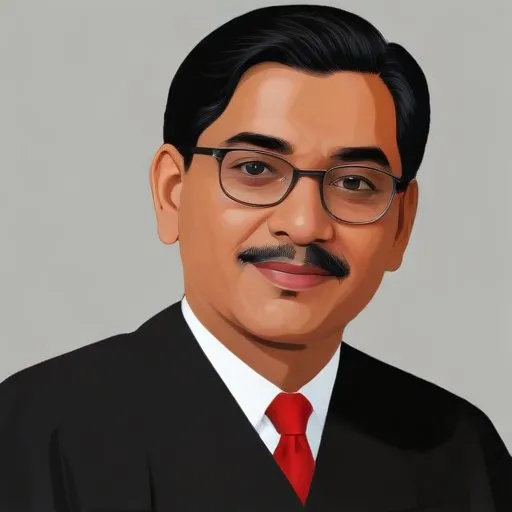
Shahabuddin Ahmed: A Pillar of Bangladeshi Politics and Justice
The President and Chief Justice of Bangladesh
Shahabuddin Ahmed is renowned for his illustrious career, which spanned several decades, as the President of Bangladesh from 1996 to 2001 and the Chief Justice of Bangladesh from 1990 to 1995. His extraordinary journey is a testament to his unwavering dedication to the country's development and his unshakeable commitment to upholding the principles of justice.
Early Life and Education
Born on February 1, 1930, in Pamal village, Kendua, Netrokona, Ahmed was blessed with a philanthropic upbringing, courtesy of his father, Talukdar Resat Ahmed Bhuiyan. After completing his matriculation and intermediate examinations, he enrolled at the University of Dhaka in 1948, earning a Bachelor's degree in Economics in 1951 and a Master's degree in International Relations in 1952 as a resident student of Fazlul Haq Hall. His educational pursuits further took him to the University of Oxford, where he attended a special course in public administration.
Career Highlights
Ahmed's professional journey began in 1954 when he joined the Civil Service of Pakistan. After completing his training at the Lahore Civil Service Academy and the University of Oxford, he served as a subdivisional officer in Gopalganj and Natore, followed by a stint as a deputy commissioner of Faridpur. In 1960, he transitioned to the judicial branch, where he worked as an additional district and session judge in Dhaka and Barisal, and later as a district and sessions judge in Comilla and Chittagong. Ahmed's ascent continued when he was appointed as a registrar of the High Court of East Pakistan in Dhaka in 1967.
Apex of Judicial Career
A significant milestone in Ahmed's career came on January 20, 1972, when he was elevated to the bench of the High Court. He later acted on deputation at the Labour Appellate Tribunal for two years (1973-1974). His dedication and expertise earned him a position as a judge of the Appellate Division of the Supreme Court of Bangladesh on February 7, 1980, and he was confirmed in this office on April 15, 1981.
Chairmanship of Key Commissions
Ahmed's leadership skills were evident in his chairmanship of the Commission of Inquiry established under the Commission of Inquiry Act, which investigated police firing on students in mid-February 1983. He also headed the National Pay Commission in 1984, submitting a report on the matter.
Presidential Tenure
Ahmed's crowning achievement came when he assumed the office of the President of Bangladesh in 1996, serving until 2001. During his tenure, he played a significant role in maintaining the country's stability and fostering economic growth.
Legacy and Impact
Shahabuddin Ahmed's legacy is a testament to his unwavering commitment to the development of Bangladesh. His contributions to the country's political and judicial landscape are undeniable, and his leadership has inspired generations of Bangladeshi citizens. As a beacon of hope and integrity, Ahmed's life serves as a shining example of dedication, perseverance, and a steadfast commitment to the greater good.
Personal Milestones
- Received a special course in public administration at the University of Oxford
- Served as the acting President of Bangladesh from 1990 to 1991
- Heeded the caretaker government and oversaw a general election in February 1991
Historical Context
Shahabuddin Ahmed's life and career are inextricably linked to the tumultuous history of Bangladesh. His rise to prominence coincided with the country's struggle for independence and the subsequent formation of a democratic government. Ahmed's commitment to justice and democracy has been instrumental in shaping the nation's destiny.
Influence on Modern Society
Ahmed's influence extends beyond the realm of politics and justice. His life's work has had a profound impact on Bangladesh's social fabric, inspiring future generations of leaders and citizens alike. His dedication to public service has fostered a culture of accountability and transparency, which continues to shape the country's development.
Philosophical Contributions and Beliefs
Ahmed's life's work is guided by his steadfast commitment to the principles of justice, equality, and democracy. His leadership has been marked by an unwavering dedication to upholding the rule of law, protecting human rights, and promoting social justice.
Conclusion
Shahabuddin Ahmed's remarkable journey is a testament to his indomitable spirit and unwavering commitment to the people of Bangladesh. As a president, a chief justice, and a champion of justice, Ahmed's legacy continues to inspire and shape the nation's destiny. His life serves as a beacon of hope, reminding generations to come of the importance of public service, integrity, and dedication to the greater good.