


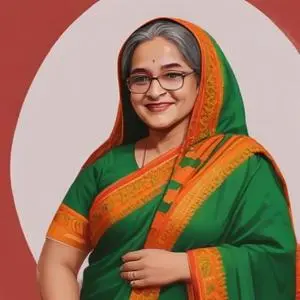
The 10th Prime Minister of Bangladesh, a prominent leader who has been instrumental in shaping the country's politics and economy, particularly in the areas of women's empowerment and poverty reduction.
Sheikh Hasina, the current Prime Minister of Bangladesh, is known for her unwavering dedication to her country and its people. With a combined total of over 20 years in office, she is not only the longest-serving Prime Minister of Bangladesh but also the longest-serving female head of government in the world.
Sheikh Hasina was born on September 28, 1947, to Sheikh Mujibur Rahman, the founding father and first President of Bangladesh. Her early life was marked by political turmoil, with her father's assassination in 1975, an event that would shape her future in politics.
Hasina's entry into politics was marked by her leadership of the Awami League, a party founded by her father. She played a crucial role in the movement against the autocratic regime of Hussain Muhammad Ershad, eventually leading to his downfall in 1990.
Hasina's first term as Prime Minister was marked by economic growth, reduction in poverty, and a significant improvement in the country's human development index. However, her tenure was also marred by political turmoil, violent demonstrations, and allegations of electoral dishonesty.
Hasina's second term was marked by her government's response to the 2014 Rana Plaza collapse, one of the deadliest industrial disasters in history. Her government's efforts to improve labor laws and working conditions earned international recognition.
In 2017, Hasina's government opened its borders to nearly a million Rohingya refugees fleeing genocide in Myanmar. Her government's efforts to provide aid and assistance to the refugees earned international praise and recognition.
Hasina's government has faced criticisms for its handling of opposition parties, human rights, and press freedom. Allegations of electoral fraud and voter suppression have marred her government's credibility.
Sheikh Hasina's legacy is complex and multifaceted. While her government has made significant strides in economic development and human rights, her authoritarian style of governance and suppression of opposition parties have raised concerns.
As the longest-serving female head of government in the world, Hasina's legacy will be shaped by her ability to balance her commitment to her country's development with the need to protect democratic values and human rights.
81 Years Old
The first female Prime Minister of Bangladesh, serving from 1991 to 1996, known for her efforts to promote democracy and economic development in the country.
97 Years Old
The 19th President of Bangladesh, serving from 2009 to 2013, known for his role in the country's politics and his efforts to promote democracy and development. He was a key figure in the country's transition to democracy.
96 Years Old
A Bangladeshi general and politician who served as the 10th President of Bangladesh, known for his military-backed rule and implementation of various economic and infrastructure development projects. He played a significant role in shaping Bangladesh's politics and economy.
