


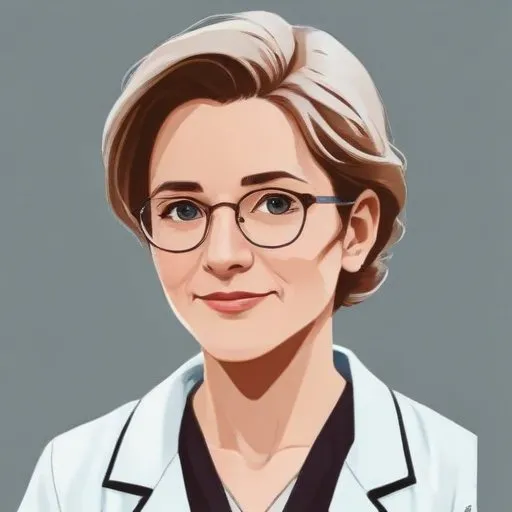
A British doctor who wrote about her experiences as a prisoner of conscience in Chile, and later penned novels and non-fiction books, exploring themes of faith, medicine, and social justice.
Sheila Cassidy is a British doctor, writer, and human rights activist, renowned for her courageous stand against human rights abuses in Chile during the 1970s and her pioneering work in the hospice movement.
In 1975, Cassidy's life took a dramatic turn when she was arrested by the Chilean secret police, DINA, for providing medical care to Nelson Gutirrez, a political opponent of the Pinochet regime. During her detention, she was subjected to severe torture, including being forced to endure the notorious "parrilla" treatment, a horrific form of electric shock therapy.
After her release from custody, Cassidy returned to the UK and wrote about her experiences in her book, Audacity to Believe. Her haunting account of her torture and imprisonment brought international attention to the atrocities committed by the Pinochet regime and galvanized the human rights movement.
Cassidy's commitment to compassionate care led her to become a pioneer in the hospice movement. She worked tirelessly to improve end-of-life care, founding the Hospice of St. Francis in Berkhamsted, Hertfordshire, and advocating for dignified and compassionate treatment of the terminally ill.
Throughout her career, Cassidy has demonstrated an unwavering dedication to her patients and a steadfast commitment to upholding human rights. Her work has inspired countless healthcare professionals and human rights advocates around the world.
Cassidy was born on August 18, 1937, in Cranwell, Lincolnshire, to Air Vice-Marshal John Reginald Cassidy and Barbara Margaret Cassidy. She grew up in Sydney, Australia, and attended the University of Sydney, where she began her medical studies. She later completed her studies at Somerville College, Oxford, in 1963.
Sheila Cassidy's courage in the face of adversity, her dedication to compassionate care, and her unwavering commitment to human rights have left an indelible mark on the world. Her legacy continues to inspire generations of healthcare professionals, human rights activists, and individuals around the world.
Born in 1922
Performed the world's first human-to-human heart transplant, revolutionizing cardiac surgery and paving the way for modern organ transplants.
Born in 1908
Pioneering cardiovascular surgeon and educator who developed numerous surgical procedures and medical devices, revolutionizing the field of cardiovascular medicine.
Born in 1920
Performed the first human heart transplant in the United States and developed numerous cardiothoracic surgical techniques. Known for his pioneering work in cardiac surgery.
Born in 1919
Performed the first successful human kidney transplant, paving the way for modern organ transplantation.
Born in 1911
Pioneering transplant surgeon who performed the first kidney transplant in the UK and made significant contributions to organ transplantation and immunology.
Born in 1873
A pioneering surgeon and biologist who developed new surgical techniques and discovered ways to keep organs alive outside the body, earning a Nobel Prize in 1912.
