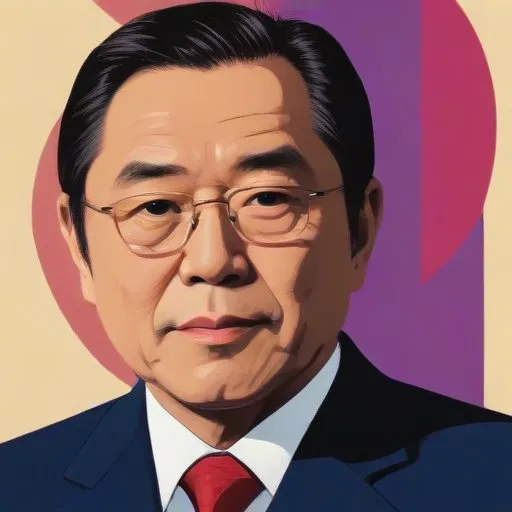
Shigenori Tg: The Enigmatic Diplomat of Imperial Japan
A Minister of Contrasts
Shigenori Tg, a prominent figure in Japan's diplomatic circle during World War II, served as the Minister of Foreign Affairs not once, but twice - at the dawn and dusk of theAxis-Allied conflict. This peculiar coincidence has forever etched his name in the annals of Japanese history, casting a complex shadow over his otherwise storied career.
Early Life and Education
Born on December 10, 1882, in Hioki District, Kagoshima, Tg's family roots traced back to Korean immigrants who settled in Kyushu following
Toyotomi Hideyoshi's campaign against Korea in the late 16th century. His father adopted the surname Tg in 1886, replacing their original Korean surname, Boku or Park. Tg graduated from the Literature Department of Tokyo Imperial University in 1904 and later honed his German language skills at Meiji University. He joined the Ministry of Foreign Affairs in 1912, overcoming four previous rejections.
Diplomatic Career: A Life of Service
Tg's diplomatic journey began in 1913 at the Japanese consulate in Mukden, Manchuria. He then served at the Japanese embassy in Bern, Switzerland, from 1916. Following Japan's ratification of the Treaty of Versailles in 1919, Tg was dispatched to Weimar Germany to reestablish diplomatic relations. This marked the beginning of his extensive involvement in international diplomacy.
- In 1921, Tg returned to Japan and was assigned to the Bureau of North American Affairs.
- In 1926, he became the secretary to the Japanese embassy in the United States, relocating to Washington D.C.
- After a brief stint in Manchuria, Tg was sent back to Germany in 1929.
A Career Marked by Crisis and Controversy
Tg's tenure was not without its fair share of challenges. He headed the Japanese delegation to the 1932 World Disarmament Conference in Geneva, which ultimately proved unsuccessful. In 1933, Tg assumed the post of director of the Bureau of North American Affairs, but a severe automobile accident left him hospitalized for over a month. Despite these setbacks, he continued to play a pivotal role in Japan's foreign policy.
Minister of Colonial Affairs and Greater East Asia
In 1941, Tg was appointed Minister of Colonial Affairs, a position he held until 1943. He briefly reassumed this role, now renamed Minister for Greater East Asia, in 1945. This dual tenure has sparked controversy, with some critics accusing him of complicity in Japan's imperialist ambitions.
Legacy and Impact
Shigenori Tg's life and career are a testament to the complexities of Japan's tumultuous 20th century. While his diplomatic efforts were often marked by controversy, his dedication to his craft and country remain undeniable. As we reflect on his legacy, we are reminded of the importance of nuance in understanding the intricacies of human experience.
Despite the complexities of his legacy, Tg's life serves as a poignant reminder of the intricate dance between diplomacy, politics, and power.
A Life of Service: Milestones and Key Events
- 1882: Born in Hioki District, Kagoshima, Japan
- 1904: Graduated from Tokyo Imperial University
- 1912: Joined the Ministry of Foreign Affairs
- 1913: First overseas posting to Mukden, Manchuria
- 1916: Assigned to the Japanese embassy in Bern, Switzerland
- 1919: Sent on a diplomatic mission to Weimar Germany
- 1932: Headed the Japanese delegation to the World Disarmament Conference in Geneva
- 1941: Appointed Minister of Colonial Affairs
- 1945: Reassumed the post of Minister for Greater East Asia
- 1950: Passed away on July 23
FAQ
What was Shigenori Tōgōs role in Japanese politics?
Shigenori Tōgō was a prominent Japanese politician who served as the 37th Minister for Foreign Affairs of Japan. He played a key role in shaping Japans foreign policy during the 1940s and 1950s.
What were Shigenori Tōgōs views on Japanese foreign policy?
Shigenori Tōgō was a strong advocate of Japanese expansionism and believed in the importance of Japan playing a major role in international affairs. He advocated for a more assertive Japanese foreign policy, including the development of military alliances and economic partnerships.
What was Shigenori Tōgōs relationship with General Hideki Tojo?
Shigenori Tōgō worked closely with General Hideki Tojo, who served as Prime Minister of Japan during World War II. Tōgō was a key advisor to Tojo and played an important role in shaping Japans war strategy.
What were the consequences of Shigenori Tōgōs foreign policy?
Shigenori Tōgōs foreign policy contributed to Japans involvement in World War II, which had devastating consequences for Japan and the world. His advocacy for Japanese expansionism and military aggression led to widespread destruction and human suffering.
What is Shigenori Tōgōs legacy in modern Japan?
Shigenori Tōgōs legacy in modern Japan is that of a controversial figure who played a key role in shaping Japans foreign policy during a turbulent period in Japanese history. His views on Japanese expansionism and military aggression continue to be debated and contested today.