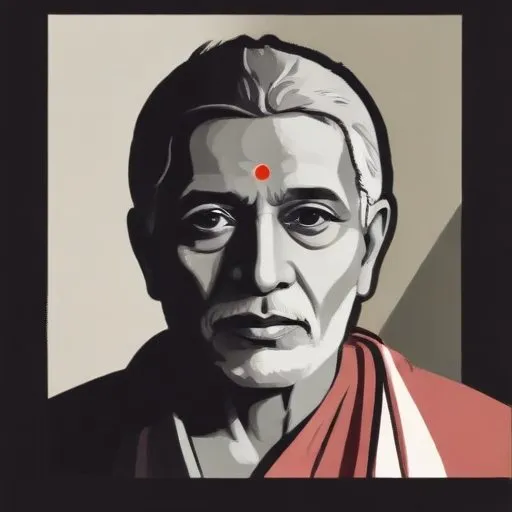
Shivrampant Damle: The Visionary Educationist Behind Maharashtra Mandal
A Legacy in Education and Social Reform
Shivrampant Damle, a renowned educationist and social reformer, is best known for founding the Maharashtra Mandal in 1924, an institution that would go on to play a pivotal role in shaping the educational landscape of India. Throughout his illustrious career, Damle dedicated himself to promoting education, social reform, and women's empowerment, leaving an indelible mark on modern Indian society.
Early Life and Education
Born on April 14, 1900, in Maval, Damle hailed from the esteemed Chitpavan Brahmin family of the Damle gharana of Kivale. He was the youngest of eight siblings, with six brothers and one sister. Damle's educational journey began at the Nutan Marathi Vidyalaya in Pune, followed by a Bachelor of Arts degree from Sir Parshurambhau College.
The Maharashtra Mandal: A Beacon of Education and Social Reform
Damle's most notable achievement was the founding of the Maharashtra Mandal in 1924, where he served as the first secretary and later as the governor from 1930 to 1948. The Mandal was a pioneering institution that aimed to promote education, social reform, and women's empowerment in Maharashtra. During his tenure, Damle worked tirelessly to establish schools, colleges, and educational institutions, making education accessible to the masses.
A Career Marked by Philanthropy and Public Service
Damle's commitment to public service was evident in his involvement with the British Indian Army during World War II, where he was posted in Belgaum from 1942 to 1948. After the war, he returned to the Maharashtra Mandal, serving as its governor from 1951 to 1975. During this period, he founded several schools, including the Seth Dagduram Kataria High School in 1963, the Indirabai Karandikar Primary School in 1964, and schools for primary education in Marathi in 1968 and 1970.
Personal Life and Legacy
Damle's personal life was marked by tragedy, including the loss of his wife, Kamlabai Bapat, in 1968. The couple had two children, Ramesh and Sunanda, with Ramesh succeeding Damle as the governor of the Maharashtra Mandal after his passing on July 25, 1977.
Lasting Impact on Education and Society
Shivrampant Damle's legacy extends far beyond his remarkable achievements. His tireless efforts to promote education, social reform, and women's empowerment have inspired countless individuals and continue to shape the fabric of Indian society. Damle's life's work serves as a testament to the power of dedication, perseverance, and visionary leadership.
Personal Milestones and Key Life Events
- 1900: Born on April 14 in Maval
- 1924: Founded the Maharashtra Mandal
- 1930-1948: Served as the governor of the Maharashtra Mandal
- 1942-1948: Served in the British Indian Army during World War II
- 1951-1975: Served as the governor of the Maharashtra Mandal
- 1963: Founded the Seth Dagduram Kataria High School
- 1964: Founded the Indirabai Karandikar Primary School
- 1968 and 1970: Founded schools for primary education in Marathi
- 1977: Founded the Chandrashekhar Agashe College of Physical Education
- 1977: Passed away on July 25
Remembering Shivrampant Damle
Shivrampant Damle's remarkable life serves as a shining example of dedication, perseverance, and visionary leadership. His unwavering commitment to education, social reform, and women's empowerment has left an indelible mark on Indian society, inspiring future generations to strive for a brighter tomorrow.
FAQ
What were Shivrampant Damles contributions to Indian education?
Shivrampant Damle was a renowned Indian educationist who promoted innovative teaching methods, advocated for womens education, and established several educational institutions in India.
How did Shivrampant Damles work impact Indian society?
Shivrampant Damles work had a profound impact on Indian society, empowering women, promoting social reform, and shaping the countrys educational landscape.
What was Shivrampant Damles approach to education?
Shivrampant Damle believed in a holistic approach to education, emphasizing character development, critical thinking, and social responsibility, in addition to academic achievement.
Did Shivrampant Damle receive any awards or recognition?
Yes, Shivrampant Damle received several awards and honors for his contributions to education, including the prestigious Padma Shri award.
Is Shivrampant Damle remembered as a pioneering educationist?
Yes, Shivrampant Damle is revered as a pioneering educationist who dedicated his life to improving Indian education and promoting social progress.