


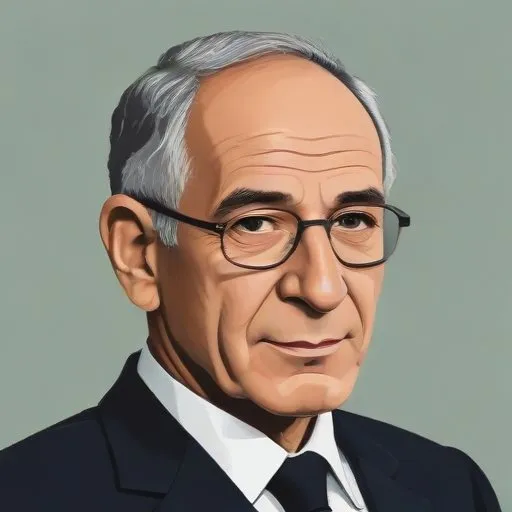
Developed innovative agricultural practices and taught generations of students, leaving a lasting impact on Israeli agriculture.
Shmuel Horowitz, a renowned Israeli agronomist, is celebrated for his groundbreaking contributions to the development of Israeli agriculture, earning him the prestigious Israel Prize in 1957. As a pioneer in his field, Horowitz dedicated his life to improving agricultural practices, fostering sustainable growth, and shaping the country's agricultural landscape.
Born on September 12, 1901, in Minsk, Russian Empire (now Belarus), Horowitz grew up in a world where antisemitism and oppression were rampant. Tragedy struck his family in 1917, when his sister was brutally murdered by an antisemitic gang in Ukraine. This traumatic event would later influence his life's work, as he sought to create a better future for his people.
Horowitz's passion for agriculture took root during his studies in Moscow, where he was drawn to the works of poet Saul Tchernichovsky, with whom he shared accommodation. This friendship would have a lasting impact on his perspective on the world and its interconnectedness.
In 1924, Horowitz's Zionist activism led to his arrest, and after spending several months in prison, he emigrated to Mandate Palestine (now Israel) in 1925. There, he became an integral part of the Kibbutz Gesher community, where he honed his skills as an agronomist.
Horowitz's determination to contribute to the growth of Israeli agriculture led him to Germany, where he studied at the prestigious College of Agriculture in Berlin. This experience would shape his understanding of agricultural practices and inspire innovative solutions for the challenges facing Israel's burgeoning agricultural sector.
From 1933 to 1954, Horowitz worked tirelessly at the Agricultural Research Station of the Jewish Agency in Rehovot, playing a vital role in its establishment. His groundbreaking research and contributions to agricultural development earned him the respect and admiration of his peers.
In 1953, Horowitz became a professor at the Hebrew University of Jerusalem, where he continued to inspire future generations of agronomists. His leadership and vision led to his appointment as Dean of the Faculty of Agriculture in 1964.
In recognition of his outstanding contributions to Israeli agriculture, Horowitz was awarded the Israel Prize in 1957. This esteemed honor solidified his position as a trailblazer in his field, and his work continues to inspire future generations of agronomists.
Shmuel Horowitz's legacy extends beyond his remarkable achievements in agriculture. He remains an icon of resilience, perseverance, and dedication to the Zionist dream. His life's work serves as a testament to the power of human ingenuity and the importance of sustainable growth.
Today, Horowitz's pioneering spirit continues to inspire generations of Israelis, Jews, and people worldwide, reminding us of the importance of nurturing the land and its inhabitants for a brighter, more sustainable future.
98 Years Old
The 11th Prime Minister of Israel, a military leader who played a key role in shaping the country's history, known for his controversial yet influential decisions that continue to impact the Middle East.
81 Years Old
The 12th Prime Minister of Israel, a lawyer-turned-politician who played a key role in shaping the country's politics and economy, particularly during the 2006 Lebanon War. He's also known for his corruption charges and subsequent imprisonment.
77 Years Old
The 9th Prime Minister of Israel, a dominant figure in Israeli politics, known for his strong leadership and controversial policies. He has been a central figure in shaping Israel's foreign policy and security strategy.
Born in 1923
A Nobel Peace Prize winner who served as Israel's President and Prime Minister, known for his efforts to bring peace to the Middle East through diplomatic negotiations.
Born in 1922
A renowned Israeli leader and peacemaker who played a crucial role in shaping the country's history and was awarded the Nobel Prize for his efforts towards peace in the Middle East.
Born in 1913
A Belarusian-born Israeli politician who served as Prime Minister of Israel and was awarded the Nobel Peace Prize for his efforts to establish a peace treaty with Egypt. He's known for his strong leadership and commitment to Israeli security.
Born in 1915
The 7th Prime Minister of Israel, serving from 1983 to 1984 and again from 1986 to 1992, known for his hardline stance on Palestinian territories and role in shaping Israel's foreign policy.
Born in 1898
A pioneering female leader who served as Israel's first and only female Prime Minister, known for her strong leadership during times of war and peace. She played a crucial role in shaping Israel's early years and remains an iconic figure in Israeli politics.
