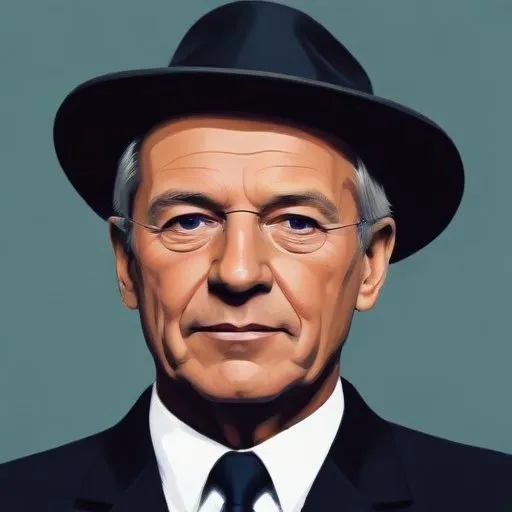
Sicco Mansholt: A Life of Service and Statesmanship
Agricultural Visionary and EU Pioneer
Sicco Mansholt, a Dutch farmer, politician, and diplomat, is renowned for his tireless efforts in shaping the European Union's agricultural policies and serving as the fourth president of the European Commission. Throughout his illustrious career, Mansholt demonstrated unwavering dedication to the development of European integration, earning him a prominent place in the annals of EU history.
Early Life and Resistance
Born on September 13, 1908, in Ulrum, Netherlands, Mansholt grew up in a family of farmers. During World War II, he joined the Dutch resistance against the German occupation, courageously sheltering refugees and contributing to the liberation of his country. This pivotal experience instilled in him a deep sense of solidarity and responsibility, which would later inform his political and diplomatic pursuits.
Political Career and Ministerial Appointments
Following the war, Mansholt was appointed acting Mayor of Wieringermeer in 1945, a position he held until 1945. He then served as Minister of Agriculture, Fisheries, and Food Supplies in the Cabinet Schermerhorn-Drees, a caretaker government tasked with restoring order and conducting elections. This marked the beginning of Mansholt's extensive ministerial career, which spanned over two decades and included multiple appointments in the Cabinets of Drees-Van Schaik, Beel I, and Drees II and III.
EU Commissioner and President
In 1957, Mansholt became the first European Commissioner from the Netherlands, playing a pivotal role in shaping the EU's agricultural policies. His dedication to European integration and his expertise in agricultural matters led to his appointment as the fourth president of the European Commission in 1972, a position he held until 1973.
Legacy and Impact
Mansholt's contributions to European integration and agricultural development have left an indelible mark on the continent. His commitment to reducing agricultural surpluses, promoting rural development, and fostering cooperation among EU member states has had a lasting impact on the European agricultural landscape. As a testament to his vision, the Mansholt Commission (1972-1973) is often credited with laying the groundwork for the EU's Common Agricultural Policy (CAP).
Personal Milestones and Key Life Events
- 1940: Joined the Dutch resistance against German occupation during World War II
- 1945: Appointed acting Mayor of Wieringermeer
- 1945: Minister of Agriculture, Fisheries, and Food Supplies in the Cabinet Schermerhorn-Drees
- 1957: Became the first European Commissioner from the Netherlands
- 1972: Appointed as the fourth president of the European Commission
- 1995: Passed away on June 29, at the age of 86
Philosophical Contributions and Beliefs
Mansholt's political and diplomatic endeavors were guided by his commitment to European integration, social democracy, and agricultural development. His steadfast support for the European project reflects his conviction that cooperation and unity are essential for ensuring peace, prosperity, and stability in the region.
Historical Context and Legacy
Mansholt's life and legacy are inextricably linked to the tumultuous period of European history, marked by the devastation of World War II and the subsequent quest for unity and cooperation. His tireless efforts to promote European integration, agricultural development, and social democracy have left a lasting impact on the continent, cementing his place as a pioneering figure in European politics and diplomacy.
FAQ
What was Sicco Mansholts role in European politics?
Sicco Mansholt was a Dutch farmer and politician who served as the 4th President of the European Commission, playing a key role in shaping European agriculture and economic policies.
How did Sicco Mansholts presidency impact the European Commission?
Mansholts presidency helped establish the European Commission as a major player in European politics, expanding its influence and authority in areas such as agriculture and trade.
What were Sicco Mansholts most notable policy initiatives?
Mansholt introduced several key policy initiatives, including the Common Agricultural Policy, which helped shape the European Unions agricultural sector and promote economic integration.
How did Sicco Mansholts background in farming influence his politics?
Mansholts roots in farming informed his political views, leading him to prioritize agricultural development and rural prosperity in his policy initiatives.
What is Sicco Mansholts legacy in European politics?
Mansholt is remembered as a pioneering figure in European politics, whose commitment to economic integration and agricultural development helped shape the European Unions early years.