


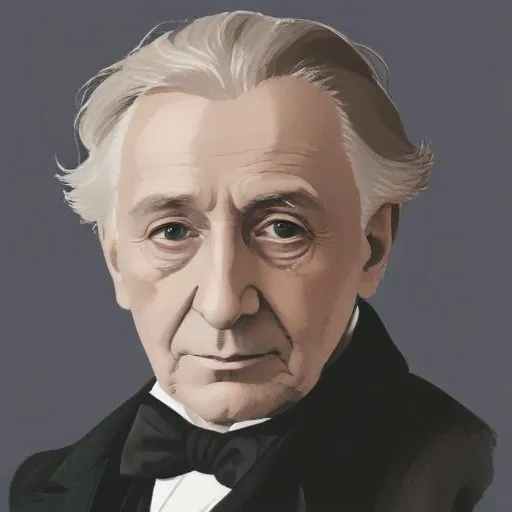
A renowned musician and wordsmith, he crafted poetic masterpieces and composed beautiful music, blending art forms to evoke emotions and spark imagination.
Sidney Lanier, born on February 3, 1842, was an American poet, musician, and author who left an indelible mark on the literary and musical world. Known for his adaptation of musical meter to poetry, Lanier's works continue to inspire and captivate readers to this day.
Lanier was born in Macon, Georgia, to Robert Sampson Lanier and Mary Jane Anderson. His love for music began at an early age, with the flute becoming his instrument of choice. He attended Oglethorpe University, where he graduated first in his class and later became a tutor. During this time, he befriended Milton Harlow Northrup, a New York native and conductor at the school.
During the American Civil War, Lanier served in the Confederate signal corps and later served as a pilot on English blockade runners. His ship, the Lucy, was captured by the USS Santiago de Cuba in 1864, and he was imprisoned. It was during this time that he contracted tuberculosis, a disease that would affect him for the rest of his life.
Lanier's literary career began to take shape in the 1870s, with his poetry being published in various publications. He often used dialects and wrote in heightened, but often archaic, American English. His poetry was deeply rooted in music, with many of his poems set to music. He eventually became a professor of literature at Johns Hopkins University in Baltimore, where he taught until his death in 1881.
Lanier's poetry and music were deeply influenced by his philosophical beliefs. He believed that music and poetry were intertwined, and that one could not exist without the other. His poetry often explored themes of love, nature, and the human experience.
Lanier's impact on modern society is still felt today. Many schools, lakes, and structures are named after him, and he is hailed as the poet of the Confederacy. In 1972, the United States Postal Service honored him with a postage stamp, cementing his place in American literary history.
"Music is love in search of a word." - Sidney Lanier
Lanier's work continues to be studied and admired today, with his unique blend of music and poetry influencing generations of artists and writers. His legacy is a testament to the power of art to transcend time and circumstance.
In conclusion, Sidney Lanier's life was a testament to the power of creativity and perseverance. Despite facing numerous challenges, he continued to produce works of beauty and inspiration, leaving behind a legacy that continues to inspire and captivate audiences today.
Born in 1819
A celebrated poet, essayist, and journalist who revolutionized American literature with his collection "Leaves of Grass", known for his free verse style and celebration of the human spirit.
Born in 1809
A master of dark and atmospheric storytelling, crafting haunting tales of mystery and horror that continue to captivate readers to this day.
Born in 1830
A reclusive poet who crafted innovative, enigmatic, and emotionally charged verse that continues to captivate readers with its unique style and profound insights.
Born in 1874
Pulitzer Prize-winning poet and playwright celebrated for rural New England-inspired works that explore human nature, morality, and the American experience.
Born in 1807
A celebrated poet and educator, known for his lyrical and narrative poems that often explored American history and culture, including the iconic "Paul Revere's Ride".
Born in 1803
A leading figure in the Transcendentalist movement, he advocated for individualism, self-reliance, and nature-inspired spirituality through his essays and poetry. His ideas continue to influence American thought and culture.
Born in 1819
Author of epic sea tales and philosophical explorations, including the iconic "Moby-Dick", which continues to influence literature and popular culture.
Born in 1835
Witty writer of classics like "The Adventures of Tom Sawyer" and "The Adventures of Huckleberry Finn", known for humor and social commentary.
