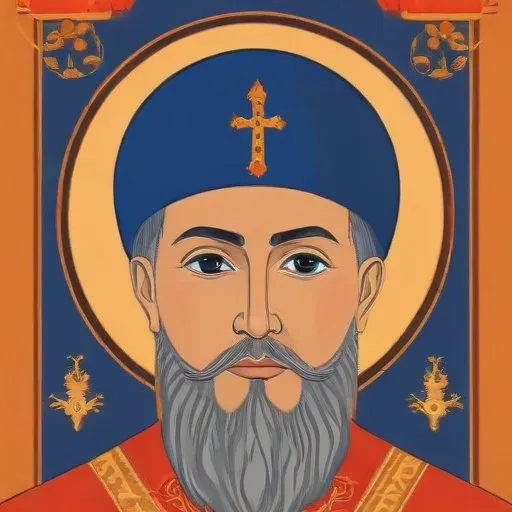
Simeon of Russia: The Visionary Ruler Who Shaped a Nation
A Unifier and a Reformer
Simeon of Russia, also known as Simeon the Proud, was a 14th-century Grand Prince of Moscow who ruled Russia from 1341 to 1353. He is renowned for his efforts to unite the fractured Russian lands, consolidate power, and reform the Orthodox Church, earning him a revered place in Russian history.
Early Life and Accession
Born in 1316, Simeon was the son of Ivan I of Moscow and Helena, a Lithuanian princess. Following his father's death in 1340, Simeon succeeded to the throne at the tender age of 24. Despite his youth, he proved to be a shrewd and ambitious leader, determined to strengthen his position and expand his territories.
Unification and Consolidation
Simeon's most notable achievement was the unification of the Russian lands, which had been fragmented and weakened by internecine strife and Mongol invasions. Through a series of strategic alliances, military campaigns, and shrewd diplomacy, he managed to bring various principalities under his control, including Tver, Vladimir, and Suzdal. This consolidation of power enabled him to establish Moscow as the capital of a unified Russian state.
Church Reforms and Ecclesiastical Politics
Simeon was a devout Orthodox Christian and played a significant role in shaping the Russian Orthodox Church. He supported the appointment of Theognostus, a Greek cleric, as the Metropolitan of Moscow, which helped to strengthen the church's ties with Constantinople. Simeon also founded several monasteries and churches, including the famous Trinity Lavra of St. Sergius, which became a center of Russian Orthodox spirituality.
Cultural and Economic Developments
During Simeon's reign, Moscow experienced a cultural and economic renaissance. The city became a center of learning, trade, and commerce, attracting scholars, merchants, and artisans from across Russia and Europe. The prince encouraged the development of architecture, art, and literature, commissioning grand projects such as the construction of the Dormition Cathedral in Moscow.
Legacy and Impact
Simeon's vision and leadership had a lasting impact on Russian history. He laid the foundations for the eventual rise of Moscow as a dominant power in Eastern Europe, paved the way for the development of the Russian Orthodox Church, and fostered a cultural and economic resurgence in the region. His legacy continues to inspire admiration and reverence in Russia, solidifying his place as one of the country's most revered leaders.
- 1316: Born in Moscow
- 1340: Succeeded his father, Ivan I, as Grand Prince of Moscow
- 1341: Married Anastasia of Lithuania
- 1346: Conquered the principality of Tver
- 1350: Founded the Trinity Lavra of St. Sergius
- 1353: Died in Moscow, aged 37
Trivia and Fun Facts
- Simeon was known for his imposing physical stature, earning him the nickname "the Proud".
- He was a patron of the arts, commissioning the famous Russian icon painter, Theophanes the Greek.
- Simeon's reign saw the introduction of the first Russian coinage, featuring his image.
Historical Context and Legacy
Simeon's reign coincided with a tumultuous period in Russian history, marked by Mongol invasions and internal power struggles. Despite these challenges, he successfully navigated the complexities of medieval politics, forging alliances, and expanding his territories. His legacy serves as a testament to his vision, leadership, and statesmanship, cementing his place as one of Russia's most revered historical figures.
FAQ
What was Simeon of Russia known for?
Simeon of Russia was a prominent figure in the medieval period, known for his military campaigns and territorial expansions. He was a skilled leader who played a significant role in shaping the history of Russia.
What was Simeon of Russias role in Russian history?
Simeon of Russia served as the Grand Prince of Moscow from 1340 to 1353 and is credited with strengthening the principality and laying the foundation for the Russian state.
How did Simeon of Russia die?
Simeon of Russia died on April 25, 1353, and was succeeded by his son, Ivan II. His death marked the end of an era and had significant implications for the future of Russia.
What was Simeon of Russias relationship with the Orthodox Church?
Simeon of Russia was a devout Orthodox Christian and had a close relationship with the Church. He was known for his piety and supported the construction of several churches and monasteries.
What legacy did Simeon of Russia leave behind?
Simeon of Russia left behind a lasting legacy in Russian history, marked by his military conquests, territorial expansions, and cultural achievements. He is remembered as one of the most important figures of the medieval period in Russia.