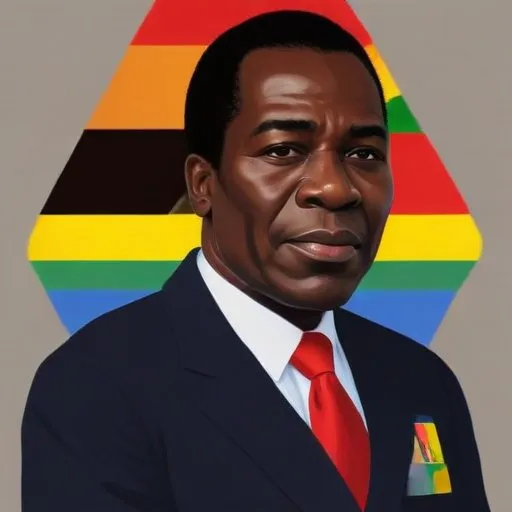
Simon Muzenda: A Luminary in Zimbabwean Politics
Deputy Prime Minister and Vice President of Zimbabwe
Simon Muzenda, a stalwart Zimbabwean politician, served as Deputy Prime Minister from 1980 to 1987 and Vice President of Zimbabwe from 1987 to 2003 under President
Robert Mugabe. Through his illustrious career, he played a pivotal role in shaping the country's political landscape, earning recognition as a key figure in Zimbabwe's struggle for independence.
Early Life and Education
Born on October 28, 1922, in Gutu District, Victoria Province, Southern Rhodesia, Muzenda was raised by his grandmother Mbuya Maweni, who ensured his regular attendance at Nyamandi Primary School. After completing his primary education, he pursued teacher training and later developed a proficiency in carpentry at the Marianhill mission in Natal, South Africa.
Political Awakening and Activism
Upon returning to Rhodesia in 1950, Muzenda's exposure to fellow students involved in black activism in South Africa and Rhodesia sparked his interest in politics. He became closely affiliated with Benjamin Burombo, an early challenger of discriminatory laws, and eventually joined the Zimbabwe African National Union (ZANU). His involvement in the party led to his imprisonment in Salisbury Central Prison for two years, an experience he referred to as a "place of study," allowing him and fellow inmates to complete their educations.
Contact with Rhodesian Security Forces and Imprisonment
In 1964, Muzenda was arrested again, this time for possession of a pistol, following his election as deputy organizing secretary of ZANU. This marked a significant turning point in his life, as he continued to navigate the complexities of Zimbabwean politics amidst the country's struggle for independence.
Rise to Prominence and Legacy
Muzenda's perseverance and commitment to the Zimbabwean people propelled him to prominent positions within the government. As Deputy Prime Minister and Vice President, he played a crucial role in shaping the country's political and economic landscape. His unwavering dedication to Zimbabwe's development earned him a lasting legacy as a luminary in Zimbabwean politics.
Personal Milestones and Key Life Events
- Marriage to Maud, a nurse, in 1955
- Establishment of his own carpentry business in Mvuma in 1955
- Imprisonment in Salisbury Central Prison for two years
- Arrest in 1964 for possession of a pistol
Historical Context and Legacy
Simon Muzenda's life and career are deeply embedded in the fabric of Zimbabwean history, marked by his tireless efforts to promote independence and development. His contributions to the country's struggle for self-governance and his commitment to public service have cemented his place as a revered figure in Zimbabwean politics.
Comparative Analysis with Contemporaries
Muzenda's political trajectory can be compared to that of his contemporaries, including Robert Mugabe and
Joshua Nkomo, who also played pivotal roles in shaping Zimbabwe's political landscape. Like his contemporaries, Muzenda navigated the complexities of Zimbabwean politics, ultimately leaving an indelible mark on the country's history.
Influence on Modern Society
Simon Muzenda's legacy extends beyond the realm of politics, as his contributions have had a profound impact on modern Zimbabwean society. His commitment to education and public service has inspired generations of Zimbabweans, solidifying his place as a revered figure in the country's history.
FAQ
Who was Simon Muzenda and what was his role in Zimbabwean politics?
Simon Muzenda was a Zimbabwean politician who served as the countrys first Vice President from 1980 to 2003. He played a crucial role in the countrys transition from white minority rule to majority rule.
What was Simon Muzendas early life and career?
Simon Muzenda was born in 1922 in Chivhu, Zimbabwe. He was a teacher and a trade unionist before entering politics. He joined the National Democratic Party in the 1960s and later became a member of the ZANU party.
What were Simon Muzendas accomplishments as Vice President of Zimbabwe?
As Vice President, Simon Muzenda oversaw the implementation of various development programs, including education and health initiatives. He was also instrumental in promoting national reconciliation and unity.
How did Simon Muzendas death impact Zimbabwean politics?
Simon Muzendas death in 2003 was a significant blow to Zimbabwean politics. He was seen as a unifying figure, and his death led to a period of instability and power struggles within the ruling party.
What is Simon Muzendas legacy in Zimbabwean history?
Simon Muzenda is remembered as a dedicated nationalist and a key figure in Zimbabwes struggle for independence. He played a crucial role in shaping the countrys post-independence development and is revered as a national hero.