


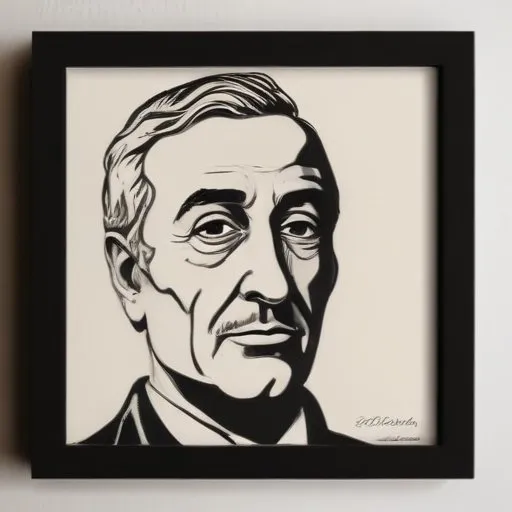
A 17th-century master of intricate engravings and etchings, renowned for his meticulous depictions of landscapes, architecture, and mythological scenes. His works showcase exceptional detail and precision.
Stefano della Bella was an Italian draughtsman and printmaker renowned for his extraordinary etchings of diverse subjects, including military and court scenes, landscapes, and lively genre scenes. With an impressive oeuvre of 1052 prints and thousands of drawings, della Bella left an indelible mark on the art world.
Born in Florence, Italy on May 18, 1610, della Bella hailed from a family of artists and was initially apprenticed to a goldsmith. However, he soon shifted his focus to engraving, working briefly under Orazio Vanni and Cesare Dandini. His training in etching was under Remigio Cantagallina, who had also instructed the celebrated Jacques Callot.
Della Bella's talent was evident from a young age. At just 17, he presented an etching depicting a banquet in the Palazzo Pitti to the young Giancarlo de' Medici, which earned him official commissions from the powerful Medici family. This early success was followed by his production of a manuscript copy of Leonardo da Vinci's Trattato della Pittura in 1630, which featured about 50 sketches.
By 1632, della Bella received direct patronage from Lorenzo de' Medici, which enabled him to request permission to travel to Rome to further hone his artistic skills. During his six-year sojourn in Rome (1633-1639), della Bella lived and studied in the Medici Palace, producing numerous vedute and drawings of antiquities, as well as recording and assisting in the court festivities of the Medici.
Della Bella's time in Rome marked a significant transformation in his style, shifting from Mannerist to Baroque. His artistic output during this period was characterized by a new level of sophistication and expressiveness, which would come to define his unique voice as an etcher. Upon his return to Florence, della Bella continued to produce an astounding array of prints, solidifying his reputation as one of the most skilled and prolific etchers of his time.
Stefano della Bella's life and work serve as a testament to his boundless energy, creativity, and dedication to his craft. As an artist, he embodied the spirit of adventure and innovation, leaving behind a rich legacy that continues to inspire and captivate art lovers to this day.
Della Bella's contributions to the art world must be viewed within the context of 17th-century Italy, where he played a significant role in shaping the development of etching as an art form. His influence extended beyond his native Italy, with his prints being sought after by collectors and connoisseurs across Europe.
Today, Stefano della Bella's etchings remain a testament to his artistic genius, offering a glimpse into the vibrant world of 17th-century Italy, where art, politics, and culture intertwined in complex and fascinating ways.
Born in 1575
A prominent Baroque painter and illustrator, renowned for his vivid and emotive depictions of mythological and religious scenes. His works are celebrated for their dramatic lighting and intense emotional power.
Born in 1598
A renowned Baroque master who crafted exquisite sculptures and paintings that captivated 17th-century Rome, leaving an indelible mark on the art world.
Born in 1596
A prominent Baroque painter who created elaborate, dramatic, and emotive works that adorned the ceilings of Roman palaces and churches, influencing the development of 17th-century art.
Born in 1599
A 17th-century painter who revolutionized Roman Baroque art with his innovative use of color and composition, creating dramatic and emotive works that captivated the art world.
Born in 1599
A renowned Spanish painter and educator, known for his masterful use of chiaroscuro and his iconic portraits of royalty, particularly the Spanish royal family.
Born in 1599
A renowned Flemish-English painter and etcher, famous for capturing the essence of 17th-century European aristocracy through his exquisite portraits, characterized by dramatic lighting and subtle emotional depth.
