


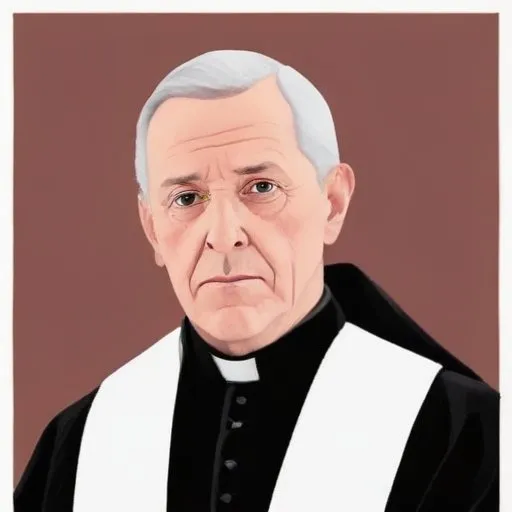
A prominent figure in the Church of England, known for his progressive views on social justice and his role in shaping the church's stance on issues like poverty and inequality.
Steven John Lindsey Croft is a British bishop in the Church of England, renowned for his work in mission and theology, and currently serving as the Bishop of Oxford since 2016. As a prominent figure in the open evangelical tradition of Anglicanism, Bishop Croft has made significant contributions to the Church of England, shaping its approach to mission and evangelism.
Born on May 29, 1957, Bishop Croft attended Heath Grammar School in Halifax and went on to study classics and theology at Worcester College, Oxford, graduating in 1980. He then trained for ordination at Cranmer Hall, Durham, from 1980 to 1983. In 1984, the University of Durham awarded him a Doctor of Philosophy (Ph.D.) degree for his thesis, "The Identity of the Individual in the Book of Psalms."
Bishop Croft was ordained as deacon in the Diocese of London on September 25, 1983, by Bill Westwood, Bishop of Edmonton, and as priest by Graham Leonard, Bishop of London, on September 23, 1984. He served as curate of the parish church of St. Andrew's Enfield from 1983 to 1987, and then as vicar of Ovenden, an Urban Priority Area parish in the Diocese of Wakefield, from 1987 to 1996.
In 1997, Bishop Croft became a member of the Church of England Evangelical Council, a role he held until 2000. From 2004 to 2008, he served as Archbishops' Missioner and Team Leader of Fresh Expressions, a joint Church of England and Methodist initiative aimed at helping Christians of any denomination think about ways of starting and growing fresh expressions of church in their area.
In 2008, Bishop Croft was consecrated as Bishop of Sheffield, a position he held until 2016. During his tenure, he played a significant role in shaping the diocese's approach to mission and evangelism. In 2016, he was elected as the Bishop of Oxford, a role that allows him to continue his work in mission and theology at a diocesan level.
Bishop Croft's work is characterized by his commitment to the open evangelical tradition of Anglicanism. He has written extensively on the importance of mission and evangelism in the life of the Church, and has been a vocal advocate for fresh expressions of church that engage with contemporary culture.
Bishop Croft's contributions to the Church of England have had a significant impact on modern society. His work on mission and evangelism has helped shape the Church's approach to engaging with contemporary culture, and his leadership has inspired a new generation of church leaders to think creatively about the role of the Church in society.
"The Church is not a club for the already committed, but a community of people who are committed to sharing the gospel with others." - Bishop Steven Croft
Bishop Steven Croft's contributions to the Church of England have been significant, shaping the Church's approach to mission and evangelism and inspiring a new generation of church leaders. As the Bishop of Oxford, he continues to play a vital role in shaping the Church's engagement with contemporary culture and society.
76 Years Old
A former Archbishop of Canterbury and prominent theologian, known for his progressive views on social issues and his efforts to promote interfaith dialogue.
70 Years Old
The 105th Archbishop of Canterbury, spiritual leader of the global Anglican Communion, advocating for social justice and interfaith dialogue.
91 Years Old
A prominent leader of the Church of England, serving as Archbishop of Canterbury from 1991 to 2002, known for his efforts to modernize the church and promote interfaith dialogue.
82 Years Old
A prominent leader in the Anglican Communion, known for his conservative stance on LGBTQ+ issues and his role in the formation of the Anglican Church in North America.
95 Years Old
A prominent religious leader and human rights advocate who fought against apartheid and racism, known for his tireless efforts to promote equality and forgiveness.
77 Years Old
A Pakistani-born Anglican bishop who served as the Bishop of Rochester and was the first non-white diocesan bishop in the Church of England, known for his conservative views on social issues.
