


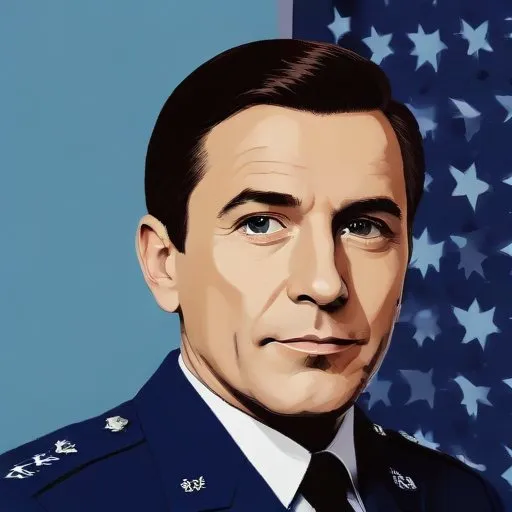
The first Secretary of the Air Force, instrumental in shaping the US Air Force into a separate branch, and a key figure in the country's military aviation development.
Stuart Symington, the first Secretary of the Air Force, is renowned for shaping the United States' aerial defense strategy during the early Cold War era. As a senator from Missouri, he fiercely criticized McCarthyism, advocated for international cooperation, and left an indelible mark on American politics and foreign policy.
Born on June 26, 1901, in Amherst, Massachusetts, Symington's early life was marked by a strong sense of responsibility and duty. His father, a Romance languages professor and later a federal judge, instilled in him the value of public service. Symington's educational background, which included attending the Gilman School and Baltimore City College, prepared him for a life of leadership.
Symington's business acumen and executive experience, gained through his work at Emerson Electric, caught the attention of President Harry S. Truman. In 1945, Symington was appointed to several positions within the Truman administration, ultimately becoming the first Secretary of the Air Force in 1947. This role allowed him to oversee the development of the United States' aerial defense capabilities, making him a key figure in shaping the country's military strategy during the early Cold War era.
In 1952, Symington was elected to the United States Senate, where he became a vocal critic of McCarthyism. As a member of the Senate Committee on Foreign Relations, he advocated for international cooperation and diplomatic engagement. His outspoken criticism of McCarthyism earned him recognition as a champion of civil liberties and a strong proponent of democratic values.
Symington's impact extended beyond politics to the world of sports. When the Kansas City Athletics relocated to Oakland, he threatened to revoke Major League Baseball's antitrust exemption, ultimately paving the way for the formation of the Kansas City Royals. This move cemented his legacy as a champion of his home state's interests.
Symington's dedication to public service and his contributions to American politics earned him numerous awards and honors. He received the Distinguished Service Medal, the Navy's highest non-combat honor, as well as the National Security Medal.
Symington's personal life was marked by a strong sense of family and community. He was married to Evelyn Wadsworth Symington, and they had two children together. Throughout his life, he remained committed to his Missouri roots, eventually declining to seek reelection in 1976 and passing the torch to John Danforth.
Stuart Symington's legacy extends far beyond his pioneering work in the Air Force and his senatorial accomplishments. He embodied the values of public service, diplomacy, and democratic ideals, leaving an indelible mark on American politics and foreign policy. His commitment to his country and his community continues to inspire generations of public servants, politicians, and citizens alike.
Born in 1884
The 33rd President of the United States, a strong leader who made tough decisions, including dropping atomic bombs on Japan and establishing the Marshall Plan to rebuild Europe after WWII.
Born in 1890
Led the Allied forces to victory in World War II and later served as President, maintaining peace and prosperity during the Cold War era. He's known for his strategic leadership and diplomatic skills.
Born in 1891
Led the US Air Forces to victory in World War II, pioneering the use of strategic bombing and playing a crucial role in shaping the US military's air power.
Born in 1906
A pioneering Air Force general who played a crucial role in shaping the US military's strategic bombing capabilities during World War II and the Cold War. He's also known for his hawkish stance on communism and his influence on US foreign policy.
Born in 1895
A pioneering aviator who set multiple records for speed and distance, and was a charismatic showman who promoted commercial aviation.
