


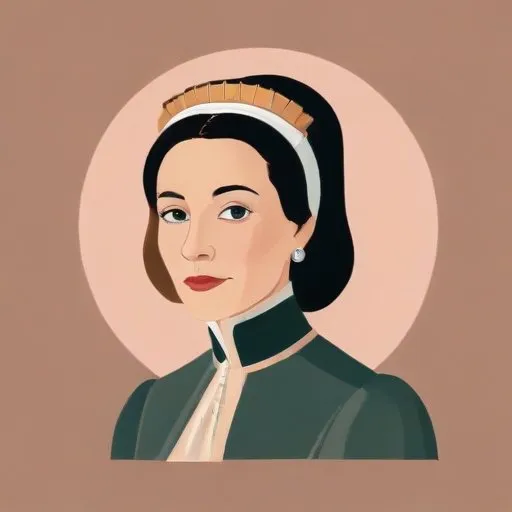
A powerful and wealthy noblewoman who played a significant role in French politics during the 16th century, known for her strategic marriages and alliances that shaped the country's history.
Suzanne, Duchess of Bourbon, was a powerful and influential figure in 16th-century France, known for her determination to protect her family's legacy and her bold actions in the face of adversity. As the suo jure Duchess of Bourbon and Auvergne from 1503 to her death in 1521, Suzanne played a crucial role in shaping the course of French history.
Suzanne was born on May 10, 1491, to Duke Peter II of Bourbon and Anne of France, making her a member of one of the most powerful noble families in France. Her mother, Anne, was the eldest daughter of Louis XI of France and served as regent of France alongside her husband during the minority of her brother, Charles VIII of France.
Following the death of her elder brother, Charles, in 1498, Suzanne's father grew concerned about the succession of the Bourbon lands. Under Salic law, the heir presumptive was Louis de Bourbon-Montpensier, a member of the Montpensier branch of the Bourbons. However, Suzanne's parents negotiated a deal with Louis XII, who had just acceded to the throne, recognizing the seven-year-old Suzanne as the rightful heir to her father's lands.
In 1505, Suzanne married Charles III, Duke of Bourbon, and the couple worked together to consolidate their power and influence. Suzanne played a crucial role in managing the Bourbon estates and was known for her intelligence, courage, and strong will.
Suzanne's determination to protect her family's legacy and her bold actions in the face of adversity make her a fascinating figure in French history. Despite the challenges she faced, Suzanne remained committed to her duty as a royal and worked tirelessly to maintain the power and influence of the Bourbon family.
Suzanne's life and actions demonstrate a strong sense of duty, loyalty, and determination. Her commitment to her family and her role as a royal reflects a deep understanding of the importance of tradition and heritage.
Suzanne's story serves as a powerful reminder of the importance of strong women in leadership roles. Her determination and courage in the face of adversity make her a role model for anyone facing challenges and obstacles.
Through her life and legacy, Suzanne, Duchess of Bourbon, continues to inspire and fascinate us, offering a glimpse into the intrigue and drama of 16th-century French royal politics.
Born in 1394
A French nobleman and poet, known for his lyrical ballads and imprisonment in the Tower of London after being captured during the Hundred Years' War.
Born in 1519
King of France from 1547 to 1559, known for his cultural and artistic patronage, and his role in the Italian Wars.
Born in 1757
The last Bourbon king of France, ruling from 1824 to 1830, known for his ultra-royalist views and attempts to restore absolute monarchy, leading to the July Revolution.
