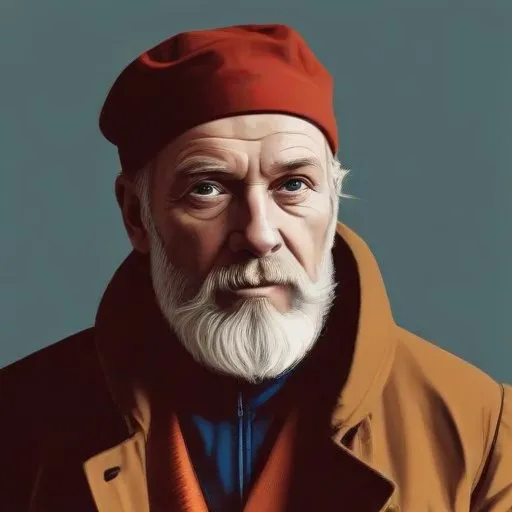
Sven Hedin: The Swedish Explorer Who Mapped the Uncharted
A Lifetime of Discovery
Sven Hedin is renowned for his extraordinary expeditions to Central Asia, which led to the discovery of the Transhimalaya, and the location of the sources of the Brahmaputra, Indus, and Sutlej Rivers. Through his journeys, he mapped lake Lop Nur, and uncovered the remnants of ancient cities, grave sites, and the Great Wall of China in the deserts of the Tarim Basin.
Early Inspiration
Hedin's fascination with exploration began at the age of 15, when he witnessed the triumphant return of Arctic explorer
Adolf Erik Nordenskiöld after his first navigation of the Northern Sea Route. This sparked a fire within him, and he became determined to follow in Nordenskiöld's footsteps.
Academic Pursuits
Hedin's studies under Ferdinand Freiherr von Richthofen, a German geographer and China expert, instilled in him a love for Germany and strengthened his resolve to embark on expeditions to Central Asia. He obtained a doctorate, learned multiple languages and dialects, and undertook two trips through Persia before embarking on his groundbreaking expeditions.
Expeditions to Central Asia
Between 1894 and 1908, Hedin led three daring expeditions through the mountains and deserts of Central Asia, mapping and researching parts of Chinese Turkestan (now Xinjiang) and Tibet, which had been unexplored by Europeans until then. His journeys were marked by incredible feats of endurance, including traversing the treacherous Tibetan Plateau and navigating the Gobi Desert.
Major Works and Legacy
Hedin's most notable work is his book "Från pol till pol" (From Pole to Pole), which chronicles his journeys across Asia and Europe between the late 1880s and early 1900s. His posthumous publication of the Central Asia Atlas marked the culmination of his life's work. This comprehensive atlas is a testament to his tireless efforts to map the uncharted regions of Central Asia.
Awards and Honors
Hedin received numerous accolades for his contributions to geography and exploration, including the Founder's Medal of the Royal Geographical Society, the Vega Medal of the Swedish Society for Anthropology and Geography, and the Cullum Geographical Medal of the American Geographical Society.
Personal Milestones
- 1865: Born on February 19th in Stockholm, Sweden
- 1890s: Undertook two trips through Persia
- 1894-1908: Led three expeditions to Central Asia
- 1909: Returned to Stockholm and was received as a hero
- 1952: Passed away on November 26th at the age of 87
Influence on Modern Society
Hedin's expeditions and cartographic work have had a lasting impact on our understanding of Central Asia's geography, culture, and history. His discoveries have paved the way for future generations of explorers, scientists, and scholars.
Philosophical Contributions and Beliefs
Hedin's work embodies the spirit of adventure, curiosity, and perseverance. His expeditions demonstrate the importance of pushing the boundaries of human knowledge and exploring the unknown.
Trivia and Fun Facts
- Hedin was a prolific writer and photographer, taking thousands of photographs during his expeditions
- He was a talented linguist, speaking multiple languages including Swedish, German, English, French, Russian, and several Asian dialects
- Hedin's love for Germany was so great that he was awarded the Royal Order of the Golden Eagle, one of Prussia's highest honors
By embarking on a journey through the life and expeditions of Sven Hedin, we are reminded of the power of human curiosity and the importance of exploration in expanding our understanding of the world.
FAQ
What was Sven Hedins contribution to the development of geography and exploration?
Sven Hedin was a pioneering geographer and explorer who made significant contributions to the development of geography and exploration. He led several expeditions to Asia and Europe, and his discoveries helped to increase our understanding of the worlds geography and natural resources.
What was Sven Hedins approach to exploration and geography?
Sven Hedins approach to exploration and geography was centered on the idea of scientific discovery and documentation. He was known for his meticulous observations and recordings, and his expeditions helped to gather valuable data on the natural environment, climate, and cultures of the regions he visited.
What was Sven Hedins significance in the development of Swedish geography and exploration?
Sven Hedin was a key figure in the development of Swedish geography and exploration, and his work helped to establish Sweden as a major center for geographic research and exploration. His contributions to the development of geography, cartography, and exploration continue to influence Swedish research and education today.
What was Sven Hedins relationship with other prominent geographers and explorers of his time?
Sven Hedin was a prominent figure in the geographic and exploration communities of his time, and he had relationships with other prominent geographers and explorers, including Fridtjof Nansen and Roald Amundsen. He was also a member of several scientific societies and organizations, and he contributed to the development of geographic research and education.
What is Sven Hedins legacy in the field of geography and exploration?
Sven Hedins legacy in the field of geography and exploration is significant, and he is still remembered as one of the most important geographers and explorers of the early 20th century. His contributions to the development of geography, exploration, and Swedish research continue to influence geographic research and practice today.