


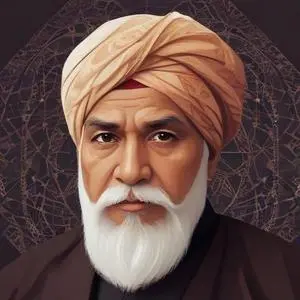
Founded the Aligarh Muslim University, promoting modern education and social reform in 19th-century India, bridging the gap between traditional Islamic values and Western knowledge.
Sir Syed Ahmad Khan is widely regarded as the pioneer of Muslim nationalism in India and the father of the two-nation theory, which formed the basis of the Pakistan movement. This Indian Muslim reformer, philosopher, and educationist played a pivotal role in shaping the course of Indian and Pakistani history in the 19th century.
Born on October 17, 1817, into a family with strong ties to the Mughal court, Ahmad Khan was exposed to science and the Quran from an early age. He went on to serve the East India Company, eventually becoming a judge at a Small Causes Court in 1867 and retiring in 1876.
During the Indian Mutiny of 1857, Ahmad Khan remained loyal to the British Raj and was noted for his bravery in saving European lives. This period of turmoil inspired him to write The Causes of the Indian Mutiny, a daring critique of various British policies that he believed had caused the revolt.
Ahmad Khan believed that the future of Muslims was threatened by the rigidity of their orthodox outlook. To combat this, he promoted Western-style scientific education by founding modern schools and journals and organizing Islamic entrepreneurs. Notable institutions he established include:
Through these endeavors, Ahmad Khan aimed to equip Muslims with the skills and knowledge necessary to thrive in a rapidly changing world.
Ahmad Khan was vocal in his criticism of the Indian National Congress, which he believed favored Hindu interests over Muslim ones. He advocated for a more inclusive and representative national movement, one that would address the unique needs and concerns of Indian Muslims.
Sir Syed Ahmad Khan's legacy is profound and far-reaching. He became a source of inspiration for the Pakistan Movement and its activists, including Allama Iqbal and Muhammad Ali Jinnah. His advocacy of Islam's rationalist tradition and a broader, radical reinterpretation of the Quran continue to influence Muslim thought and identity in India and beyond.
Today, Ahmad Khan is remembered as a champion of education, social reform, and Muslim empowerment. His contributions to the development of modern India and Pakistan remain invaluable, a testament to the power of vision, perseverance, and dedication.
In recognition of his outstanding achievements, Ahmad Khan was awarded an honorary LLD from the University of Edinburgh in 1889. This esteemed honor reflects his commitment to education, social reform, and the betterment of Muslim communities worldwide.
"Education is the only key to unlock the door of happiness and prosperity."
"The greatest glory in living lies not in never falling, but in rising every time we fall."
These words of wisdom continue to inspire generations of Indians, Pakistanis, and Muslims around the world, reminding them of the transformative power of education and the importance of perseverance in the face of adversity.
Born in 1877
A Pakistani philosopher, poet, and politician who played a key role in the creation of Pakistan and is revered for his philosophical and literary works that explored Islamic identity and nationalism.
Born in 1889
India's first Prime Minister, a key figure in the country's struggle for independence from British rule, and a champion of democracy and secularism. He played a crucial role in shaping modern India's government and economy.
Born in 1861
A Bengali polymath who wrote extensively on love, nature, and humanity, creating a unique blend of Indian and Western literary styles, and was the first non-European to win the Nobel Prize in Literature.
Born in 1865
A leading figure in India's struggle for independence from British rule, known for his role in the Indian independence movement and his advocacy for Hindu-Muslim unity.
Born in 1907
An Indian socialist revolutionary who fought for independence from British rule through dramatic acts of defiance, including a bombing of the Indian Assembly and a hunger strike that led to his execution.
Born in 1897
Indian freedom fighter and politician who led the Indian National Army against British rule and was a key figure in the country's struggle for independence. He is also known for his mysterious disappearance in 1945.
