


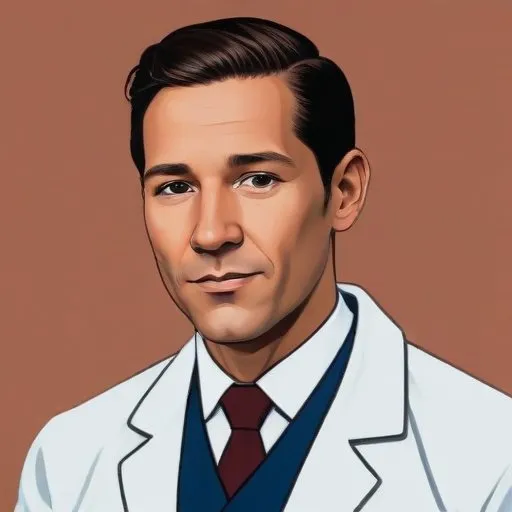
A pioneering surgeon who advocated for civil rights and economic empowerment for African Americans, particularly in the rural South, through his leadership in the Regional Council of Negro Leadership.
T. R. M. Howard was a trailblazing civil rights leader, entrepreneur, and surgeon who played a pivotal role in shaping the landscape of social justice in America during the mid-20th century. Through his tireless efforts, he inspired a generation of activists, including Medgar Evers, Fannie Lou Hamer, and Jesse Jackson, to fight for equality and human rights.
Born on March 4, 1908, in Murray, Kentucky, Howard's early life was marked by the mentorship of Dr. Will Mason, a prominent white physician who recognized the young boy's potential and supported his education. This relationship would have a profound impact on Howard's future, as he went on to become a renowned surgeon and civil rights leader.
Howard was a staunch advocate for African American businesses and economic development. He served as the chairman of the board of the National Negro Business League, promoting entrepreneurship and job creation within the black community. His vision for economic empowerment was rooted in the belief that financial independence was essential to achieving social equality.
As the founder of the Regional Council of Negro Leadership (RCNL), Howard played a crucial role in investigating the brutal murder of Emmett Till in 1955. The RCNL's efforts brought national attention to the case, galvanizing public opinion and paving the way for the civil rights movement of the 1960s.
Howard's leadership was guided by a deep commitment to social justice and human rights. He believed in the importance of addressing the social determinants of health that disproportionately affect the black community, and his work as a surgeon and civil rights leader reflected this philosophy.
Howard's legacy extends far beyond his own lifetime. His work as a civil rights leader, entrepreneur, and surgeon has inspired generations of activists, entrepreneurs, and healthcare professionals. His emphasis on economic empowerment and social justice continues to resonate with contemporary social movements.
T. R. M. Howard's remarkable life and achievements serve as a testament to the power of visionary leadership and dedication to social justice. His work continues to inspire and empower individuals to strive for a more equitable society, where all people can thrive.
Born in 1856
A pioneering figure in African-American education, he founded the Tuskegee Institute and advocated for racial uplift through self-improvement and economic empowerment. His autobiography, "Up from Slavery," remains a classic of American literature.
Born in 1862
A pioneering African American journalist and anti-lynching crusader who exposed the horrors of racial violence in the South through her writing and activism.
Born in 1902
A renowned poet, novelist, and playwright who powerfully voiced the experiences and struggles of African Americans during the Harlem Renaissance, using jazz and blues rhythms to convey the spirit of his people.
97 Years Old
A prominent leader in the civil rights movement, advocating for racial equality and social justice through nonviolent means, leaving a lasting impact on American history.
Born in 1925
A civil rights leader who fought for racial equality and social justice, assassinated in 1963, sparking widespread outrage and fueling the Civil Rights Movement.
Born in 1926
A prominent leader in the American Civil Rights Movement, he worked closely with Martin Luther King Jr. to advocate for racial equality and social justice through nonviolent means.
Born in 1913
Refused to give up her seat on a Montgomery, Alabama bus to a white person, sparking the Montgomery Bus Boycott, a pivotal event in the Civil Rights Movement.
Born in 1868
A pioneering figure in the struggle for racial equality, advocating for civil rights and social justice through groundbreaking research and powerful writings.
