


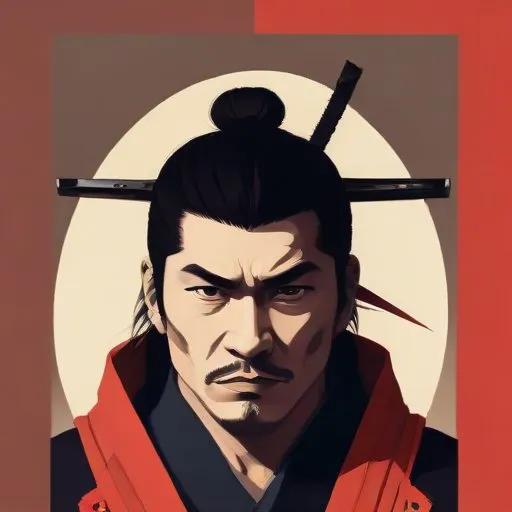
A 17th-century samurai who served as a high-ranking retainer to the Japanese daimy? Matsudaira Tadayoshi, known for his bravery and strategic prowess in battles. He played a key role in the Siege of Osaka.
Takenaka Shigeharu, also known as Hanbei, was a Japanese samurai and chief strategist who played a pivotal role in the unification of Japan during the Sengoku period of the 16th century. He is best known for his brilliant military tactics and unwavering loyalty to Toyotomi Hideyoshi, who would eventually become the most powerful daimyō of Japan.
Born in 1544, Shigeharu was the son of Takenaka Shigemoto, a local samurai and lord of the mid-Castle in the Mino Province. He grew up in a turbulent era, where the constant struggle for power and territorial control defined the lives of samurai. Shigeharu's early experiences in battle, including the Battle of Nagaragawa in 1556, laid the foundation for his future successes.
In 1560, Shigeharu succeeded his father as the lord of Bodaisan Castle and became a vassal of the Sait clan. However, he soon grew disillusioned with the clan's leadership and plotted an uprising against Sait Tatsuoki, the young and inexperienced daimyō. In 1564, Shigeharu joined the Mino Triumvirate and successfully drove Tatsuoki out of Inabayama Castle.
Shigeharu's cunning and bravery caught the attention of Oda Nobunaga, who would later become one of Japan's most powerful daimyō. In 1570, Shigeharu joined the Oda clan and participated in the Battle of Anegawa, where he fought alongside his father-in-law, Ando Morinari. After the battle, Nobunaga ordered Shigeharu to stay in Yokoyama Castle, where he would eventually meet Toyotomi Hideyoshi.
Shigeharu's fateful meeting with Hideyoshi marked the beginning of a lifelong partnership that would change the course of Japanese history. Hideyoshi, who was then a low-ranking samurai, was deeply impressed by Shigeharu's strategic mind and military prowess. Together, they formed an unstoppable team, with Shigeharu serving as Hideyoshi's chief strategist and adviser.
Shigeharu's contributions to Hideyoshi's campaigns were invaluable. He played a crucial role in the Siege of Inabayama Castle, the Battle of Hanazuka, and the Battle of Yamazaki, among others. His tactical genius and ability to adapt to changing circumstances helped Hideyoshi gain victory after victory, eventually securing his position as the most powerful daimyō in Japan.
Takenaka Shigeharu's legacy extends far beyond his military achievements. He was a master of psychological warfare, often using deception and misdirection to outmaneuver his enemies. His unwavering loyalty to Hideyoshi and his dedication to the unification of Japan earned him a place among the most revered samurai of the Sengoku period.
Despite his significant contributions to Japanese history, Shigeharu's life was cut short when he died of illness in 1579, at the age of 35. His untimely death was a devastating blow to Hideyoshi, who mourned the loss of his trusted friend and strategist.
Takenaka Shigeharu's impact on modern society is still felt today. His military tactics and strategies continue to be studied by historians and military enthusiasts around the world. His partnership with Hideyoshi serves as a testament to the power of collaboration and loyalty, inspiring generations of leaders and entrepreneurs.
In conclusion, Takenaka Shigeharu was a true mastermind behind the scenes of Japanese history. His brilliant military tactics, unwavering loyalty, and dedication to the unification of Japan secured his place as one of the most revered samurai of the Sengoku period. His legacy continues to inspire and influence people to this day, making him an enduring figure in Japanese history.
Born in 1543
Unified Japan's warring states, establishing a dynasty that ruled for over 250 years, and is revered as a brilliant military strategist and statesman.
Born in 1530
A powerful feudal lord who unified Japan's Echigo Province and fought several battles, earning a legendary reputation for bravery and martial prowess.
Born in 1521
A powerful daimy? who unified Japan's Takeda clan and expanded its territories through military campaigns, known for his exceptional leadership and innovative tactics.
