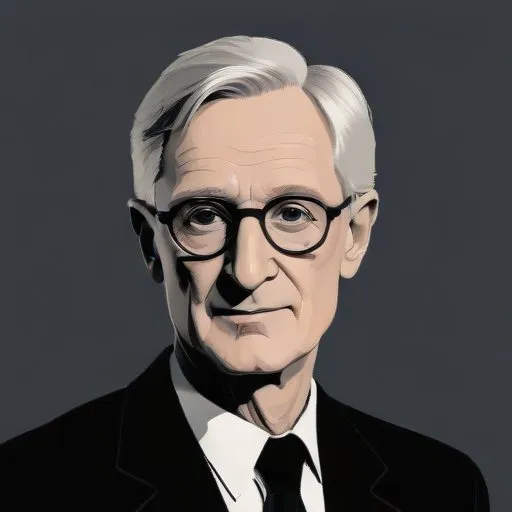
Ted Nelson: The Pioneer of Hypertext and Hypermedia
The Visionary Behind the Digital Revolution
Ted Nelson, an American pioneer of information technology, philosopher, and sociologist, is renowned for coining the terms "hypertext" and "hypermedia" in 1963, revolutionizing the way we interact with digital information. His groundbreaking work, published in 1965, has had a profound impact on modern computing, ushering in an era of innovation and transformation.
Early Life and Education
Born on June 17, 1937, to Emmy Award-winning director Ralph Nelson and Academy Award-winning actress
Celeste Holm, Ted Nelson's early life was marked by creativity and intellectual curiosity. Raised by his grandparents in Chicago and later in Greenwich Village, Nelson's upbringing laid the foundation for his future pursuits. He earned a B.A. in philosophy from Swarthmore College in 1959, where he created an experimental humorous student film, "The Epiphany of Slocum Furlow," which showcased his innovative storytelling skills.
The Genesis of Project Xanadu
Nelson's fascination with computer-based writing systems began during his college days, where he envisioned a digital repository for the world's knowledge, allowing for greater flexibility in drawing connections between ideas. This concept, later known as Project Xanadu, was founded in 1960, with the goal of creating a seamless computer network with a user-friendly interface.
A Career of Innovation and Exploration
- In 1964, Nelson became an instructor in sociology at Vassar College, further refining his ideas on hypertext and hypermedia.
- From 1964 to 1966, he worked as a photographer and filmmaker at John C. Lilly's Communication Research Institute in Miami, Florida, where he collaborated with Gregory Bateson.
- In 2002, Nelson earned his Ph.D. in media and governance from Keio University, solidifying his reputation as a thought leader in the field.
Philosophical Contributions and Beliefs
Nelson's work is characterized by a romanticism and passion for storytelling, reflecting his self-described identity as a "literary romantic." His philosophical contributions extend beyond the realm of technology, as he has explored the intersections of sociology, philosophy, and literature.
Influence on Modern Society
Ted Nelson's pioneering work has had a profound impact on modern computing, influencing the development of the World Wide Web, digital publishing, and online education. His ideas have inspired generations of innovators, shaping the way we communicate, access information, and interact with technology.
Quotes and Memorable Sayings
"Everything is deeply intertwined. I wanted to make a system that would allow people to make connections between ideas, and to see the structure of the connections."
Legacy and Historical Context
Ted Nelson's contributions to the world of technology, philosophy, and sociology are a testament to his boundless creativity and innovative spirit. As a true visionary, his work has left an indelible mark on modern society, shaping the course of digital history for generations to come.
FAQ
What is Ted Nelsons most famous concept?
Ted Nelson is best known for coining the term hypertext, which refers to the use of links to connect related pieces of information.
What books did Ted Nelson write?
Nelson has written several influential books, including Computer Lib/Dream Machines and Literary Machines)
What is Ted Nelsons philosophy on technology?
Nelson is a pioneer in the field of human-computer interaction, and his philosophy emphasizes the importance of designing technology that is accessible and empowering for users.
What awards has Ted Nelson won?
Nelson has received numerous awards for his contributions to technology and philosophy, including the IEEE Computer Societys Computer Entrepreneur Award.
What is Ted Nelsons legacy?
Nelsons work on hypertext and interactive systems has had a profound impact on the development of the internet and modern computing, earning him a place as one of the most influential thinkers of the 20th century.