


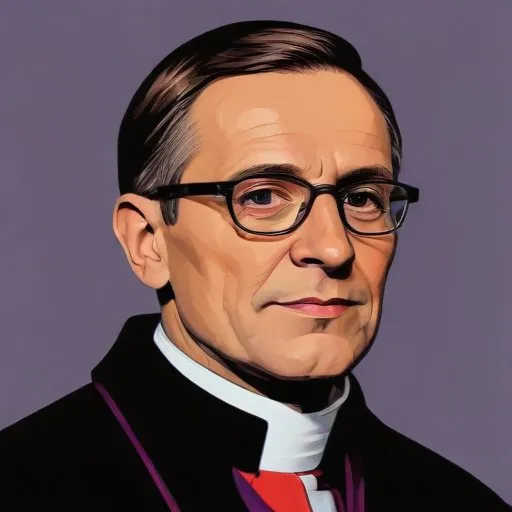
Founded the first Protestant deaconess institute, training women for social and charitable work, and is considered the father of modern deaconess movement.
Theodor Fliedner is renowned for founding the Kaiserswerther Diakonie, a hospital and deaconess training center, in 1836, which marked the rebirth of the apostolic deaconess ministry. This innovative institution not only transformed the landscape of nursing and social work but also inspired Florence Nightingale, the founder of modern nursing, who spent time at Kaiserswerth in 1850.
Theodor Fliedner was born on January 21, 1800, in Eppstein, Hesse, Germany, to a Lutheran minister. He pursued theological studies at the University of Giessen, the University of Göttingen, and the Herborn Academy. Before assuming the pastorate in Kaiserswerth, Fliedner worked as a house teacher.
In 1821, Fliedner became the pastor of Kaiserswerth, a poor municipality that struggled to support its church and ministry due to economic crisis. To alleviate the situation, Fliedner embarked on fundraising journeys to Westphalia, the Netherlands, and England. These travels not only yielded financial support but also exposed him to new ideas about social work and deaconess ministry.
In the Netherlands, Fliedner became acquainted with the ancient church office of deaconess, which had been revived by the Moravian Church in 1745. In England, he met Elizabeth Fry, a prominent social reformer, who demonstrated her work among the impoverished and imprisoned. Fliedner's experiences abroad sparked a passion within him to improve the lives of the disadvantaged in his own community.
Upon his return to Kaiserswerth, Fliedner began working among inmates at the Düsseldorf Prison, preaching the Gospel and ministering to their spiritual and physical needs. This work eventually led to the establishment of the Rhenish-Westphalian Prison Society in 1826. In 1836, Fliedner founded the Kaiserswerther Diakonie, a hospital and deaconess training center, which became a beacon of hope for the needy and a model for modern deaconess ministry.
Theodor Fliedner's pioneering work in nursing and deaconess ministry has had a profound impact on modern society. Through his institution, he empowered countless women to serve the sick, the poor, and the marginalized. Florence Nightingale, the founder of modern nursing, spent time at Kaiserswerth in 1850, and Fliedner's work undoubtedly influenced her own endeavors. Today, the Kaiserswerther Diakonie continues to thrive, remaining a testament to Fliedner's vision and dedication to serving humanity.
"The deaconess is not only a helper of the pastor, but also a servant of the poor and the sick."
Fliedner's life and work continue to inspire generations of healthcare professionals, social workers, and deaconesses around the world, serving as a powerful reminder of the transformative power of faith, compassion, and service.
Born in 1768
A pioneering theologian and philosopher who shaped modern Christian thought and hermeneutics, known for his emphasis on individual experience and understanding of religious texts.
Born in 1663
A German clergyman, philanthropist, and scholar who founded the Francke Foundations, a complex of charitable and educational institutions, and was a pioneer in social welfare and education. He's known for his innovative approaches to social reform and education.
Born in 1483
A German monk and priest who sparked the Protestant Reformation, challenging Catholic Church authority and shaping Western Christianity. He's famous for nailing 95 theses to a church door, sparking a religious revolution.
Born in 1509
A French pastor and theologian who played a key role in the Protestant Reformation, shaping Christian theology and influencing Western civilization. He's famous for his teachings on predestination and his role in establishing Calvinism.
Born in 1484
Leader of the Swiss Reformation, advocating for church reform and inspiring other Protestant movements.
Born in 1497
A 16th-century Renaissance scholar who made significant contributions to the development of the Protestant Reformation and education, known for his theological writings and astronomical observations.
