


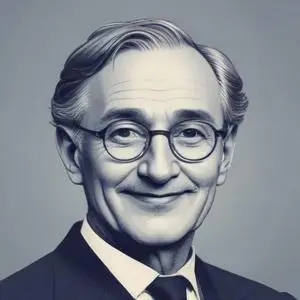
Developed laser-based precision spectroscopy, enabling precise measurements of atomic energy levels and earning a Nobel Prize in Physics in 2005.
Hnsch's academic career began as a NATO postdoctoral fellow at Stanford University, where he worked with Arthur L. Schawlow from 1970 to 1972. He later became an assistant professor at Stanford University, California, a position he held from 1975 to 1986. During this period, he made significant contributions to the development of laser-based precision spectroscopy, including the invention of a new type of laser that generated light pulses with extremely high spectral resolution.
Hnsch's pioneering work on laser-based precision spectroscopy has had a profound impact on various fields, including physics, chemistry, and biology. His technique has enabled the development of highly accurate atomic clocks, which have far-reaching implications for fields such as navigation, telecommunications, and spectroscopy.
Hnsch's contributions to the field of spectroscopy have inspired a new generation of scientists to pursue research in this area. His students, including Carl E. Wieman, have gone on to make significant contributions to the field, with Wieman being awarded the Nobel Prize in Physics in 2001. Hnsch's legacy continues to shape the course of scientific inquiry, and his work remains a testament to the power of human innovation and discovery.
Hnsch's work is guided by a deep commitment to advancing human knowledge and understanding. His contributions to the field of spectroscopy reflect his passion for scientific inquiry and his dedication to pushing the boundaries of human knowledge.
Hnsch's most significant contribution to the field of spectroscopy is his development of the optical frequency comb technique, which has revolutionized the field by enabling highly accurate measurements of optical frequencies. His work has also led to the development of highly accurate atomic clocks, which have far-reaching implications for various fields.
Theodor W. Hnsch's pioneering work has left an indelible mark on the scientific community. His contributions to the field of spectroscopy continue to inspire new generations of scientists, and his legacy serves as a testament to the power of human innovation and discovery.
Born in 1920
A Dutch-American physicist and academic who pioneered the field of nonlinear optics, making groundbreaking discoveries that led to the development of lasers and fiber optic communication.
Born in 1918
Developed the Electron Spectroscopy for Chemical Analysis (ESCA) technique, which allows for the analysis of the chemical composition of materials. This innovation has had a significant impact on various fields, including chemistry, physics, and materials science.
94 Years Old
A pioneer in X-ray astronomy, he discovered the first cosmic X-ray source and led the development of orbiting observatories, revolutionizing our understanding of the universe.
97 Years Old
A Nobel Prize-winning physicist who pioneered the field of superconductivity, making groundbreaking discoveries that transformed our understanding of materials and their properties.
Born in 1921
A Soviet physicist and dissident who advocated for human rights and nuclear disarmament, earning a Nobel Peace Prize in 1975. He's known for his courageous stance against the Soviet regime, promoting peace and democracy.
68 Years Old
A German physicist and academic who won the Nobel Prize for his groundbreaking work on ultracold atoms and Bose-Einstein condensates, revolutionizing our understanding of quantum mechanics.
