


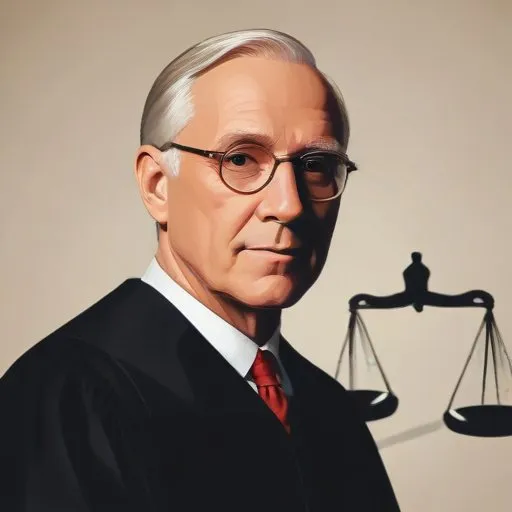
A prominent figure in the development of American bankruptcy law, known for his contributions to the Bankruptcy Act of 1898.
Theodore Trautwein, a New Jersey judge, is famously known for his landmark rulings that tested the limits of journalistic shield laws, forever changing the landscape of journalism and First Amendment rights. In the 1978 Dr. X murder trial, Trautwein's decision to hold a New York Times reporter in contempt of court for refusing to disclose investigative notes sparked a national debate on the protection of journalists' sources.
Born on March 29, 1920, in Paramus, New Jersey, Trautwein grew up with a passion for baseball and attended Hackensack High School. He earned a baseball scholarship to Columbia University, but his dreams of becoming a professional baseball player were put on hold when he was drafted by the St. Louis Cardinals. To support his family, Trautwein worked as a stevedore before attending the United States Merchant Marine Academy. During World War II, he served in the United States Navy, and after the war, he pursued his law degree from New York University School of Law, passing the bar in 1953.
Trautwein began his judicial career as a county court judge in 1964, later becoming a district court judge. During this time, he issued several notable rulings, including those that led to the creation of the New Jersey Meadowlands Commission and the New Jersey Sports and Exposition Authority. In 1981, he was named a New Jersey Superior Court, Appellate Division judge.
The 1978 Dr. X murder trial of Mario Jascalevich, a physician accused of murdering three patients with curare, brought Trautwein into the national spotlight. When a New York Times reporter refused to turn over investigative notes, Trautwein held the reporter in contempt of court, sentencing them to 40 days in jail. This ruling sparked a heated debate on the limits of shield laws, which protect journalists from revealing their sources. The case ultimately led to a series of appeals and lawsuits, cementing Trautwein's legacy as a champion of journalistic independence.
Trautwein's ruling in the Dr. X trial has been cited in numerous cases, including the landmark Branzburg v. Hayes Supreme Court case, which established the First Amendment right to a free press. His legacy extends beyond the courtroom, influencing generations of journalists and lawyers who continue to grapple with the complexities of shield laws and freedom of the press.
Trautwein's commitment to the freedom of the press and the protection of journalistic sources has been hailed as a cornerstone of American democracy. His rulings continue to inspire journalists, lawyers, and scholars who believe that a free press is essential to a healthy and functioning democracy.
Trautwein's legacy serves as a reminder that the pursuit of truth and the protection of those who seek it are fundamental to our system of justice. As we continue to navigate the complexities of shield laws and journalistic freedom, Trautwein's courage and conviction remain a beacon of hope for a brighter, more informed future.
Born in 1907
The 15th Chief Justice of the United States, leading the Supreme Court from 1969 to 1986, known for his conservative stance and landmark decisions on abortion and capital punishment.
Born in 1924
The 16th Chief Justice of the United States, a conservative jurist who led the Supreme Court from 1986 to 2005, shaping the court's decisions on issues like abortion and affirmative action. He's also known for his role in several landmark cases, including Bush v. Gore.
96 Years Old
First female Supreme Court Justice in the United States, serving from 1981 to 2006 and playing a crucial role in many landmark cases, particularly those involving gender equality and reproductive rights.
90 Years Old
A conservative Supreme Court Justice who played a significant role in shaping the court's decisions on issues like abortion, affirmative action, and gun rights, known for his originalist interpretation of the Constitution.
90 Years Old
A Supreme Court Justice who served for over 30 years, known for his swing votes and opinions on landmark cases, including same-sex marriage and abortion rights.
87 Years Old
A Supreme Court Justice who served from 1990 to 2009, known for his unexpected liberal leanings and influential decisions on issues like abortion and affirmative action.
78 Years Old
The longest-serving African American justice on the Supreme Court, known for his conservative views and influential opinions on affirmative action, gun rights, and the death penalty.
93 Years Old
A pioneering Supreme Court Justice and women's rights advocate who championed gender equality and became a cultural icon.
