


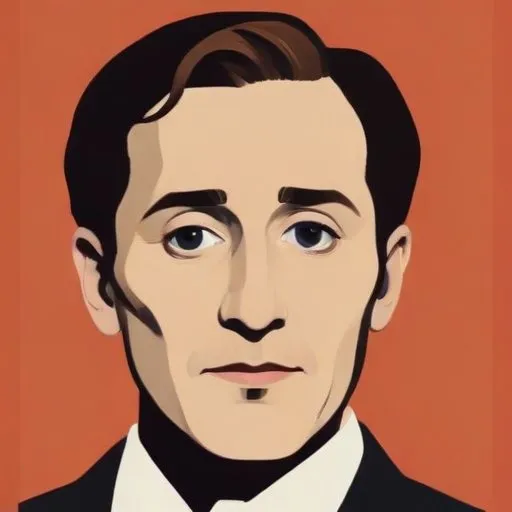
A renowned opera singer and professor, known for his powerful bass-baritone voice and academic contributions to music education.
Thomas Allen, a renowned English mathematician and astrologer, left an indelible mark on the scientific and intellectual landscape of 16th century England. Born on December 21, 1542, in Uttoxeter, Staffordshire, Allen's exceptional knowledge and teachings in mathematics, philosophy, and antiquity earned him a reputation as a respected private tutor and scholar of his time.
Allen's academic journey began at Trinity College, Oxford, where he was admitted as a scholar in 1561. He graduated with a Master of Arts degree in 1567, demonstrating a profound understanding of mathematics and philosophy. In 1571, he left his college and fellowship to join Gloucester Hall, where he became known for his expertise in antiquity, philosophy, and mathematics.
Gloucester Hall provided Allen with a conducive environment to share his knowledge with like-minded scholars. The Hall's absence of stringent religious observance and chapel made it an attractive space for Allen, a sympathizer of Catholicism, to flourish. He was joined by friends and fellow scholars Edmund Reynolds, Miles Windsor, and George Napper, who had also left their colleges due to religious tensions.
Allen's mathematical prowess extended to mathematical geography, a subject of great importance during his time. He was reputed to have taught prominent figures such as Thomas Harriot, Walter Warner, and Sir John Davies. His teachings also reached Robert Fludd and Sir Thomas Aylesbury, who went on to become notable scholars in their own right. The mathematical school of Allen played a significant role in shaping the intellectual landscape of England during the 16th century.
Thomas Allen's contributions to mathematics, philosophy, and antiquity had a profound impact on the intellectual networks of 16th century England. His teachings and works influenced a generation of scholars, cementing his place as a visionary mathematician and astrologer of his time. Although he published little during his lifetime, his reputation as a private tutor and scholar has endured for centuries, leaving a lasting legacy in the world of mathematics and beyond.
Allen's story serves as a testament to the power of knowledge and intellectual curiosity, inspiring future generations to pursue their passions and make meaningful contributions to their respective fields.
Born in 1656
Predicted celestial events, including the return of a comet that bears his name, and made significant contributions to navigation, astronomy, and mathematics.
Born in 1575
A 17th-century minister and mathematician who invented the slide rule, a precursor to the calculator, and made significant contributions to algebra and astronomy.
Born in 1646
England's first Astronomer Royal, mapping the stars and creating a catalog of celestial bodies, laying the foundation for modern astronomy.
Born in 1573
A 17th-century astronomer and Jesuit who made significant contributions to the study of sunspots and invented the helioscope, an instrument used to observe the Sun safely.
Born in 1564
Pioneering astronomer, physicist, and mathematician who played a major role in the Scientific Revolution, making key discoveries that challenged Aristotelian views and laid the foundation for modern science.
Born in 1571
A 17th-century trailblazer who discovered the three laws of planetary motion, revolutionizing our understanding of the solar system. He's also credited with being a pioneer in the field of astrology.
