


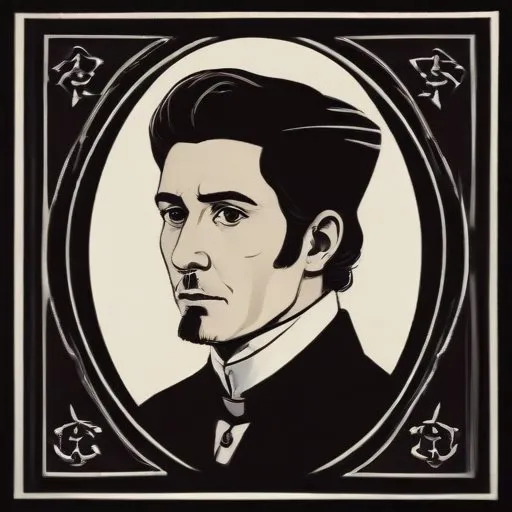
A 17th-century English astrologer, courtier, and diplomat who wrote extensively on astrology, alchemy, and natural philosophy, and is known for his works on the powder of sympathy.
Sir Kenelm Digby, a 17th-century English courtier, diplomat, natural philosopher, astrologer, and Roman Catholic intellectual, was a true embodiment of the Renaissance ideal. He was known for his remarkable versatility, earning him the title "the Magazine of all Arts and Sciences" and "the Ornament of this Nation."
Digby was born on July 11, 1603, at Gayhurst, Buckinghamshire, England, to a family of gentry stock. His father, Sir Everard Digby, was executed in 1606 for his involvement in the Gunpowder Plot, which had a significant impact on Kenelm's career. Despite this, he was in favor with James I and was proposed as a member of Edmund Bolton's projected Royal Academy, alongside notable figures such as George Chapman, Michael Drayton, Ben Jonson, John Selden, and Sir Henry Wotton.
He attended Gloucester Hall, Oxford, in 1618, where he was taught by Thomas Allen. Although he left without taking a degree, Allen bequeathed his library to Digby, which he later donated to the Bodleian.
Digby spent three years on the Continent between 1620 and 1623, where he caught the attention of Marie de Medici, who reportedly fell in love with him. In 1623, he was appointed to the household of Prince Charles in Madrid and was knighted by James I upon his return to England. He became a gentleman of the privy chamber to Charles and was granted a Cambridge Master of Arts degree on the king's visit to the university in 1624.
Throughout his career, Digby held various roles, including that of a privateer, sailing his flagship, the Eagle (later renamed Arabella), and becoming a member of the Privy Council of Charles I of England. Despite his Roman Catholicism, which hindered his appointment to government office, he converted to Anglicanism.
Around 1625, Digby married Venetia Stanley, whose wooing he cryptically described in his memoirs. His personal life was marked by intrigue, including his romantic involvement with Marie de Medici.
Digby's contributions to various fields have had a lasting impact on English history. As a natural philosopher and astrologer, he was a leading intellectual of his time. His diplomatic ventures and roles in the royal household have cemented his place in the annals of 17th-century English history.
Through his life and works, Digby has left an indelible mark on the fields of philosophy, astrology, and diplomacy. His remarkable versatility and accomplishments have earned him a place among the most renowned figures of the English Renaissance.
Digby's memoirs provide insight into his life and experiences, offering a unique perspective on the events that shaped his career and personal life.
This quote, among others, offers a glimpse into Digby's romantic and introspective nature, adding depth to our understanding of this remarkable individual.
Digby's life and career spanned a tumultuous period in English history, marked by political and religious upheaval. His experiences and accomplishments serve as a testament to the complexities and intrigues of the 17th century.
Through his legacy, Digby continues to inspire and educate, offering a unique window into the world of 17th-century England and the Renaissance ideal.
Born in 1561
A 16th-17th century Renaissance figure who pioneered the scientific method and empiricism, and served as a prominent government official.
Born in 1577
A 17th-century polymath who wrote extensively on melancholy, anatomy, and literature, producing influential works that shaped the Renaissance era's understanding of human emotions and the natural world.
Born in 1573
A 17th-century poet and cleric who penned powerful, metaphysical sonnets that explored themes of love, death, and spirituality. His works are celebrated for their complex, intricate language and profound insights into the human experience.
Born in 1572
A prominent figure in the English Renaissance, known for his witty plays and poems that explored themes of love, power, and morality. His works continue to influence literature and theater to this day.
Born in 1564
Renowned playwright and poet behind iconic works like Romeo and Juliet, Hamlet, and Macbeth, whose writings continue to influence literature and theater to this day.
Born in 1564
A Renaissance master of words, crafting plays and poems that explored the human condition, and translating ancient texts into English, leaving a lasting impact on literature.
Born in 1590
Early Connecticut leader who played a key role in the colony's development and governance, particularly in the 17th century.
Born in 1554
A Renaissance man who excelled in literature, politics, and warfare, leaving a lasting legacy in the world of poetry and chivalry.
