


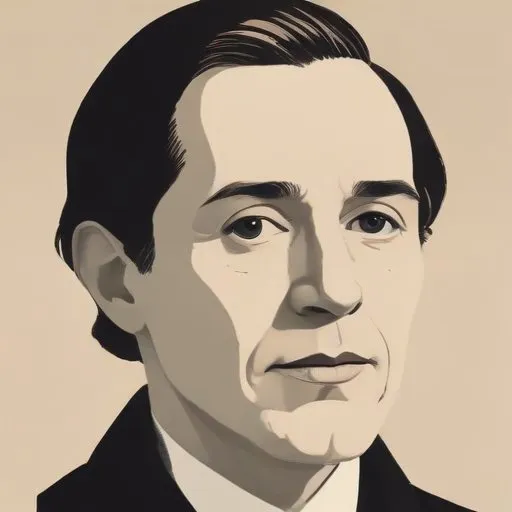
Wrote humorous and sentimental poetry and novels that captured the essence of New England life, particularly in his semi-autobiographical novel "The Story of a Bad Boy".
Thomas Bailey Aldrich, a renowned American writer, poet, critic, and editor, is most notably recognized for his long editorship of the esteemed The Atlantic Monthly, as well as his influential semiautobiographical book The Story of a Bad Boy, which pioneered the "bad boy" genre in 19th-century American literature.
Throughout his remarkable career, Aldrich's impressive literary prowess and astute editing skills contributed significantly to the development of American literary culture, earning him a permanent place in the annals of literary history.
Thomas Bailey Aldrich was born on November 11, 1836, in Portsmouth, New Hampshire, to Elias T. Aldrich and Sara Aldrich (née Bailey). His early life was marked by a period of nomadic experiences, including a move to New Orleans with his family, followed by a return to Portsmouth to prepare for college after his father's untimely death in 1849.
At the tender age of 16, Aldrich entered his uncle's New York business office, where he began his literary journey as a constant contributor to various newspapers and magazines. During this period, he befriended a coterie of young poets, artists, and wits, including Edmund Clarence Stedman, Richard Henry Stoddard, Fitz Hugh Ludlow, Bayard Taylor, and the iconic Walt Whitman.
Between 1856 and 1859, Aldrich was on the staff of the Home Journal, edited by Nathaniel Parker Willis. During the American Civil War, he served as the editor of the New York Illustrated News.
In 1865, Aldrich returned to New England, where he edited the eclectic weekly literary magazine Every Saturday, published by Ticknor and Fields and successors Field, Osgood & Co. and H. O. Houghton & Co., until its conclusion in 1874.
The pinnacle of Aldrich's editorial career was his tenure as editor of The Atlantic Monthly from 1881 to 1890, during which he exerted significant influence over American literary discourse. His editorial philosophy was characterized by a commitment to showcasing emerging talent and fostering a spirit of literary innovation.
Thomas Bailey Aldrich's multifaceted contributions to American literature have left an indelible mark on the literary landscape. His editorial stewardship of The Atlantic Monthly helped propel the careers of numerous notable writers, including Charles W. Chesnutt. Aldrich's commitment to nurturing emerging talent and promoting literary innovation has inspired generations of writers, critics, and editors.
Through his remarkable literary career, Aldrich has left behind a rich legacy that continues to inform and delight readers to this day.
Born in 1807
A celebrated poet and educator, known for his lyrical and narrative poems that often explored American history and culture, including the iconic "Paul Revere's Ride".
Born in 1803
A leading figure in the Transcendentalist movement, he advocated for individualism, self-reliance, and nature-inspired spirituality through his essays and poetry. His ideas continue to influence American thought and culture.
Born in 1804
Author of dark, psychologically complex tales that explore the human condition, often set in 17th-century New England, and known for his masterpiece "The Scarlet Letter".
Born in 1819
Author of epic sea tales and philosophical explorations, including the iconic "Moby-Dick", which continues to influence literature and popular culture.
Born in 1809
A master of dark and atmospheric storytelling, crafting haunting tales of mystery and horror that continue to captivate readers to this day.
Born in 1830
A reclusive poet who crafted innovative, enigmatic, and emotionally charged verse that continues to captivate readers with its unique style and profound insights.
Born in 1819
A celebrated poet, essayist, and journalist who revolutionized American literature with his collection "Leaves of Grass", known for his free verse style and celebration of the human spirit.
Born in 1835
Witty writer of classics like "The Adventures of Tom Sawyer" and "The Adventures of Huckleberry Finn", known for humor and social commentary.
