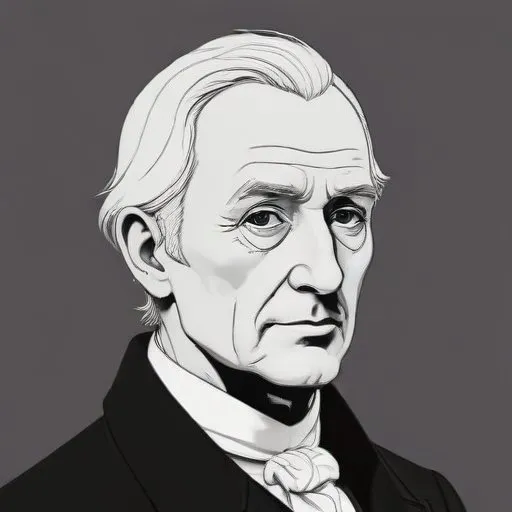
Thomas Baker: The Erudite Antiquarian
A Life of Learning and Controversy
Thomas Baker, a renowned English antiquarian, was born on September 14, 1656, in Lanchester, Durham. He is best known for his vast collection of books and manuscripts, which he accumulated throughout his life, and his contentious relationships with the Church of England.
Early Life and Education
Baker was the grandson of Colonel Baker of Crook, Durham, a hero of the English Civil War. He received his education at the free school in Durham and later attended St. John's College, Cambridge, where he was awarded a fellowship. This marked the beginning of his lifelong association with the college.
Church Controversies and Resignation
In 1687, Lord Crew, the bishop of Durham, appointed Baker as the rector of Long Newton. However, Baker's refusal to read James II's Declaration of Indulgence led to a rift with the bishop. When William III ascended to the throne, Baker chose not to take the oaths of allegiance, resulting in his resignation from Long Newton in 1690.
Deprivation and Isolation
Baker's decision to defy the Church of England's authority led to his deprivation of fellowship from St. John's College in 1716. He was among 21 others who suffered a similar fate. This event had a profound impact on Baker, who inscribed himself as "socius ejectus" (fellowship ejected) in his books and those he donated to the college library.
A Life of Scholarship and Legacy
Despite the controversies, Baker continued to live in the college as a commoner-master and devoted himself to his studies. He published two works:
Reflections on Learning, showing the Insufficiency thereof in its several particulars, in order to evince the usefulness and necessity of Revelation (1709-1710) and the preface to Bishop Fisher's Funeral.
Legacy and Impact
Baker's extensive library, comprising books and manuscripts, was a valuable resource for scholars after his death. Although the collection was dispersed, many books were donated to St. John's College, where they remain a testament to Baker's erudition. His legacy as a antiquarian and scholar continues to inspire researchers and historians.
Personal Milestones and Characteristics
- Baker's grandson, Colonel Baker of Crook, Durham, was a hero of the English Civil War.
- He was a fellow of St. John's College, Cambridge, and later a commoner-master.
- Baker was known for his strong convictions and refusal to compromise his principles, even in the face of adversity.
Trivia and Fun Facts
- Baker's sudden death from apoplexy on July 2, 1740, brought an end to his remarkable life.
- His annuity of 40, along with 20 per annum from his elder brother's collieries, was his only income after the Registering Act of 1723.
FAQ
What was Thomas Bakers most notable work?
Thomas Bakers most notable work is his Mediæval Chronicle, a historical account of England from the 13th to the 16th century. This comprehensive work is considered a valuable resource for historians and scholars, offering insights into medieval Englands politics, society, and culture.
What were Thomas Bakers contributions to English history?
Thomas Baker made significant contributions to English history through his meticulous research and documentation of the medieval period. His work helped to fill gaps in historical records, providing a more comprehensive understanding of Englands past.
How did Thomas Bakers writing style influence historical account?
Thomas Bakers writing style, characterized by thorough research and attention to detail, influenced the way historians approached historical account. His work set a high standard for historical writing, emphasizing accuracy and objectivity.
What inspired Thomas Bakers interest in history?
Thomas Bakers interest in history was inspired by his love of literature and his desire to understand the complexities of human society. He believed that studying the past was essential for shaping a better future, and his work reflects this philosophy.
What is Thomas Bakers legacy in English literature?
Thomas Bakers legacy in English literature is that of a meticulous historian and scholar who contributed significantly to the field of historical research. His work continues to be valued by scholars and historians, serving as a testament to his dedication to understanding the past.