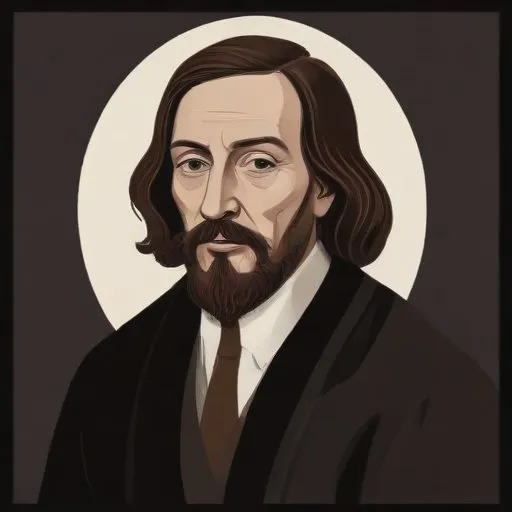
Unveiling the Enigmatic Thomas Browne: Polymath, Author, and Renaissance Man
A Life of Curiosity and Erudition
Thomas Browne, a 17th-century English polymath, author, and philosopher, is renowned for his eclectic and voluminous works that exemplify his boundless curiosity and erudition. His writings, infused with wit, subtlety, and a deep fascination with the natural world, have captivated scholars and readers alike, earning him a spot among the most revered intellectuals of his time.
A Childhood of Privilege and Learning
Born on October 19, 1605, in the parish of St. Michael, Cheapside, London, Browne was the youngest child of Thomas Browne, a silk merchant, and Anne Browne. His family's prominent social standing and armigerous heritage likely contributed to his access to quality education and early exposure to the world of learning.
Academic Pursuits and Influences
Browne's educational journey took him to Winchester College, followed by Broadgates Hall of Oxford University, where he delivered the undergraduate oration in 1624. He graduated in 1627 and subsequently pursued medical studies at Padua, Montpellier, and Leiden universities. The influences of
Francis Bacon's scientific revolution, classical sources, and biblical references are evident in his writings, reflecting his broad intellectual landscape.
A Polymath's Magnum Opus: Religio Medici
Browne's most celebrated work,
Religio Medici (1643), is a philosophical and introspective treatise that showcases his unique blend of scientific inquiry, spirituality, and wit. This seminal work, written in a lyrical and ornate style, explores the interplay between faith, reason, and the human experience.
Other Notable Works and Contributions
Some of Browne's other notable works include:
- Pseudodoxia Epidemica (1646), a comprehensive survey of common errors and misconceptions in various fields.
- Hydriotaphia, Urn Burial (1658), a meditation on mortality, funeral rites, and the significance of burial practices.
- The Garden of Cyrus (1658), a treatise on the symbolic and mystical significance of gardens and gardening.
Legacy and Impact
Thomas Browne's writings have had a profound impact on literature, science, and philosophy. His works, characterized by their erudite and labyrinthine style, continue to inspire and challenge readers. His influence can be seen in the works of prominent authors, including
Samuel Taylor Coleridge,
Charles Lamb, and
Thomas De Quincey.
Personal Milestones and Key Life Events
Browne's life was marked by significant events, including his father's early death, his mother's remarriage, and his own struggles with melancholia. Despite these challenges, he remained dedicated to his craft, leaving behind a legacy of intellectual curiosity and literary innovation.
Trivia and Fun Facts
- Browne was known for his fascination with the natural world, particularly insects and botany.
- He was a fellow of the Royal Society and a strong supporter of the scientific revolution.
- Browne's writings often featured cryptic and oblique references, adding to their mystique and allure.
In Conclusion
Thomas Browne, a true Renaissance man, left an indelible mark on the intellectual landscape of his time. His extraordinary writings, infused with wit, erudition, and curiosity, continue to captivate and inspire readers, cementing his place as one of the most remarkable minds in history.
FAQ
What is Thomas Brownes most famous work?
Thomas Brownes most famous work is Religio Medici, a philosophical and theological treatise that explores the relationship between faith and reason.
How did Brownes work influence the development of English literature?
Brownes unique style, characterized by its use of symbolism and metaphysics, influenced a range of English writers, including Samuel Johnson and Charles Lamb.
What is the significance of Thomas Brownes concept of idolatry?
Brownes concept of idolatry criticized the excessive veneration of material objects, emphasizing the importance of spiritual devotion over earthly concerns.
How did Brownes medical background inform his writing?
Brownes medical training and experience informed his writing, as he often used medical analogies to explore philosophical and theological concepts.
What legacy did Thomas Browne leave in the field of science?
Brownes scientific writings, although not always accurate, demonstrate his curiosity and empiricism, influencing the development of scientific inquiry in the 17th century.