


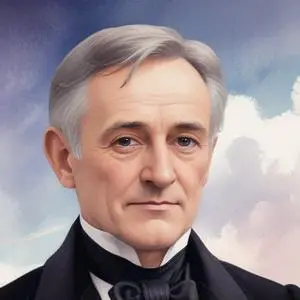
A renowned journalist and author who penned influential essays and novels, including the famous "Confessions of an English Opium-Eater", which explored the darker side of addiction.
Thomas De Quincey, born on August 15, 1785, was an English writer, essayist, and literary critic, best known for his groundbreaking work, Confessions of an English Opium-Eater (1821). This seminal work inaugurated the tradition of addiction literature in the West, cementing De Quincey's place in literary history.
De Quincey was born in Manchester, Lancashire, to a successful merchant father with a passion for literature. After his father's death in 1796, his mother, Elizabeth Penson, changed the family surname to De Quincey. He was a frail and sickly child, spending much of his youth in solitude.
De Quincey's writing career spanned over three decades, during which he wrote numerous essays, articles, and reviews. His work was characterized by its vivid imagery, philosophical depth, and introspective nature.
De Quincey's work was deeply rooted in philosophical inquiry, particularly in the fields of aesthetics, ethics, and the human condition.
De Quincey's work has had a profound impact on modern literature, influencing writers such as Charles Baudelaire, Virginia Woolf, and William S. Burroughs.
Thomas De Quincey's legacy extends beyond his literary accomplishments, serving as a testament to the power of the human spirit to overcome adversity and transform suffering into art.
Through his writing, Thomas De Quincey has left an indelible mark on literary history, shaping our understanding of the human condition and inspiring future generations of writers and thinkers.
Born in 1772
A leading figure of the Romantic movement, he crafted vivid, imaginative poetry and explored the human experience through his writing and philosophical ideas. His works continue to inspire and influence literature and art to this day.
Born in 1770
A major Romantic poet, known for his focus on nature, emotion, and the human experience, creating works that evoke a sense of wonder and connection to the natural world.
Born in 1788
Romantic poet and playwright celebrated for passionate, expressive works that explored themes of love, freedom, and the human condition.
Born in 1792
Romantic-era writer of lyrical poetry and Gothic dramas that explored the human condition, freedom, and the beauty of nature.
Born in 1795
Romantic poet celebrated for sensual language and vivid imagery, capturing the beauty of nature and human experience in odes like "To Autumn" and "Ode to a Nightingale".
Born in 1797
Author of Gothic novels, particularly the iconic "Frankenstein", which has become a cultural phenomenon and influenced countless adaptations and reinterpretations.
Born in 1775
A celebrated author of witty, romantic novels of manners that offer insightful commentary on 19th-century English society, particularly the lives of women. Her works remain beloved for their strong female characters, clever dialogue, and nuanced exploration of relationships.
Born in 1812
A renowned author of timeless classics, crafting vivid stories that exposed social injustices and explored the human condition, leaving an indelible mark on literature.
