


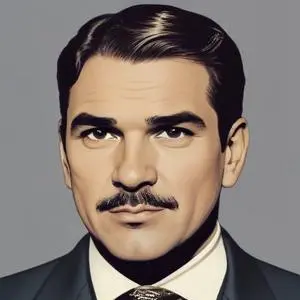
The 47th Governor of New York was a prominent lawyer and politician who played a significant role in shaping the state's politics and policies during his tenure. He's most known for being the Republican nominee for President in 1944 and 1948, famously losing to Harry Truman in the latter election.
Known for his unwavering determination to bring down the American Mafia, Thomas E. Dewey was a lawyer, politician, and a force to be reckoned with in the fight against organized crime. As a New York City prosecutor and District Attorney in the 1930s and early 1940s, Dewey made a name for himself by taking on the likes of notorious gangsters Charles "Lucky" Luciano and Waxey Gordon, ultimately putting them behind bars.
Dewey's political career was shaped by his moderate stance on various issues, which often put him at odds with conservative politicians of his time. As the 47th governor of New York from 1943 to 1954, he advocated for the professional and business community of the Northeastern United States, supporting international cooperation and social welfare reforms. His moderate faction of the Republican Party was instrumental in shaping the party's platform during the 1940s and 1950s.
Dewey's governorship was marked by several significant reforms, including the establishment of the New York State Power Authority, the creation of the State University of New York, and the construction of the New York State Thruway. His administration also saw the implementation of various social welfare programs, including old-age assistance, disability benefits, and workers' compensation.
In 1944 and 1948, Dewey was the Republican Party's nominee for president, losing both times to Democratic opponents. Despite these defeats, Dewey remained a powerful figure in American politics, with his combined electoral votes from both elections placing him second behind William Jennings Bryan as the candidate with the most electoral votes who never acceded to the presidency.
Dewey's most notable achievements, however, were in the realm of law enforcement. His dogged pursuit of organized crime led to the successful prosecution of Charles "Lucky" Luciano, who was sentenced to 30 to 50 years in prison for forced prostitution. Dewey also convicted Waxey Gordon, a prominent New York City gangster and bootlegger, of tax evasion. His efforts to apprehend Dutch Schultz were thwarted by the gangster's murder in 1935.
Thomas E. Dewey's legacy in American politics is one of moderation, reform, and unwavering commitment to justice. His fearless approach to taking on organized crime set a new standard for law enforcement, and his contributions to the development of the Republican Party continue to shape its platform to this day.
"Crime is an issue that affects us all, and it is our collective responsibility to combat it."
Thomas E. Dewey's crusade against organized crime paved the way for future generations of law enforcement officials, inspiring a new wave of crusaders against corruption and crime. His moderate stance on politics and his commitment to social welfare reforms continue to influence American politics today.
Born in 1882
Led the United States through the Great Depression and World War II, implementing a series of reforms known as the New Deal and helping to establish the country as a global superpower.
Born in 1873
The 42nd Governor of New York was a prominent figure in American politics, known for being the first Catholic to run for President and a strong advocate for social justice and progressive reforms. He played a significant role in shaping the Democratic Party's platform during the 1920s and 1930s.
Born in 1908
A wealthy businessman and politician who served as Vice President under Gerald Ford, known for his moderate Republican views and influential role in shaping US foreign policy.
Born in 1904
A prominent attorney general and politician who played a significant role in shaping New York's legal landscape and advocating for liberal policies. He's most known for his efforts in civil rights and social justice.
Born in 1896
Australian author and critic, best known for writing the classic mystery novel "Picnic at Hanging Rock", a haunting and atmospheric tale that has become an Australian literary icon.
89 Years Old
A renowned British actor, known for his iconic roles in films like "Day of the Jackal" and "Gandhi", bringing characters to life with his distinctive voice and presence.
