


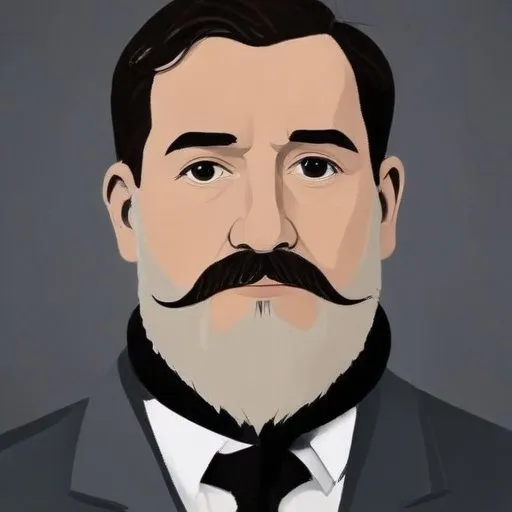
Scottish astronomer and mathematician who made significant contributions to the field of astronomy, particularly in the discovery of the parallax of Alpha Centauri, a major milestone in measuring the distance to nearby stars.
Thomas Henderson, a Scottish astronomer and mathematician, is renowned for being the first person to measure the distance to Alpha Centauri, the closest star system to Earth, and the first to determine the parallax of a fixed star. This groundbreaking achievement marked a significant milestone in the field of astronomy, revolutionizing our understanding of the universe and earning Henderson a place among the most notable astronomers in history.
Born on December 28, 1798, in Dundee, Scotland, Henderson was educated at the High School of Dundee before pursuing a career in law. However, his true passions lay in astronomy and mathematics, which he pursued in his spare time. His talent and dedication eventually caught the attention of Thomas Young, superintendent of the Royal Navy's Nautical Almanac, who helped Henderson enter the world of astronomical science.
In 1832, Henderson was appointed to the Royal Observatory at the Cape of Good Hope in South Africa, where he made numerous stellar observations that would later cement his place in history. During his time in Africa, Henderson was alerted to the large proper motion of Alpha Centauri by Manuel John Johnson of the East India Company's observatory on Saint Helena. Recognizing the potential to measure the distance to this star using parallax, Henderson set out to achieve this formidable task.
After retiring to the United Kingdom due to poor health, Henderson began analyzing his measurements and eventually concluded that Alpha Centauri was approximately 3.25 light years away, with a distance of just slightly less than one parsec. This achievement not only marked the first time the distance to a star had been measured using parallax but also demonstrated the power of human ingenuity and scientific inquiry.
Henderson's pioneering achievement had a profound impact on the field of astronomy, paving the way for future generations of scientists to explore the vast expanse of the universe. As the first Astronomer Royal for Scotland, Henderson's work inspired a new era of astronomical discovery and continued to influence the development of astronomy long after his death on November 23, 1844.
Henderson was elected a Fellow of the Royal Society of Edinburgh (FRSE) and a Fellow of the Royal Society (FRS) in recognition of his outstanding contributions to the field of astronomy.
Henderson's work embodied the spirit of scientific inquiry and the pursuit of knowledge. His groundbreaking achievement demonstrated the power of human ingenuity and the importance of pushing the boundaries of human understanding.
Henderson's pioneering work took place during a period of significant scientific discovery and exploration. His achievement not only reflected the intellectual curiosity of the era but also paved the way for future generations of scientists to build upon his discoveries.
Born in 1738
A pioneering astronomer and musician who discovered Uranus and two of its moons, and also composed symphonies and concertos.
Born in 1750
First female astronomer to receive a salary, discovered several comets and double stars, and assisted her brother William in his astronomical observations.
Born in 1792
Developed a system of mathematical astronomy, cataloging over 2,500 nebulae and star clusters, and made significant contributions to the field of photography. His work laid the foundation for modern astronomy and astrophysics.
Born in 1799
Discovered four moons of Neptune and Uranus, and built a telescope to study the solar system.
Born in 1811
Predicted the existence and location of Neptune, a previously unknown planet, through mathematical calculations, revolutionizing astronomy.
Born in 1784
Developed the Bessel functions, a set of mathematical equations crucial for astronomy, navigation, and engineering, and made the first accurate measurement of a star's distance from Earth.
