


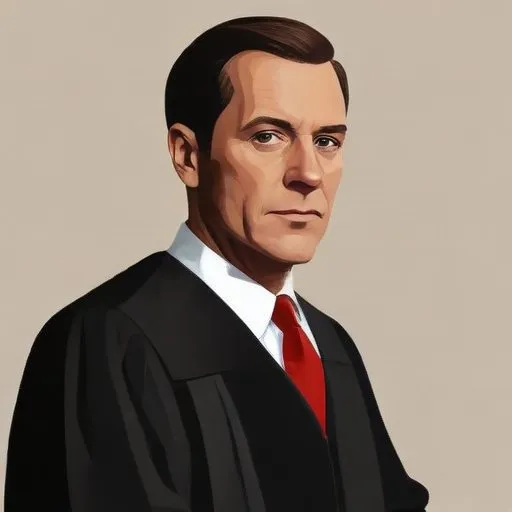
Served as the Chief Justice of the Ohio Supreme Court, known for his leadership and opinions on significant state cases. 18
As the longest-serving chief justice in Ohio Supreme Court history, Thomas J. Moyer left an indelible mark on the state's judicial system, advocating for education reform and championing the principles of stare decisis. From 1987 to 2010, Moyer's tenure was marked by landmark decisions, including the DeRolph decision, which reshaped Ohio's school funding landscape.
Born on April 18, 1939, in Sandusky, Ohio, Moyer attended Sandusky High School before earning both his undergraduate and law degrees from the Ohio State University. His alma mater would later bestow upon him the honor of chairman of the board of directors of the Ohio State Alumni Association.
Moyer's career in law and politics began to take shape when he served as president of the Columbus Board of Education from 1968 to 1970. During this period, the board grappled with desegregation issues, as chronicled in the book Getting Around Brown. He then served as executive assistant to Governor Jim Rhodes for four years and later practiced private law in Sandusky for eight years.
In 1979, Moyer was appointed to the Tenth District Court of Appeals, where he served until 1987. He was then elected to the Ohio Supreme Court, winning reelection in 1992, 1998, and 2004. As chief justice, Moyer oversaw significant reforms, including the creation of a task force on guardians ad litem in Ohio in 2001.
Moyer's commitment to stare decisis led to controversial decisions, such as the DeRolph case, which aimed to address Ohio's school funding disparities. Another notable case involved tort reform in the late 1990s. Although a Republican, Moyer's dedication to upholding precedent often put him at odds with his party's stance.
In recognition of his dedication to the Ohio judiciary, the Thomas J. Moyer Ohio Judicial Center was named in his honor in 2011. Throughout his career, Moyer received numerous awards and honors, solidifying his position as a respected figure in Ohio's legal community.
Moyer was married and lived in Columbus, where he remained an active member of the community. He served on the board of trustees of Franklin University and was involved in various philanthropic endeavors, though details of these efforts remain scarce.
As Moyer's legacy continues to shape Ohio's judicial landscape, it is clear that his commitment to education and stare decisis will remain a guiding force for future generations of jurists.
Born in 1907
The 15th Chief Justice of the United States, leading the Supreme Court from 1969 to 1986, known for his conservative stance and landmark decisions on abortion and capital punishment.
Born in 1924
The 16th Chief Justice of the United States, a conservative jurist who led the Supreme Court from 1986 to 2005, shaping the court's decisions on issues like abortion and affirmative action. He's also known for his role in several landmark cases, including Bush v. Gore.
96 Years Old
First female Supreme Court Justice in the United States, serving from 1981 to 2006 and playing a crucial role in many landmark cases, particularly those involving gender equality and reproductive rights.
Born in 1920
A renowned lawyer and jurist who served on the Supreme Court for nearly 35 years, shaping American law and civil liberties with his progressive opinions.
Born in 1908
A Supreme Court Justice who played a crucial role in landmark cases like Roe v. Wade, shaping the country's legal landscape and social policies.
Born in 1908
A trailblazing lawyer and civil rights champion who broke racial barriers in the US justice system, serving as the first African American on the Supreme Court. He fought tirelessly for equality and justice, leaving a lasting impact on American history.
Born in 1891
The 14th Chief Justice of the United States, a jurist and politician who led the Supreme Court through a transformative era of civil rights and social change, issuing landmark rulings like Brown v. Board of Education.
Born in 1886
A U.S. Supreme Court Justice who served for 34 years, known for his strong support of individual liberties and First Amendment rights.
