


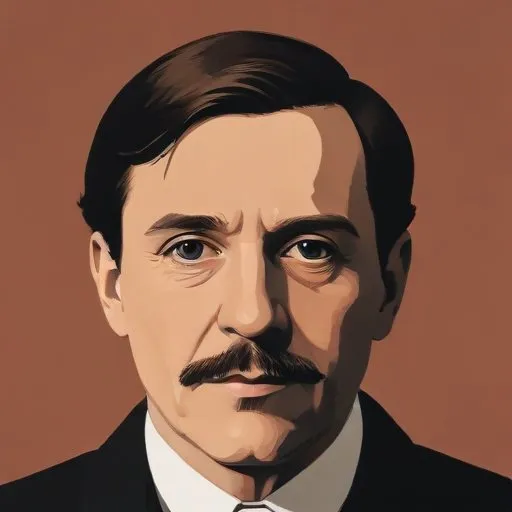
Noted writer and critic who reviewed films and theater productions for various publications, offering insightful commentary on the entertainment industry.
Thomas Quinn Curtiss, an American writer, film and theater critic, left an indelible mark on the world of arts and letters. Known for his razor-sharp wit, Curtiss' critiques and writing continue to inspire a new generation of artists, writers, and critics alike.
Born on June 22, 1915, in New York City, Curtiss was the son of Roy A. Curtiss and Ethel Quinn. His privileged upbringing afforded him access to the best education, attending the Bovee School for Boys and later the Browning School in New York, where he graduated in 1933. It was during these formative years that Curtiss developed his passion for the arts, fostered by his friendships with luminaries like Louis Auchincloss.
In the 1930s, Curtiss embarked on a journey to Vienna and Moscow, where he studied film and theater under the tutelage of the legendary Sergei Eisenstein. This period not only honed his critical faculties but also introduced him to the works of European masters, shaping his unique perspective on the arts.
In 1937, Curtiss met the German author Klaus Mann, nine years his senior, in Budapest. Their whirlwind romance, though brief, left an indelible mark on both men. Mann's diary entries and later writings would immortalize Curtiss as "Tomski", his endearing nickname for the young American. Their relationship, though fraught with passion and intensity, would eventually fizzle out, but the impact of their encounter would linger.
As a critic, Curtiss' insightful writings on film and theater garnered him a reputation as a keen observer of the human experience. His philosophical leanings, informed by his own tumultuous relationships and struggles with identity, added depth and nuance to his critiques. Curtiss' writings continue to inspire artists and intellectuals, who find solace in his compassionate and erudite perspective.
Thomas Quinn Curtiss' life, a tapestry of passion, art, and intellect, continues to fascinate and inspire. His romance with Klaus Mann, though fleeting, remains a testament to the power of love to transcend boundaries. As a writer and critic, Curtiss left an indelible mark on the world of arts and letters, ensuring his legacy as a Renaissance man of the 20th century.
Born in 1911
A Pulitzer Prize-winning playwright and poet, known for crafting emotionally charged, poetic dramas that explore the human condition, particularly in the American South.
Born in 1915
Pulitzer Prize-winning playwright behind iconic dramas like "Death of a Salesman" and "The Crucible", exploring American identity and morality through powerful storytelling.
Born in 1905
Pioneering playwright and screenwriter who crafted intricate, socially conscious dramas that probed the human condition, often focusing on moral dilemmas and personal relationships.
Born in 1894
Pioneering author of hard-boiled detective fiction, crafting gritty, iconic characters like Sam Spade and Nick Charles, influencing the genre for generations. 82
Born in 1899
A legendary writer who crafted sparse, powerful prose, capturing the human experience in novels like "The Old Man and the Sea" and "A Farewell to Arms".
Born in 1896
Author of novels and short stories that capture the essence of the Jazz Age, exploring themes of wealth, class, and the American Dream. Known for timeless classics like "The Great Gatsby" and "Tender Is the Night".
Born in 1893
A witty and insightful writer who crafted poetry, short stories, and critiques that continue to delight readers with their clever wordplay and sharp observations.
Born in 1924
A celebrated author of dark, atmospheric fiction, known for crafting intricate, psychologically complex stories that blur the lines between reality and fantasy. His work often explores the American psyche, delving into themes of identity, morality, and the human condition.
