


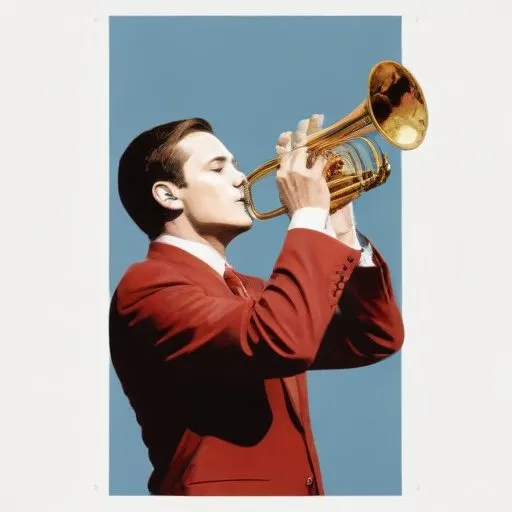
A pioneering jazz trumpeter of the 1920s and 1930s, known for his distinctive, lyrical style and influential recordings with bands like the New Orleans Feetwarmers.
Tommy Ladnier, an American jazz trumpeter, was a master of his craft, often overshadowed by the great Louis Armstrong, but still considered one of the most talented musicians of his time. Hugues Panassi, a renowned French jazz critic, once rated Ladnier second only to Armstrong, a testament to his incredible skill and artistry.
Born on May 28, 1900, in Mandeville, Louisiana, Ladnier began his musical journey at a young age, performing in the Independence Band at the Dew Drop Dance Hall, led by clarinetist Isidore Frick. It was during this time that he received lessons from trumpeter Bunk Johnson, who would later become a significant influence on his style.
After moving to Chicago with his mother in 1917, Ladnier worked in the stockyards before pursuing a career in music. He married Daisy Mathews in 1920 and began playing professionally around 1921. His talent soon took him to St. Louis, where he played with Charlie Creath, and later to Chicago, where he recorded with pianist Lovie Austin and accompanied blues singers Ma Rainey, Ida Cox, and Alberta Hunter.
Ladnier's idol, King Oliver, greatly influenced his playing style, which he emulated on the solo "Play that Thing" with Ollie Powers Harmony Syncopators in 1923. Tragedy struck the same year when his mother, Willie Ladnier, died from a gunshot wound at a party. This event would mark a turning point in Ladnier's life and career.
In 1925, Ladnier joined pianist Sam Wooding's orchestra for an extensive tour of Germany, Sweden, Denmark, Spain, and Russia. During this time, the orchestra recorded in Berlin, further solidifying Ladnier's reputation as a trumpet virtuoso.
Tommy Ladnier's contributions to jazz, though often overlooked, are undeniable. His unique playing style, influenced by King Oliver and shaped by his experiences in New Orleans and Chicago, left an indelible mark on the genre. As a testament to his legacy, Ladnier's music continues to inspire and influence jazz musicians to this day.
Though Ladnier's life was cut short when he passed away on June 4, 1939, his music remains a celebration of his talent, dedication, and passion. As we reflect on his life and legacy, we are reminded of the power of jazz to transcend time and generations, leaving behind a rich cultural heritage that continues to inspire and enrich our lives.
Born in 1901
A legendary jazz musician who revolutionized the genre with his unique trumpet playing and raspy vocals, leaving an indelible mark on American music.
Born in 1897
A pioneering jazz musician who blended traditional and experimental styles, creating a unique sound that influenced generations of jazz artists.
Born in 1909
A virtuosic clarinetist and bandleader, known as the "King of Swing," who revolutionized jazz music with his energetic and sophisticated style, leading a racially integrated orchestra in the 1930s.
Born in 1910
A virtuosic clarinetist and innovative bandleader, he revolutionized the swing era with his unique sound and iconic hits like "Begin the Beguine" and "Stardust".
Born in 1899
A legendary jazz pianist, composer, and bandleader who revolutionized the genre with his unique style and iconic compositions, such as "Take the A Train" and "Mood Indigo".
Born in 1904
A legendary jazz pianist and bandleader who led a iconic orchestra, blending swing and blues to create a unique sound that influenced generations of musicians. Known for his distinctive "less-is-more" style and hits like "April in Paris" and "One O'Clock Jump".
Born in 1917
A virtuosic jazz vocalist known for her pure, expressive tone, impeccable phrasing, and incredible scat singing abilities. She won 13 Grammy Awards and recorded over 200 albums.
