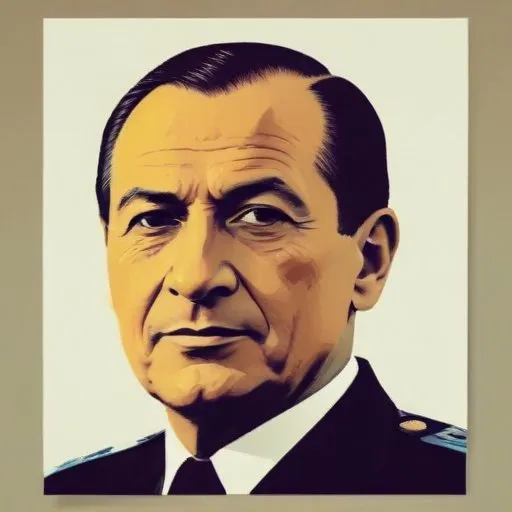
Traian Basescu: The Conservative Politician who Shaped Romania's Future
A Brief Overview
Traian Basescu, born on November 4, 1951, is a prominent Romanian conservative politician who served as the President of Romania from 2004 to 2014. During his tenure, he played a crucial role in Romania's accession to the European Union (EU) in 2007, making him a significant figure in the country's modern history.
Early Life and Career
Born in Basarabi (now renamed Murfatlar), near the port city of Constanta, Basescu grew up in a family with a strong military background. His father, Dumitru, was an army officer who instilled in him the importance of public service. Basescu's early involvement in politics began in the 1970s when he joined the Romanian Communist Party (PCR). After the collapse of communism, he shifted his allegiance to the Democratic Party (PD) and quickly rose through the ranks.
Rise to Prominence
In 2000, Basescu was elected as the Mayor of Bucharest, a position he held until 2004. During his tenure, he implemented several notable reforms, including the modernization of the city's infrastructure and the improvement of public services. His success as Mayor catapulted him to the forefront of Romanian politics, and in 2004, he was elected as the President of Romania.
Presidential Tenure and Legacy
Basescu's presidency was marked by several significant achievements, including Romania's accession to the EU in 2007. He also implemented a range of social conservative, neoliberal, and populist policies, which had a profound impact on the country's economy and society. Despite facing opposition and criticism, Basescu remained a dominant figure in Romanian politics, winning re-election in 2009.
Controversies and Challenges
During his presidency, Basescu faced two impeachment attempts, in 2007 and 2012, respectively. Although he survived both attempts, they tarnished his reputation and raised concerns about corruption and abuse of power. Additionally, his brother, Mircea, was embroiled in a corruption scandal, which further eroded public trust in his leadership.
Post-Presidency and Later Life
After leaving office in 2014, Basescu joined the People's Movement Party (PMP) and became its president in 2016. He resigned from the position in 2018 and has since served as a Member of the European Parliament for Romania since 2019.
Personal Life and Family
Basescu is married to Maria, and they have two daughters, Ioana and Elena. Despite the demands of his political career, he has maintained a strong family bond and has often spoken about the importance of family values in Romanian society.
Philosophical Contributions and Beliefs
Throughout his career, Basescu has been driven by a strong sense of conservative values, emphasizing the importance of individual freedom, limited government intervention, and social responsibility. He has also been a vocal advocate for neoliberal policies, promoting economic growth and foreign investment.
Influence on Modern Society
Basescu's presidency and policies have had a lasting impact on Romanian society. He has been credited with promoting economic growth, improving infrastructure, and enhancing Romania's global reputation. Although controversy has surrounded his leadership, his commitment to public service and his vision for Romania's future have left an indelible mark on the country's history.
Major Works and Publications
- The Romania of the Future (2004) - a collection of speeches and essays outlining Basescu's vision for Romania's future
- A New Era for Romania (2009) - a book detailing his presidential policies and achievements
Quotes and Memorable Sayings
- "Romania's future is in the European Union, and we must work tirelessly to make that a reality."
- "The role of the state is to serve the people, not to control them."
Legacy and Comparative Analysis
Basescu's presidency was marked by both triumphs and controversies, but his commitment to public service and his vision for Romania's future have secured his place in the country's history. When compared to his contemporaries, Basescu's leadership style and policies have been likened to those of other prominent European conservatives, such as
Angela Merkel and
David Cameron. Despite the challenges he faced, he remains a significant figure in modern Romanian politics.