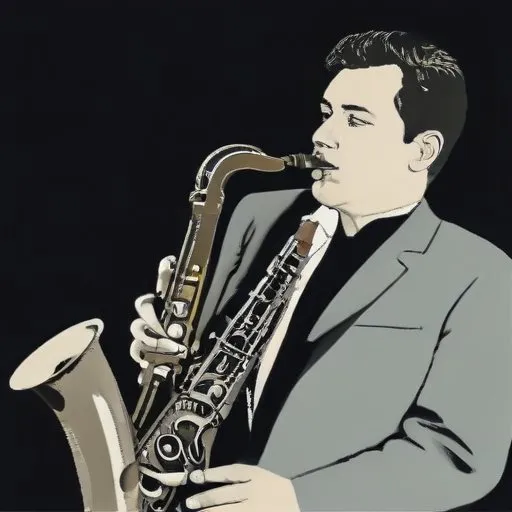
Tubby Hayes: The Virtuosic British Jazz Saxophonist
Early Life and Inspiration
Tubby Hayes, born Edward
Brian Hayes on January 30, 1935, was a renowned British jazz multi-instrumentalist, celebrated for his exceptional musicianship on the tenor saxophone. He is widely regarded as one of the finest jazz saxophonists to have emerged from Britain, leaving an indelible mark on the jazz landscape.
Growing up in Raynes Park, southwest London, Hayes was introduced to music at a tender age by his father, a BBC studio violinist who provided him with violin lessons. By the age of ten, Hayes had already begun playing the piano, and by eleven, he transitioned to the tenor saxophone, an instrument that would become synonymous with his name.
Influences and Early Career
Dizzy Gillespie, a legendary jazz trumpeter, was an early influence on Hayes, who often listened to swing music in the early 1940s. However, it was later musicians such as
Stan Getz,
Sonny Rollins,
John Coltrane,
Hank Mobley, and
Zoot Sims who would shape his style and approach to jazz.
After attending Rutlish School in Merton Park from 1946 to 1951, Hayes left school to pursue a career in music, initially playing with various semi-professional bands around London. At the age of 16, he joined
Kenny Baker's sextet, marking the beginning of his professional journey.
Rise to Prominence
Hayes's prodigious talent on the tenor saxophone was recognized in 1951 when he joined Kenny Baker's sextet. He subsequently worked with prominent big band leaders, including Ambrose, Terry Brown, Tito Burns, Roy Fox, Vic Lewis, and Jack Parnell. In 1955, with the assistance of music impresario Tito Burns, Hayes formed his own octet, known as Tubby Hayes and His Orchestra, which toured the UK extensively and recorded several sessions for Tempo Records.
Quartet and Later Career
Following the disbandment of his octet in 1956, Hayes pursued other musical opportunities, including his own quartet. Throughout the 1950s and 1960s, Hayes continued to perform and record with various ensembles, solidifying his reputation as a masterful saxophonist.
Influence and Legacy
Tubby Hayes's impact on modern jazz is undeniable. His virtuosic musicianship, versatility, and eclectic influences have inspired generations of jazz musicians. With his passing on June 8, 1973, the jazz world lost a luminary, but his legacy lives on through his remarkable body of work.
Discography and Notable Recordings
- Tubby Hayes and His Orchestra: Tempo TAP 16 (1955)
- Tubby Hayes Quartet: Tubby's Theme (1959)
- Tubby Hayes: The Jazz Couriers (1957-1959)
Awards and Honors
Hayes's contributions to jazz were recognized with several awards and accolades, including the prestigious
Best Newcomer award at the 1955
NME Poll Winners Concert.
Personal Milestones and Key Life Events
Throughout his life, Hayes was known for his humility and dedication to his craft. His passion for jazz led him to share the stage with fellow British jazz luminaries, including
Ronnie Scott and Jimmy Deuchar, forging lasting musical relationships.
Historical Context and Legacy
Tubby Hayes's life and music are a testament to the fertile soil of British jazz in the post-war era. His innovative approach to the tenor saxophone and his boundary-pushing musical explorations have left an indelible mark on the genre. As a result, Hayes's legacy continues to inspire and influence jazz musicians to this day.
FAQ
What was Tubby Hayes contribution to British jazz?
Tubby Hayes was a pioneering figure in British jazz, introducing modern jazz styles and techniques to the UK scene. His virtuosic saxophone playing and compositions raised the profile of British jazz globally.
Which instruments did Tubby Hayes play?
Tubby Hayes was a multi-instrumentalist, playing the tenor saxophone, soprano saxophone, and vibraphone. He was particularly known for his work on the tenor saxophone, which earned him international recognition.
What are some notable collaborations by Tubby Hayes?
Tubby Hayes collaborated with esteemed musicians like Ronnie Scott, Tony Kinsey, and Jimmy Deuchar. He also worked with American jazz legends like Coleman Hawkins and Roland Kirk.
What is Tubby Hayes legacy in British music?
Tubby Hayes legacy in British music is that of a trailblazing jazz musician who paved the way for future generations of British jazz artists. His influence extends beyond jazz, inspiring musicians across multiple genres.
How did Tubby Hayes career evolve over time?
Tubby Hayes career evolved from his early days as a swing musician to his later work as a modern jazz innovator. He explored various styles, from bebop to modal jazz, and remained a driving force in British jazz until his untimely death.