


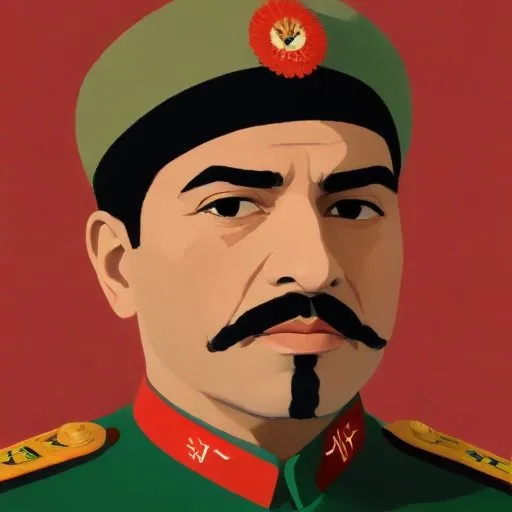
Son of Saddam Hussein, notorious for brutal suppression of Iraqi athletes and citizens, earning a reputation as a ruthless and feared figure.
Uday Hussein was the eldest son of Saddam Hussein, the former dictator of Iraq, and was once considered the likely successor to his father's throne. However, his notorious reputation for brutality, corruption, and extravagance eventually led to his downfall.
Uday was born on June 18, 1964, in Baghdad, Iraq, to Saddam Hussein and his first wife, Sajida Talfah. His childhood was marked by luxury and violence, with reports suggesting that he would play with disarmed grenades as an infant and witness executions alongside his father.
In the 1980s, Uday began to consolidate his power and influence in Iraq, holding positions as a sports chairman, military officer, and businessman. He became the head of the Iraqi Olympic Committee and the Iraq Football Association, using these positions to further his own interests and intimidate those around him.
Uday was also the founder and leader of the Fedayeen Saddam, a paramilitary organization that was notorious for its brutality and human rights abuses. He was accused of ordering the torture and murder of Iraqi athletes who failed to meet his expectations, as well as the rape and murder of countless civilians.
Uday's personal life was marked by extravagance and controversy. He was known for his love of luxury cars, expensive jewelry, and high-end fashion. However, he was also accused of being erratic, ruthless, and intimidating, with many relatives and acquaintances falling victim to his violence and rage.
In 2003, during the United States-led invasion of Iraq, Uday's world began to crumble. He was killed on July 22, 2003, alongside his brother Qusay and his nephew Mustafa, in a firefight with American forces in Mosul.
Uday Hussein's legacy is one of brutality, corruption, and terror. While he was once considered the likely successor to his father's throne, his own actions ultimately led to his downfall and ensured that his name would become synonymous with evil.
Uday's life and legacy must be viewed within the context of his father's brutal regime. While Saddam Hussein's rule was marked by violence and oppression, Uday's actions took it to new heights, earning him a reputation as one of the most feared and hated men in Iraq.
89 Years Old
The authoritarian leader who ruled Iraq with an iron fist, notorious for his brutal suppression of dissent and invasion of neighboring countries.
60 Years Old
Son of Saddam Hussein, who served as a high-ranking military officer and politician in Iraq, known for his brutal suppression of opposition and human rights abuses.
84 Years Old
A former Iraqi vice president and kingpin of the insurgency against US forces, known for leading the Naqshbandi Army and being a key figure in the Sunni insurgency following the US invasion of Iraq.
90 Years Old
Iraq's long-serving Foreign Minister who played a key role in Saddam Hussein's government, known for his diplomatic efforts and controversial ties to the regime.
81 Years Old
An Iraqi exile who played a key role in convincing the US to invade Iraq in 2003, claiming Saddam had WMDs, which were later found to be nonexistent. He was a controversial figure with a complex legacy.
76 Years Old
The 76th Prime Minister of Iraq, a Shia Islamist politician who served from 2006 to 2014, is known for his role in shaping Iraq's post-Saddam Hussein government and his controversial policies. He's infamous for his sectarian agenda, which exacerbated Sunni-Shia tensions and contributed to the rise of ISIS.
