


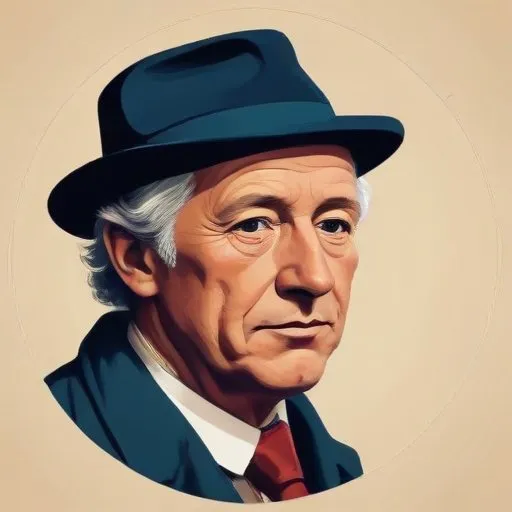
A Swedish physiologist and academic who discovered neurotransmitters, specifically noradrenaline, and its role in the nervous system, earning him a Nobel Prize in Physiology or Medicine in 1970.
Ulf von Euler, a Swedish physiologist and pharmacologist, is renowned for his groundbreaking research on neurotransmitters, which earned him the Nobel Prize in Physiology or Medicine in 1970. His seminal work revolutionized the understanding of neurotransmission, shedding light on the intricate mechanisms governing the human nervous system.
Born on February 7, 1905, in Stockholm, Sweden, Ulf von Euler was immersed in a family of esteemed scientists. His father, Hans von Euler-Chelpin, was a professor of chemistry and a Nobel laureate, while his mother, Astrid Cleve, was a professor of botany and geology. This intellectual environment nurtured von Euler's curiosity and passion for science from an early age.
He pursued his medical studies at the Karolinska Institute in 1922, where he worked under the guidance of Robin Fåhraeus in blood sedimentation and rheology. Von Euler's doctoral thesis, presented in 1930, marked the beginning of his illustrious career in pharmacology.
Von Euler's postdoctoral journeys took him to England, where he collaborated with Sir Henry Dale in London and I. de Burgh Daly in Birmingham. He later traveled to the continent, working with Corneille Heymans in Ghent, Belgium, and Gustav Embden in Frankfurt, Germany. These experiences broadened his expertise in biophysics, neuromuscular transmission, and pharmacology.
His research trajectory was marked by a distinctive ability to forge meaningful connections with prominent scientists of his time. Von Euler's collaborations with celebrated researchers, including Archibald Vivian Hill, G. L. Brown, and Eduardo Braun-Menéndez, not only enriched his understanding of physiological processes but also testified to his instinct for seeking out cutting-edge research opportunities.
Von Euler's most significant contribution lies in his discovery of neurotransmitters, specifically noradrenaline, which he isolated and characterized in the 1940s. This breakthrough fundamentally altered the understanding of neurotransmission, revealing the crucial role of chemical messengers in regulating various physiological processes.
His work on neurotransmitters also led to the development of new pharmacological agents, significantly impacting the treatment of various diseases, including hypertension, depression, and Alzheimer's disease. Von Euler's legacy extends to his influence on modern neuroscience, inspiring subsequent generations of researchers to explore the intricacies of neurotransmission.
In recognition of his groundbreaking research, von Euler was awarded the Nobel Prize in Physiology or Medicine in 1970, alongside Bernard Katz and Julius Axelrod. This prestigious honor solidified his position as a pioneer in the field of neurotransmitters.
In addition to the Nobel Prize, von Euler received numerous accolades, including the Royal Medal from the Royal Society in 1961 and the National Medal of Science in 1973. He was also elected as a member of several esteemed scientific organizations, including the Royal Swedish Academy of Sciences and the American Academy of Arts and Sciences.
Ulf von Euler's remarkable contributions to the field of physiology and pharmacology continue to inspire and inform contemporary research. His pioneering work on neurotransmitters has paved the way for significant advances in our understanding of the human nervous system, laying the foundation for the development of novel therapeutic strategies.
As a testament to his enduring influence, von Euler's legacy extends beyond the scientific community, inspiring future generations of researchers, clinicians, and students alike. His remarkable story serves as a beacon, illuminating the power of curiosity, perseverance, and collaboration in the pursuit of scientific excellence.
Through his extraordinary achievements, Ulf von Euler has secured his place among the pantheon of scientific giants, leaving an indelible mark on the landscape of human knowledge.
Born in 1873
A pioneering scientist who discovered the chemical transmission of nerve impulses, revolutionizing our understanding of the nervous system. His groundbreaking work earned him a Nobel Prize in Physiology or Medicine in 1936.
Born in 1911
A German-English biophysicist who discovered the neurotransmitter acetylcholine and its role in transmitting nerve impulses, leading to a deeper understanding of the nervous system.
Born in 1900
A Finnish-Swedish physiologist who discovered the workings of the retina and developed the concept of receptive fields, earning him the Nobel Prize in Physiology or Medicine in 1967. His work laid the foundation for modern neuroscience and visual perception research.
Born in 1924
A Swedish neurophysiologist and academic who discovered the organization and function of the visual cortex, and was awarded the Nobel Prize in Physiology or Medicine in 1981 for his work on the brain's visual system.
Born in 1926
A Nobel Prize-winning neurophysiologist who uncovered the inner workings of the visual cortex, revealing how the brain processes visual information. Their groundbreaking research revolutionized our understanding of the human brain.
96 Years Old
A pioneering neuroscientist and psychiatrist who unraveled the mysteries of memory and learning, earning a Nobel Prize for his groundbreaking work on the physiological basis of memory storage.
