


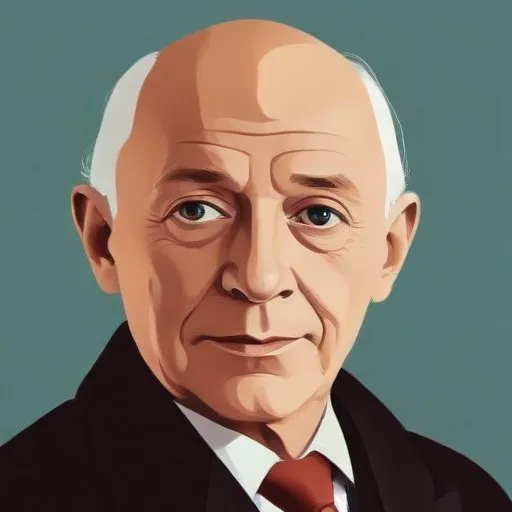
A Nobel Prize-winning biochemist who discovered the co-enzyme Q and its importance in cellular respiration, making significant contributions to our understanding of cellular energy production.
Hans von Euler-Chelpin, a German-born Swedish biochemist, made waves in the scientific community with his groundbreaking research on the fermentation of sugar and enzymes, earning him the prestigious Nobel Prize in Chemistry in 1929. His remarkable work, conducted alongside Arthur Harden, paved the way for significant advancements in the field of biochemistry.
Born on February 15, 1873, in Augsburg, Germany, Euler-Chelpin's early life was marked by a passion for science and art. His father, a lieutenant general in the Royal Bavarian Infantry Guard Regiment, exposed him to the world of art, which sparked an interest in color theory. Euler-Chelpin went on to study art at the Munich Academy of Painting before shifting his focus to chemistry and physics at the University of Berlin.
In 1899, Euler-Chelpin was appointed as a Privatdozent at the Royal University in Stockholm, where he began working in the laboratory of van 't Hoff, a renowned chemist. This marked the beginning of his illustrious career in Sweden, where he would spend the next four decades making significant contributions to the field of biochemistry.
Euler-Chelpin's most notable achievement came in 1929, when he was awarded the Nobel Prize in Chemistry, along with Arthur Harden, for their pioneering work on the fermentation of sugar and enzymes. Their research revealed the crucial role of enzymes in biological processes, laying the foundation for future breakthroughs in biochemistry and molecular biology.
Euler-Chelpin held various prestigious positions throughout his career, including professor of general and organic chemistry at Stockholm University (1906-1941) and director of the Institute for Organic-Chemical Research (1938-1948). He was also an esteemed member of several scientific societies, including the Royal Swedish Academy of Sciences and the German Academy of Sciences Leopoldina.
Euler-Chelpin married Astrid Cleve, a chemist and daughter of the Uppsala chemist Per Teodor Cleve. Their son, Ulf von Euler, would go on to win the Nobel Prize in Physiology or Medicine in 1970. Euler-Chelpin's legacy extends beyond his scientific contributions, as he left behind a family that continued to make significant impacts in the world of science.
Euler-Chelpin's work was driven by a deep passion for understanding the fundamental principles of life. He believed that the secrets of nature could be unlocked through rigorous scientific inquiry and a willingness to challenge established notions. His philosophical approach to science continues to inspire generations of researchers and scientists.
Euler-Chelpin's research on enzymes has had far-reaching implications for various industries, including medicine, agriculture, and biotechnology. His work has enabled the development of new diagnostic tools, treatments, and products that have improved human lives and transformed the way we approach biological systems.
Hans von Euler-Chelpin's remarkable life and achievements serve as a testament to the power of dedication, passion, and scientific inquiry. His groundbreaking research has left an indelible mark on the world of biochemistry, and his legacy continues to inspire and motivate scientists and researchers around the world.
Born in 1918
Pioneering biochemist who discovered the mechanism of DNA replication and was awarded the Nobel Prize in Physiology or Medicine in 1959 for his groundbreaking work on nucleic acid synthesis.
Born in 1898
A high-ranking officer in the German Wehrmacht during World War II, known for his involvement in the July 20 plot to assassinate Adolf Hitler.
Born in 1905
A pioneer in DNA research, this biochemist discovered the base pairing rules of DNA, leading to a fundamental understanding of genetic code.
Born in 1905
A pioneering biochemist who discovered the mechanism of RNA synthesis, earning a Nobel Prize in Physiology or Medicine in 1959. His work laid the foundation for our understanding of genetic code and protein synthesis.
Born in 1865
A British biochemist and academic who discovered the importance of phosphates in cellular respiration, earning him a Nobel Prize in Chemistry in 1929. His work laid the foundation for our understanding of cellular energy production.
Born in 1881
Organic chemist and Nobel laureate who synthesized hemin and chlorophyll, leading to a deeper understanding of biological pigments. His work has far-reaching implications for fields like medicine and agriculture.
Born in 1920
A British biochemist who discovered the mechanism of cellular respiration, earning a Nobel Prize in Chemistry for his groundbreaking work on the electron transport chain. His research revolutionized our understanding of energy production in cells.
