


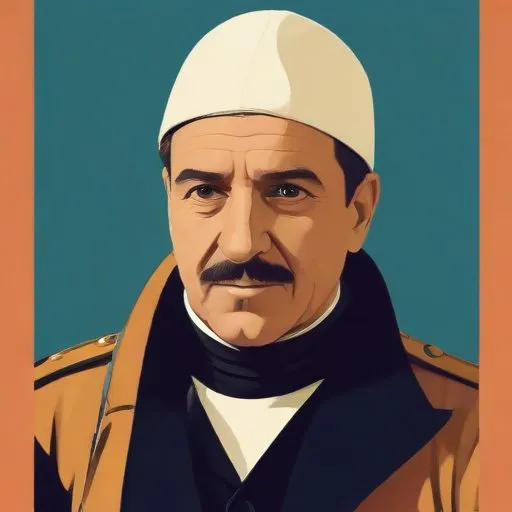
Designed and flew airships, leading the first expedition to reach the North Pole by air in 1926. He also led a tragic expedition to the Arctic in 1928 that ended in disaster.
Umberto Nobile, the Italian aviator, aeronautical engineer, and Arctic explorer, is best known for his groundbreaking achievements in developing and promoting semirigid airships between the two World Wars. His remarkable journey is marked by milestones, controversies, and contributions that have left an indelible mark on the history of aviation and exploration.
Nobile was born on January 21, 1885, in Lauro, Italy, to a family of small landowners. His father, Vincenzo, was a civil servant, and his family's aristocratic roots were stripped of their titles after the Italian unification. After graduating from the University of Naples in 1908 with a degree in industrial engineering, Nobile began his career with the Italian state railways.
In 1911, Nobile's interests shifted to aeronautical engineering, and he enrolled in a course offered by the Italian Army's Engineers Corps. During World War I, he served as a military engineer, working at the Military Factory for Aeronautical Construction and Experience in Rome, where he designed airships for antisubmarine reconnaissance. After the war, 15 of his designs were built, and he taught courses for aspiring officers. In 1918, he designed the first Italian-made parachute.
Nobile's expertise earned him the position of director of the Factory from 1919 to 1927. He also lectured at the University of Naples, obtained his test pilot's license, and wrote the textbook Elementi di Aerodinamica (Elements of Aerodynamics). His experience and knowledge paved the way for his most notable achievements.
In 1926, Nobile designed and piloted the airship Norge, which is believed to be the first aircraft to reach the North Pole. This monumental achievement was followed by another historic feat – becoming the first to fly across the polar ice cap from Europe to America.
In 1928, Nobile designed and flew the airship Italia, which ended in a deadly crash, sparking an international rescue effort. This tragic event marked a turning point in Nobile's career, as he faced controversy and criticism.
After the Italia disaster, Nobile's reputation suffered, and he faced opposition from the Italian government. However, he continued to work on aeronautical projects and wrote several books about his experiences. Nobile passed away on July 30, 1978, leaving behind a legacy that has inspired generations of aviators, engineers, and explorers.
Nobile's work was driven by his passion for innovation and his belief in the potential of human ingenuity. He once said, "The sky is not the limit; it's just the beginning." His unwavering commitment to pushing boundaries has inspired countless individuals to pursue careers in aviation and exploration.
Nobile's contributions to aeronautical engineering and exploration have had a lasting impact on modern society. His work paved the way for the development of modern airships, blimps, and zeppelins, which have been used for a wide range of applications, from surveillance to advertising.
Nobile's remarkable achievements have inspired numerous books, films, and documentaries. His story has captivated audiences worldwide, and his legacy continues to inspire new generations of explorers and aviators.
Born in 1872
First person to reach the South Pole, leading a Norwegian expedition in 1911, and a pioneer in Arctic and Antarctic exploration.
Born in 1868
Led a British expedition to the South Pole, racing against a Norwegian team, and tragically perished on the return journey. He is remembered for his bravery and sacrifice in the pursuit of scientific discovery.
Born in 1874
Led expeditions to the Antarctic, famously surviving a disastrous shipwreck and trekking to safety, earning a legendary reputation for bravery and leadership.
Born in 1888
Led the first flights over the North and South Poles, and explored Antarctica, expanding our knowledge of the world's most remote regions.
Born in 1902
The first person to fly solo non-stop across the Atlantic Ocean, completing a historic 33.5-hour flight in 1927 and becoming an international hero and aviation icon.
Born in 1897
Pioneering female aviator who broke records and pushed boundaries in flight, mysteriously disappearing during a attempted circumnavigation of the globe.
Born in 1896
A key developer of Mussolini's air force, he played a crucial role in shaping Italy's military aviation during World War II. He's most known for his aerial stunts and leading massive flight formations.
Born in 1874
Developer of the first practical wireless telegraph, pioneering radio communication and earning a Nobel Prize in Physics. Known for revolutionizing long-distance communication.
