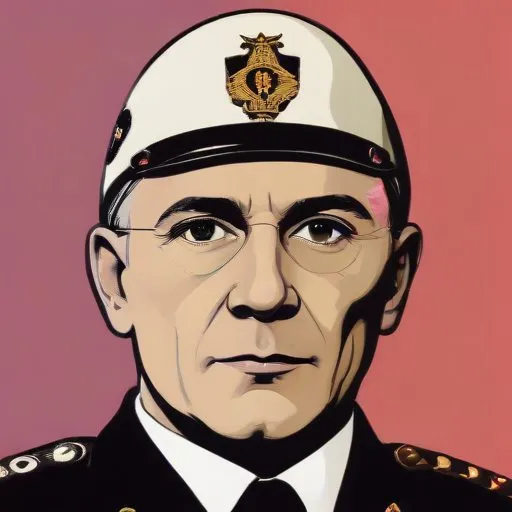
Uno Laht: The Satirical Voice of Soviet Estonia
The Poet and the Policeman
Uno Laht was a Estonian writer and poet, renowned for his witty satires that exposed the peculiarities of everyday Soviet life. Behind the pen, however, lay a more complex figure – a former NKVD and KGB officer, who participated in arrests and deportations in the 1940s.
A Life of Contrasts
Born on April 30, 1924, in Valga, Estonia, Laht's life was marked by contrasting personas. As Onu Thal, his palindromic pseudonym, he wrote humorous poetry and short stories that ridiculed the Soviet regime's bureaucratic red tape, cultural restrictions, and labor camps. His work, though, was not without controversy, as he was also an active participant in the Soviet security apparatus.
The Humorist's Craft
Laht's most celebrated works include the poetry collections
Piimahambad (1954) and
Piimahambad plombeeritud (1956), which showcased his unique brand of satire. These works were marked by their lighthearted, yet piercing, commentary on the Soviet system's peculiarities. His writing often centered on the struggles of ordinary people, from the mundane to the absurd.
Awards and Accolades
Laht's literary prowess earned him the prestigious Tuglas Prize in 1975 for his short story
We Good Fellows All Over the Earth. This recognition solidified his position as a notable figure in Estonian literature.
A Change of Heart
The restoration of Estonian independence in 1991 marked a significant turning point in Laht's life. He publicly renounced his previous affiliation with the Soviet regime, leaving the USSR Union of Writers and rejecting the status of a Soviet war veteran. This dramatic shift in perspective reflected his growing disillusionment with the Soviet system.
Legacy and Impact
Uno Laht's literary contributions continue to resonate with readers today, offering a unique window into the intricacies of Soviet life. His work serves as a testament to the power of satire as a means of social commentary, and his personal journey serves as a reminder of the complexities of the human experience.
Quotes and Memorable Sayings
- "Laughter is the greatest form of resistance."
- "The truth is always hidden in plain sight."
Timeline of Major Works and Events
- 1924: Born in Valga, Estonia
- 1940s: Participates in arrests and deportations as an NKVD and KGB officer
- 1954: Publishes Piimahambad, a collection of satirical poetry
- 1956: Publishes Piimahambad plombeeritud, an expanded collection of satirical poetry
- 1975: Awarded the Tuglas Prize for We Good Fellows All Over the Earth
- 1991: Renounces affiliation with the Soviet regime and rejects the status of a Soviet war veteran
- 2008: Passes away on September 24, after a lengthy illness
Trivia and Fun Facts
- Uno Laht's pseudonym, Onu Thal, is a palindrome, reading the same forwards and backwards.
- Laht's work was often censored by the Soviet authorities, who deemed his satire too subversive.
- Despite his complex past, Laht remained a beloved figure in Estonian literary circles until his passing.
FAQ
Who is Uno Laht, the Estonian KGB officer?
Uno Laht is an Estonian former KGB officer and author, known for his autobiographical books about his experiences in the Soviet security services.
What is Uno Lahts most notable book?
Lahts most notable book is The Enforcer, a memoir about his time in the KGB, which provides a unique insight into the workings of the Soviet security services.
What is Uno Lahts experience in the KGB?
Laht was a high-ranking officer in the Estonian KGB, working in counter-intelligence and counter-terrorism. He was involved in several high-profile operations and interrogations.
How did Uno Lahts work in the KGB impact the Estonian people?
Lahts work in the KGB had a profound impact on the Estonian people, as he was involved in suppressing dissident movements and monitoring political activity.
What is Uno Lahts legacy in Estonian history?
Lahts legacy is that of a complex figure, both as a former KGB officer and as an author who has shed light on the inner workings of the Soviet security services.