


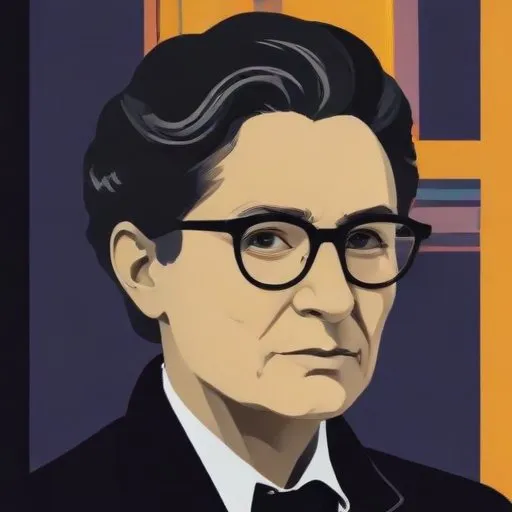
A renowned literary critic and short story writer, celebrated for his insightful reviews and masterful storytelling, which captured the essence of British life.
V. S. Pritchett, known to his readers and admirers as VSP, was a British writer and literary critic renowned for his exceptional short stories and essays. His remarkable body of work, which spanned over six decades, has left an indelible mark on the literary world.
VSP was born on December 16, 1900, in Suffolk, England, to Walter Sawdon Pritchett and Beatrice Helena (née Martin). His early life was marked by frequent relocations due to his father's business failures, which instilled in him a sense of resilience and adaptability. This nomadic existence also exposed him to various social classes and environments, later influencing his literary themes and settings.
Pritchett's writing career began in the 1920s, with his early work appearing in various magazines and journals. He gained recognition with his short story collections, including The Sailor, The Saint, and The Camberwell Beauty, which showcased his unique style and nuanced character portrayals. His memoirs, A Cab at the Door (1968) and Midnight Oil (1971), offered insightful accounts of his life and literary pursuits.
As a literary critic, Pritchett wrote extensively on esteemed authors, such as Dostoevsky, Tolstoy, and Dickens, demonstrating his deep understanding of literature and its historical context. His essays and reviews were compiled into numerous collections, including The Living Novel and The Working Novelist.
Pritchett received numerous accolades for his contributions to literature, including the Order of Merit (1993), the highest civilian honor in the UK. He was also knighted in 1975 for his services to literature.
Through his writing, Pritchett explored themes of identity, morality, and social class, often critiquing the British class system and societal norms. His work embodied a strong sense of humanity, emphasizing the importance of empathy and understanding in bridging social divides.
Pritchett's literary legacy extends beyond his own work, as he inspired generations of writers, including notable authors like Graham Greene and Muriel Spark. His commitment to literary criticism and biography has shaped the way we approach and appreciate literature today.
V. S. Pritchett's remarkable life and literary achievements have left an enduring mark on British literature. His commitment to crafting exceptional short stories, essays, and critiques has inspired countless writers, critics, and readers. As a testament to his profound influence, Pritchett's work continues to be widely read, studied, and admired today.
Through his writing, Pritchett has shown us that literature has the power to unite, to educate, and to inspire. As we reflect on his remarkable legacy, we are reminded of the importance of empathy, understanding, and the human experience – themes that will continue to resonate with readers for generations to come.
Born in 1879
This celebrated author crafted novels and plays that probed the human condition, exploring themes of social class, morality, and personal relationships, with a distinctive wit and insight. Their works continue to captivate audiences with their nuanced portrayals of English society during the early 20th century.
Born in 1903
A renowned writer of dystopian classics, such as "1984" and "Animal Farm", who warned of totalitarianism's dangers through allegorical fiction.
73 Years Old
A Canadian actor who appeared in over 150 films and TV shows, often playing Native American and First Nations characters, and was a pioneer for Indigenous representation in media.
Born in 1885
A pioneering modernist poet and critic who transformed 20th-century literature with innovative styles and provocative ideas, shaping the course of modern poetry.
Born in 1888
A renowned poet, playwright, and critic who reshaped modern poetry with works like "The Waste Land" and "Old Possum's Book of Practical Cats", influencing literature and art with their unique style.
Born in 1882
A pioneering author of modernist literature, known for experimental novels and essays that explored the human experience, blurring the lines between reality and fiction.
Born in 1885
A pioneering writer of the early 20th century, known for exploring themes of human nature, relationships, and the clash between individual desire and societal expectations through novels like "Sons and Lovers" and "Lady Chatterley's Lover".
Born in 1843
A renowned literary mastermind, celebrated for crafting psychologically complex, atmospheric novels and short stories that probed the human condition, often exploring the intricacies of the American and European aristocracy.
