


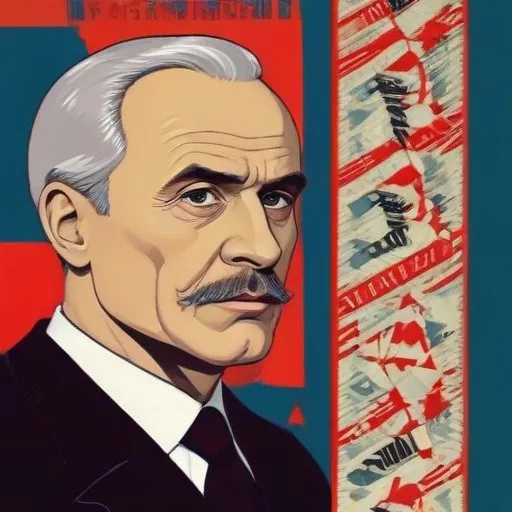
The 11th Premier of the Soviet Union, a key figure in the country's economic reform efforts, known for his role in the August Coup of 1991, a failed attempt to overthrow Mikhail Gorbachev.
Valentin Pavlov, a prominent Soviet official, is best known for his role as the Prime Minister of the Soviet Union and his attempt to reform the country's economy through the 1991 Soviet monetary reform, commonly referred to as the Pavlov reform. This drastic measure, aimed at halting the flow of Soviet rubles into the country from abroad, was a last-ditch effort to salvage the crumbling Soviet economy.
Born on September 26, 1937, in Moscow, Russian Soviet Federative Socialist Republic, Pavlov graduated from the Moscow Finance Institute in 1958. He began his political career in the Ministry of Finance in 1959, eventually rising through the ranks to become the head of the Financial Department of the State Planning Committee during the Brezhnev Era.
Pavlov's career took a significant turn when he was appointed as the Chairman of the State Committee on Prices during the Gorbachev Era. His subsequent appointment as the Minister of Finance in Nikolai Ryzhkov's second government further solidified his position within the Soviet government.
In early 1991, Pavlov, as the newly appointed Prime Minister of the Soviet Union, initiated the Pavlov reform, a drastic measure aimed at stabilizing the Soviet economy. The reform sought to replace old ruble notes with new ones, effectively rendering the old notes worthless. Although initially ridiculed, Pavlov's claim that the reform was necessary to halt the flow of Soviet rubles into the country from abroad was later proven to be true.
In June 1991, Pavlov called for a transfer of power from the President of the Soviet Union to the Prime Minister and the Cabinet of Ministers. When this failed, he joined a plot to oust Gorbachev, participating in the 1991 Soviet coup d'état attempt. The coup ultimately failed, and Pavlov was arrested for his involvement. Following his release, he transitioned to the banking sector in post-Soviet Russia.
Valentin Pavlov's legacy is complex and multifaceted. Although his reform efforts ultimately failed to save the Soviet Union, his actions demonstrate a deep commitment to the preservation of the Soviet state. His involvement in the coup and subsequent transition to the banking sector underscore the tumultuous nature of his career. As the last legitimate Soviet head of government, Pavlov's legacy serves as a poignant reminder of the Soviet Union's demise.
Valentin Pavlov's contributions to the Soviet government and economy have been recognized through various awards and honors, including:
Key events in Valentin Pavlov's life and career:
95 Years Old
The last leader of the Soviet Union, who introduced reforms that led to the end of the Cold War and the collapse of communism, earning a Nobel Peace Prize. He's known for his policies of glasnost and perestroika, which transformed the Soviet Union and the world.
Born in 1909
Soviet Minister of Foreign Affairs who played a crucial role in shaping the country's foreign policy during the Cold War, known for his diplomatic skills and ability to navigate complex international relations.
Born in 1911
The last Soviet leader before Mikhail Gorbachev, he briefly ruled the USSR from 1984 to 1985, maintaining a hardline communist stance and resisting reform.
Born in 1914
Leader of the Soviet Union from 1982 to 1984, known for attempting to reform the stagnant Soviet economy and crack down on corruption. Implemented policies to increase discipline and productivity.
Born in 1906
A Soviet leader who ruled with an iron fist, implementing policies that stagnated the economy and suppressed dissent, while also being a key figure in the Cold War. He's infamous for his authoritarian regime and bureaucratic inefficiency.
Born in 1894
The Soviet leader who initiated reforms and denounced Stalin's regime, known for his bold policies and iconic shoe-banging incident at the UN.
