


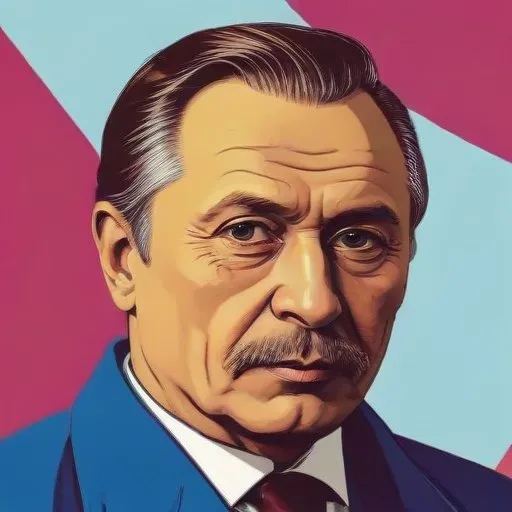
A Russian ethnographer and politician who compiled the first comprehensive history of Russia and developed the concept of Eurasia, shaping the country's national identity. He also founded several cities, including Stavropol and Yekaterinburg.
Vasily Nikitich Tatishchev, a prominent Russian Imperial statesman, historian, philosopher, and ethnographer, is renowned for authoring the monumental book "The History of Russia", which was posthumously published in 1767. This magnum opus cemented his legacy as a pioneer in Russian historiography, advocating for the idea that autocracy is the perfect form of government for Russia.
Born on April 19, 1686, near Pskov, Tatishchev was homeschooled and taught German and Polish from a young age. He later studied French and Latin, although he never mastered these languages. After graduating from the Artillery and Engineering school in Moscow, he participated in the Great Northern War with Sweden from 1700 to 1721.
Under the service of Peter the Great, Tatishchev held a prominent post in the Foreign Office, where he opposed the policies of the Supreme Privy Council and supported Anna's ascension to the Russian throne in 1730. This strategic alliance earned him the lucrative office of managing Ural factories, a responsibility he utilized to found the cities of Perm and Yekaterinburg, which have since grown into the veritable capitals of the Urals.
Tatishchev's contributions to Russian history are twofold. Firstly, his book "The History of Russia" remains a seminal work, providing valuable insights into Russia's past. However, his methodology has been criticized for lacking proper citation, making it difficult for historians to verify his sources. This has led to the term "Tatishchev information" being used to describe unverified information that requires additional evidence to be trusted.
Secondly, Tatishchev's founding of three cities has had a lasting impact on the Russian Empire's urban landscape. A monument dedicated to him was opened in Perm in 2003, a testament to his enduring legacy.
Tatishchev's philosophical leanings were shaped by his experiences as a statesman and historian. He firmly believed in the autocratic system of government, which he deemed ideal for Russia. This perspective is reflected in his writings, which often advocated for strong central authority and efficient governance.
Vasily Tatishchev's legacy extends beyond his historical writings and city-founding endeavors. His ideas on governance and autocracy continue to influence Russian politics and historical discourse. His contributions to the development of the Ural region have had a lasting impact on the local economy and culture.
In conclusion, Vasily Tatishchev's remarkable life and achievements have left an indelible mark on Russian history. As a statesman, historian, and philosopher, he has inspired generations of scholars and leaders, solidifying his position as one of the most important figures in Russian Imperial history.
Born in 1711
A Russian polymath who made significant contributions to various fields, including the discovery of the atmosphere of Venus and the development of a comprehensive theory of the Earth's origin. They are also credited with founding Moscow State University.
Born in 1799
Russia's literary icon penned timeless tales of love, drama, and social commentary, leaving an indelible mark on the country's cultural heritage.
Born in 1818
A Russian literary mastermind who crafted poignant novels and plays that explored the human condition, delving into themes of love, family, and social change.
Born in 1828
A Russian literary giant who penned sweeping novels like "War and Peace" and "Anna Karenina", exploring the human condition with profound insight and masterful storytelling.
Born in 1821
A Russian literary mastermind who penned psychologically complex novels that probed the human condition, exploring themes of morality, philosophy, and the darker aspects of human nature.
Born in 1860
A renowned Russian literary mastermind, celebrated for crafting poignant, psychologically nuanced tales that probe the human condition, and pioneering the modern short story genre.
Born in 1899
A Russian-born novelist and critic, renowned for crafting intricate, lyrical prose and exploring themes of identity, morality, and the human condition through works like "Lolita" and "Pale Fire".
