


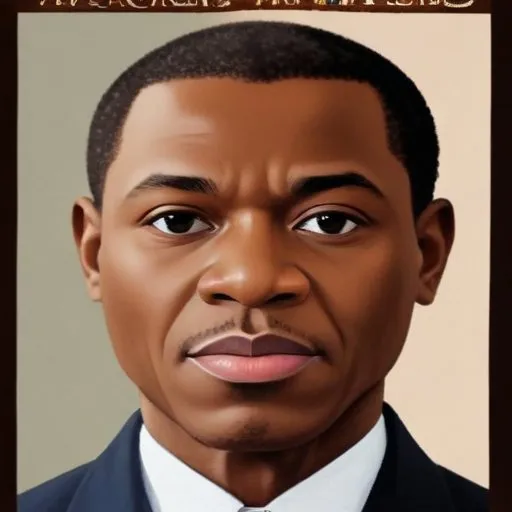
A pioneering civil rights leader who used his pulpit to advocate for racial equality and social justice, inspiring many prominent activists, including Martin Luther King Jr.
Vernon Johns is best known as the fiery and outspoken minister who pioneered the civil rights movement in the South, paving the way for iconic leaders like Dr. Martin Luther King Jr. As the pastor of the Dexter Avenue Baptist Church in Montgomery, Alabama, Johns delivered sermons that were decades ahead of his time, boldly addressing race relations and social justice.
Vernon Johns was born on April 22, 1892, in Darlington Heights, Prince Edward County, Virginia. His grandparents had been enslaved, and his paternal grandfather was hanged for killing his master. Johns' maternal grandfather, a white man named Mr. Price, had a longstanding relationship with Johns' maternal grandmother, and later served prison time for killing a white man who tried to rape her.
Johns graduated from Virginia Theological Seminary and College in 1915 and went on to attend the Oberlin Seminary, where he studied with classmate Robert M. Hutchins. While at Oberlin, Johns was highly respected by both his classmates and the faculty, and was chosen to give the annual student oration. He later attended the University of Chicago's graduate school of theology.
Johns' ministry was marked by controversy and courage. In 1926, he became the first African American to have his work published in Best Sermons of the Year. However, his outspoken sermons on race relations often put him at odds with his congregations and the wider community. Despite this, Johns remained committed to his message of social justice and equality.
In 1927, Johns married Altona Trent, a pianist and music teacher who became a professor at what is now Alabama State University. In 1929-1933, Johns served as president of the Virginia Theological Seminary and College, his alma mater.
Vernon Johns' ministry had a profound impact on the civil rights movement. His sermons and teachings inspired a generation of leaders, including Dr. Martin Luther King Jr., who succeeded Johns as pastor of the Dexter Avenue Baptist Church.
Johns' legacy extends beyond his ministry. He was a pioneer in the fight for social justice and equality, and his courageous stand against racism and oppression paved the way for the civil rights movement of the 1950s and 1960s.
Johns' philosophical contributions were rooted in his belief in the power of faith to bring about social change. He believed that the church had a critical role to play in the fight for justice and equality, and that ministers had a responsibility to use their pulpits to speak out against racism and oppression.
Vernon Johns' legacy is one of courage, controversy, and conviction. He was a true pioneer in the fight for social justice and equality, and his contributions to the civil rights movement continue to inspire and motivate us today.
As we reflect on Johns' life and ministry, we are reminded of the power of faith to bring about change and the importance of standing up against racism and oppression. Vernon Johns may be gone, but his legacy lives on, inspiring us to continue the fight for a more just and equal society.
97 Years Old
A prominent leader in the civil rights movement, advocating for racial equality and social justice through nonviolent means, leaving a lasting impact on American history.
Born in 1926
A prominent leader in the American Civil Rights Movement, he worked closely with Martin Luther King Jr. to advocate for racial equality and social justice through nonviolent means.
Born in 1912
A pioneering civil rights activist who played a key role in organizing the 1963 March on Washington, where Martin Luther King Jr. delivered his iconic "I Have a Dream" speech.
94 Years Old
A prominent civil rights leader and diplomat who served as a key advisor to Martin Luther King Jr. and later became the first African American to hold a top post in an American presidential administration.
Born in 1912
A pioneering figure in the struggle for racial and gender equality, she dedicated her life to empowering African American women and promoting education and social justice.
Born in 1908
A prominent civil rights leader and congressman who fought for racial equality and social justice, known for his charismatic oratory skills and advocacy for African American rights.
85 Years Old
A prominent figure in the Civil Rights Movement, advocating for Black Power and self-defense, and famously coining the term "Black Power" in 1966. Known for his radical approach to achieving racial equality.
Born in 1889
Leader of the Brotherhood of Sleeping Car Porters, pioneering the Civil Rights Movement through nonviolent protests and advocacy for African American workers' rights.
